
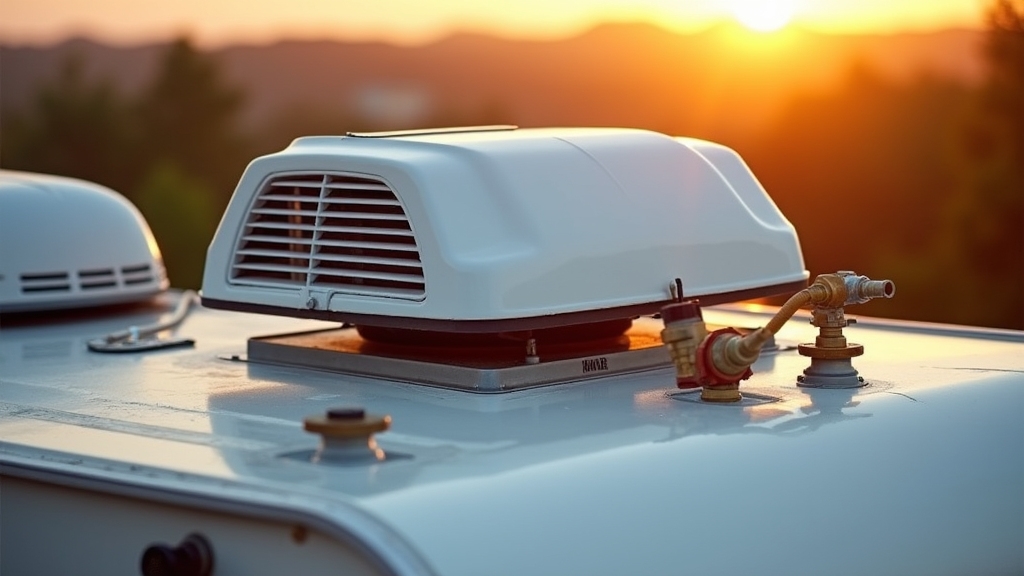
You can’t run most RV air conditioners directly on propane because they require electric power from shore power, a generator, or an inverter system.
However, propane-powered generators can supply the electricity your AC unit needs off-grid. They offer cleaner emissions and extended runtime compared to gasoline.
Propane’s efficiency and availability also make it a practical fuel source for these generators. Understanding how propane supports RV cooling and the related safety measures can help you optimize your system’s performance and reliability.
Key Takeaways
- RV air conditioners primarily run on electricity but can be powered indirectly by propane via propane generators producing AC power.
- Some RV cooling systems use propane combustion engines, offering 30% higher efficiency than electric but require exhaust and safety measures.
- Propane generators provide clean-burning fuel, longer storage life, and support off-grid RV air conditioning with runtimes dependent on tank size.
- Dual fuel generators can switch between propane and gasoline, with propane preferred for onboard fuel compatibility and cleaner emissions.
- Propane-powered RV AC units need safety checks, proper handling, and maintenance to prevent leaks, lockouts, and carbon monoxide risks.
Common Power Sources for RV Air Conditioners
When you run an RV air conditioner, you typically rely on one of several common power sources: shore power hookups, generators, inverters connected to house batteries, or solar systems.
Shore power is the most common, providing up to 3,600 watts via 30-amp (NEMA TT-30R) or 12,000 watts with 50-amp (NEMA 14-50R) service. This is sufficient for high-demand appliances like AC units. Proper power supply ensures safe operation and prevents damage to the unit.
Shore power delivers up to 12,000 watts, easily powering RV air conditioners and other high-demand appliances.
Generators rated 3,000-4,000 watts supply AC power similar to shore power. Larger RVs may need 5,000+ watt units for dual ACs.
Inverters convert DC from house batteries into AC. Pure sine wave inverters guarantee stable power and can handle 1,500-2,000 watts of running loads. Soft starters can reduce startup demands.
Selecting the correct inverter size is essential to handle the AC unit’s startup and running wattage, with many RV air conditioners requiring inverters rated around 3000W capacity for reliable operation.
Solar panels augment battery charging but can’t independently power air conditioners. Using solar along with other power sources can improve overall system efficiency and reduce reliance on fuel-based generators.
Challenges of Direct Propane-Powered AC Units
Although propane-powered air conditioners offer an alternative fuel source, they face significant challenges that limit their practicality and efficiency.
Direct propane combustion engines operate at roughly 25% efficiency, reducing cooling effectiveness compared to electric units. Additionally, they do not benefit from the improved fuel economy seen with balanced tire systems.
Ventilation is critical, as combustion produces hazardous byproducts requiring dedicated exhaust and leak detection systems, complicating installation and safety.
Noise pollution and increased maintenance further hinder usability.
Economically, propane AC units incur higher fuel consumption and operational costs, with frequent service needs due to engine complexity.
Integration with existing RV electrical infrastructure is problematic, as direct propane units lack compatibility with standard shore power setups.
Structural modifications for propane storage and exhaust increase installation complexity, making direct propane-powered air conditioners a less viable option for most RV applications.
How Propane Generators Support RV Cooling?
Did you know that you can power your RV air conditioner efficiently with a propane generator? It’s pretty neat! These generators burn propane gas to generate electricity that works perfectly with standard AC units.
They come in a variety of sizes, usually ranging from 2,000 to over 6,000 watts, which is great because that means they can provide enough starting and running power for most RV cooling systems. Proper maintenance of your generator ensures long-lasting performance and reliability.
Plus, one of the best features is that propane has clean combustion and larger tank capacities. This means you get extended runtime, making propane generators a reliable choice for keeping your RV nice and cool while you’re on the road. Isn’t that convenient?
Propane is also a cleaner-burning fuel compared to gasoline, producing less odor and emissions, which makes it ideal for RV use.
Propane Generators Explained
How do propane generators support your RV cooling needs effectively?
They convert propane fuel into electricity, powering your air conditioner without requiring traditional hookups. These generators often integrate with RV electrical systems, ensuring reliable and efficient power distribution.
Propane burns cleaner and stores longer than gasoline, reducing fuel management complexity, especially since you likely already carry propane for other appliances.
Dual fuel generators automatically switch between propane and gasoline, ensuring continuous operation.
A 20-pound propane tank can provide roughly 6 hours and 40 minutes of runtime for a 15,000 BTU AC unit, with larger setups extending this considerably.
Propane generators deliver stable, clean inverter power suitable for sensitive electronics and operate efficiently even in remote or high-elevation locations.
When paired with soft start devices, they optimize power distribution, reducing startup surges and enabling the use of smaller, cost-effective generators for your RV cooling system.
Powering AC Units
When shore power isn’t available, propane generators provide the essential electricity needed to run your RV’s air conditioning units. These generators must match the starting and running wattage of your AC, typically requiring 2000 watts or more.
Many RV owners also enhance their systems with solar panels to supplement power and extend generator runtime. Choosing a generator with corrosion resistance features ensures reliable performance in various weather conditions.
Dual fuel models let you switch between propane and gasoline, but propane is preferred since it aligns with your onboard fuel system for appliances like refrigerators and heaters.
Inverter generators with soft-start technology optimize power delivery, reducing compressor strain and preventing voltage drops.
Propane conversion of gasoline generators streamlines fuel management by eliminating gasoline storage.
While direct propane engine-powered AC systems exist, conventional propane generators remain the primary, efficient solution to power electric RV air conditioners without shore power. This ensures cooling comfort during off-grid camping.
Runtime and Efficiency
Why does runtime matter for propane generators powering RV air conditioners? It directly affects how long you can maintain comfortable cooling without refueling.
A dual-fuel generator running on a 20 lb propane tank typically lasts about 6 hours and 40 minutes powering a 15,000 BTU AC. Using separate tanks or larger 30 lb cylinders can nearly double runtime to 13 hours or more.
While propane generators have 10-20% shorter runtimes than gasoline due to lower energy density, they burn cleaner and require less maintenance.
Load factors also influence efficiency; most RV AC units draw 11-16 amps, with two units nearing 50% generator capacity.
Optimizing tank size and managing load can extend runtime, ensuring effective cooling during your RV travels with propane-powered systems.
For the best performance and safety, it is important to use components rated for appropriate pressure and durability to avoid issues during operation.
Benefits of Using Propane for RV Air Conditioning
You’ll really appreciate how propane has cleaner fuel emissions. This means you’re doing a solid for the environment compared to using electric power sources. It’s a win-win! Propane-powered systems also tend to have lower startup currents, reducing strain on your RV’s electrical system.
And let’s talk about availability. Propane is everywhere, so you won’t have to stress about finding a place to refuel while you’re on the road. How convenient is that?
Plus, when it comes to cooling, propane air conditioners really shine. They give you an extended cooling runtime, which means your RV stays nice and comfy for longer, especially when you’re off the grid. Propane is also about 30% more efficient than electricity for HVAC purposes, which helps save fuel and money. Doesn’t that sound great?
Cleaner Fuel Emissions
Although many RV air conditioners rely on electricity, choosing propane considerably reduces emissions and environmental impact. Propane’s combustion produces fewer greenhouse gases than electric or gasoline-powered systems, lowering your carbon footprint by up to 43% compared to electric cooling.
It contains no methane, a potent greenhouse gas, and generates virtually zero particulate matter, improving air quality. Propane systems emit notably less nitrogen oxide and sulfur oxide, key contributors to respiratory issues and acid rain, than electric alternatives.
Additionally, propane burns cleaner than gasoline or diesel, releasing fewer harmful pollutants during operation. Propane air conditioners also often require less electrical power, which helps preserve battery life and reduces the need for heavy-duty chargers.
By using propane for your RV air conditioning, you not only gain efficient cooling but also contribute to cleaner air and reduced environmental harm. This makes it an eco-friendlier choice for off-grid comfort, especially since propane systems require less electricity than electric heat pumps or air conditioners.
Fuel Availability Convenience
Beyond reducing emissions, propane offers significant advantages in fuel availability that enhance the practicality of RV air conditioning.
You’ll find propane widely accessible through gas stations, RV parks, and dedicated retailers, simplifying refills even in remote areas lacking electrical hookups.
Its long shelf life guarantees reliable storage during sporadic use, while portable 20-pound cylinders make transport and swapping effortless, minimizing downtime.
Since many RV systems already run on propane for heating, cooking, and refrigeration, you can streamline fuel management by using a single energy source for multiple appliances.
This integration reduces complexity and supports dual-fuel setups, letting you switch between propane and electricity based on availability or preference.
Additionally, propane’s compatibility with weather-resistant materials ensures reliable performance in diverse outdoor conditions.
Extended Cooling Runtime
When choosing an air conditioning system for your RV, propane offers a significant advantage by extending cooling runtime through superior fuel efficiency.
Propane is about 30% more efficient than electricity for air conditioning, allowing longer cooling periods per fuel unit. A standard 20 lb propane tank powers a 15,000 BTU RV AC for roughly 6 hours 40 minutes continuously.
Using dual fuel generators with propane tanks can nearly double this runtime. Propane-powered ACs reduce electrical load, preserving battery life and enhancing off-grid cooling capability.
Linking multiple propane tanks and integrating energy-efficient designs or smart thermostats optimize runtime further. These benefits let you cool longer without frequent refills or recharging, improving energy management and reducing operational costs in mobile settings.
For added safety and reliability, consider pairing propane AC systems with RV surge protectors to safeguard your electrical appliances from power fluctuations.
Runtime and Power Considerations With Propane Systems
Since propane generator runtime directly impacts your RV air conditioner’s performance, understanding power consumption and fuel efficiency is vital.
A 20 lb propane tank typically powers a 3500–4500 watt generator running a 15,000 BTU AC for 6 to 10 hours, extending up to 20 hours under ideal conditions.
Propane consumption ranges from 0.3 to 0.5 gallons per hour, influenced by ambient temperature, AC size, and additional loads.
Startup amps can spike well above the steady 1800 watts running power, demanding careful power management.
Generator efficiency varies, usually around 25–30%, with newer models performing better.
Using multiple generators or propane splitters affects runtime and fuel use.
Regular maintenance and monitoring propane supply are vital to guarantee consistent cooling during extended off-grid stays. The air conditioner requires a dedicated 30-amp, 2500-3000 watt power source to operate efficiently.
Alternative Cooling Solutions for RVs
Managing propane consumption and generator runtime can be challenging, especially during extended trips. To optimize cooling efficiency and minimize propane reliance, consider alternative solutions tailored for RV environments. These options use electricity or natural processes to reduce fuel dependency.
You might explore:
Ductless mini-split systems offering compact, electric-powered cooling without ductwork. These systems are highly energy-efficient, consume less electricity than rooftop units, and operate quietly. Evaporative coolers leverage water evaporation, ideal for dry climates, with low noise.
Low-profile rooftop units combine heat pump technology for cooling and heating. Portable interior coolers provide flexible placement but limited coverage. Residential mini-splits adapted for RVs offer zone cooling and propane engine variants.
Choosing the right system depends on your RV size, climate, and power availability. This helps balance comfort and operational costs effectively.
Safety Practices for Operating Propane Appliances in RVs
Although propane appliances provide reliable comfort in your RV, you must follow strict safety practices to prevent hazards.
Always verify your propane system’s ignition safety features function properly; igniters attempt ignition up to three times before shutting off gas flow to prevent leaks.
Regularly test propane and carbon monoxide detectors, placing them near sleeping and appliance areas.
Maintain proper ventilation by inspecting exhaust vents and keeping doors or windows slightly open to allow fresh air.
Routinely inspect tanks, lines, and fittings for leaks or damage, and use certified technicians for servicing. It is also essential to ensure the carbon monoxide detectors are functioning before operation to prevent dangerous incidents.
If a propane lockout activates, follow manual reset procedures carefully, ensuring all appliances are off before restoring gas flow.
These protocols minimize risks of leaks, explosions, and carbon monoxide poisoning during propane appliance operation.
Frequently Asked Questions
Can Propane-Powered AC Units Be Retrofitted Into Older RV Models?
You can retrofit propane-powered AC units into older RVs, but it’s complicated and uncommon.
You’ll face challenges like modifying electrical, plumbing, and venting systems, plus ensuring proper combustion gas exhaust.
The units are bulky, affecting weight distribution and structure.
Costs and safety compliance often outweigh benefits.
Most owners prefer electric ACs powered by propane generators instead, as direct propane AC retrofits demand custom fabrication and professional certification, making them impractical for typical RV setups.
What Is the Lifespan of Propane Generators Used for RV Air Conditioning?
You can expect propane generators for RV air conditioning to last a solid 6-8 years with proper care. This is practically forever in RV terms!
To maximize lifespan, run your generator monthly to avoid carburetor issues. Change oil every 50 hours, and inspect spark plugs and filters regularly.
Following these maintenance steps keeps performance steady and prevents costly failures. This lets your propane generator reliably power your RV AC for years on end.
Are There Specific Propane Recommended for RV Cooling Systems?
You wouldn’t want your RV cooling system failing mid-trip, so choosing reliable propane matters.
While specific propane aren’t strictly mandated, companies like Dometic, Furrion, Coleman-Mach, and Suburban recommend their own certified propane systems optimized for RV air conditioners.
You should always use propane that meets purity standards and your unit’s pressure requirements to maintain performance and avoid damage or safety risks.
Can Propane Air Conditioning Systems Operate Efficiently in High-Altitude Locations?
Propane air conditioning systems can operate at high altitudes, but you’ll face efficiency challenges due to thinner air and reduced oxygen for combustion.
To maintain proper performance, you must adjust fuel-to-air ratios using high-altitude calibration kits or technician tuning.
Without these modifications, combustion becomes incomplete, causing poor ignition and increased emissions.
Choosing the Right RV Cooling Setup for Your Power Needs
You might dream of your RV’s air conditioner humming on pure propane power, but don’t hold your breath. It’s not that simple.
Direct propane-powered AC units are about as common as a unicorn at a mechanic’s shop. Instead, propane generators step in, powering your cooling needs indirectly.
So, unless you’re planning to invent the next big thing, stick to tried-and-true power sources. Keep safety top of mind while staying cool on the road.