
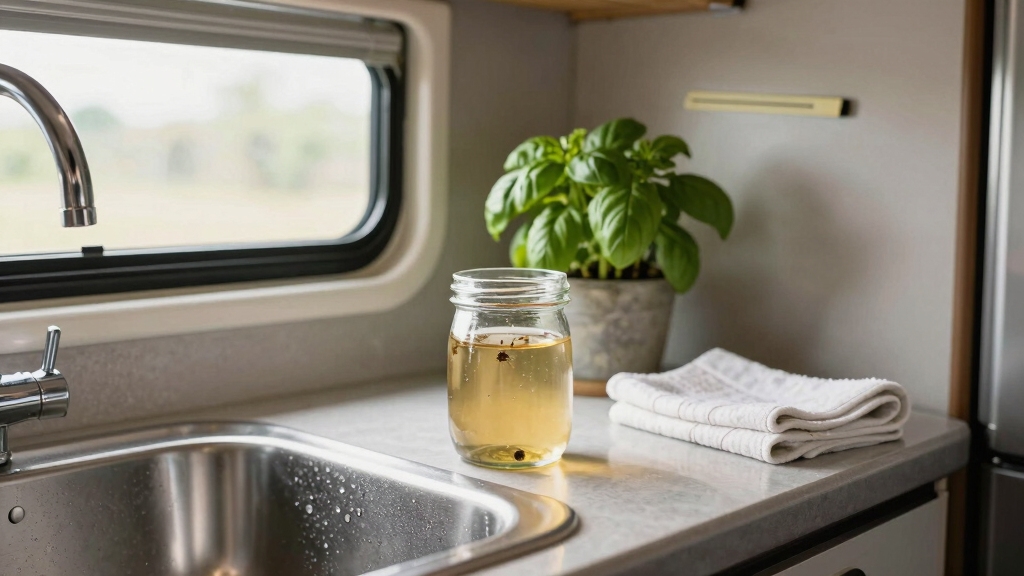
To get rid of gnats in your RV, start by sealing vents, windows, and doors with tight screens and weather stripping to block entry. Clean up food residue, empty trash regularly, and use enzyme-based treatments in black tanks and drains to break down organic matter.
Deploy sticky traps with bait and pour boiling water down drains to kill larvae. Maintain inspection routines to catch infestations early. Following these steps will help keep gnats under control while protecting your comfort and hygiene.
Explore further details for thorough management.
Key Takeaways
- Regularly inspect and clean black tanks and sink strainers to remove organic matter and prevent gnat breeding in the RV.
- Use enzyme-based treatments in black and grey water tanks to break down waste and reduce gnat-attracting odors.
- Seal vents, windows, doors, and cracks with screens and weatherstripping to block gnat entry into the RV.
- Hang sticky fly strips with bait near doors and windows but away from food areas to trap adult gnats effectively.
- Eliminate standing water, wipe surfaces, store food sealed, and pour boiling water down drains to disrupt gnat larvae development.
Understanding Gnats and Their Impact on Your RV

Although gnats are small, they can quickly become a significant nuisance in your RV by invading food storage areas, drains, and damp spaces. These tiny insects are attracted to organic matter and moisture, making your RV’s kitchen and plumbing prime targets.
If left unchecked, gnats reproduce rapidly, leading to infestations that compromise hygiene and comfort. You need to identify their preferred breeding sites, such as dirty sink strainers or black tanks, and understand their life cycle to disrupt it effectively.
Gnats also indicate underlying issues like food residue or standing water, so addressing these conditions promptly is essential. By pinpointing infestation sources precisely, you can implement targeted solutions, minimizing gnat presence and maintaining a sanitary, pleasant RV environment.
Regularly inspect and seal entry points to prevent additional pest invasions and maintain overall cleanliness.
Preventing Gnats: Natural Repellents and Sealing Entry Points
How can you effectively keep gnats from invading your RV in the first place? Start by sealing all entry points. Check vents, doors, and windows for gaps and install tight-fitting screens.
Use natural repellents like peppermint oil around the RV perimeter; it’s non-toxic and effective. Apply diatomaceous earth to outdoor surfaces to create a hostile environment for gnats. Reapply repellents after rain to maintain protection.
Choosing the right moisture control products inside your RV can also help reduce humidity levels that attract gnats.
| Prevention Step | Natural Repellent | Sealing Technique |
|---|---|---|
| Check & seal vents | Peppermint oil spray | Weatherstripping door frames |
| Install window screens | Diatomaceous earth dust | Use door sweeps |
| Wipe counters frequently | Thermacell Patio Shield | Seal cracks with silicone |
| Remove trash promptly | Exterior insect spray | Inspect awning edges |
These precise measures reduce gnat access and discourage breeding around your RV.
Setting Up Traps and Barriers to Control Gnats
To tackle gnat problems effectively, you can start by setting up some targeted traps. Fly strips work wonders when placed near those pesky problem areas, capturing adult gnats as they buzz around. It’s a simple yet effective way to reduce their numbers.
Now, let’s talk about keeping them out in the first place. Installing physical barriers like window screens is a great idea. Plus, sealing up any vents can really help prevent gnats from sneaking into your RV.
And don’t forget, combining these methods with perimeter sprays can create a thorough control system. It’s all about layering your defenses to keep those annoying gnats at bay!
Additionally, having a well-stocked first aid kit on hand is essential to treat any bites or irritations promptly during your travels.
Effective Gnat Traps
Deploying effective gnat traps and physical barriers is essential for controlling infestations around your RV. To capture gnats efficiently, hang fly strips near doors, windows, and other entry points where gnats concentrate.
Use yellow bug lights outside to reduce attraction, as regular lights can draw gnats closer. Position traps away from food preparation areas to avoid contamination.
Combine sticky traps with bait solutions like apple cider vinegar to increase capture rates. Regularly replace or clean traps to maintain effectiveness.
Additionally, keep exterior lights off when not needed to minimize gnat attraction. While traps reduce adult populations, integrate them with other control methods for thorough management.
This targeted approach guarantees you interrupt the gnat life cycle and maintain a gnat-free environment around your RV. Also, maintaining proper ventilation and cleanliness inside the RV helps prevent conditions that attract gnats, improving overall air quality and odor control.
Installing Physical Barriers
While traps help reduce the adult gnat population, setting up physical barriers strengthens your defense by preventing their entry into the RV.
Start by sealing all potential entry points, including vents, door gaps, and windows. Install tightly fitted screens on windows and vents to block gnats without restricting airflow.
Use weather stripping or door sweeps to close gaps under doors. Switch exterior lighting to yellow bug lights or keep lights off near entryways, as standard lights attract gnats.
Additionally, apply perimeter bug spray around the RV base to create a chemical barrier that deters gnats. Regularly inspect these barriers for damage or gaps and maintain them to ensure continuous protection.
For maintaining outdoor areas like awnings, using biodegradable cleaners can help prevent fungal growth that attracts gnats and other pests.
Treating Drains and Black Tanks to Eliminate Gnats
Eliminate gnats breeding in RV drains and black tanks by applying targeted treatments designed to destroy eggs and larvae.
Start by pouring boiling water down your drains to kill existing larvae.
Follow with enzyme-based treatments in the black tank to break down organic matter and prevent egg development.
For immediate relief, apply spray insecticides directly into the black tank, repeating treatments as necessary to reach hidden eggs.
Using enzyme-based formulations also helps maintain odor control while effectively breaking down waste.
| Treatment Type | Application Method | Purpose |
|---|---|---|
| Boiling Water | Pour down drains | Destroys larvae in pipes |
| Enzyme-Based Product | Add to black tank | Breaks down organic matter |
| Spray Insecticide | Spray inside black tank | Kills eggs and adult gnats |
| Repeat Treatments | Scheduled intervals | Guarantees full eradication |
Cleaning and Maintenance to Stop Gnat Breeding
After treating drains and black tanks to remove gnats at their source, focus on cleaning and maintenance routines that prevent new infestations from developing.
Keep your RV spotless by wiping down countertops, washing dishes immediately after use, and emptying trash into park containers without delay.
Regularly clean the kitchen sink strainer to remove organic debris that attracts gnats.
Store all food in sealed containers to eliminate odor sources.
Eliminate standing water inside the RV to disrupt breeding habitats.
Vacuum and wipe surfaces daily during infestations to remove eggs and larvae.
Inspect and seal potential entry points such as vents, doors, and awnings to block gnat ingress.
Maintaining this disciplined cleaning regimen interrupts the gnat lifecycle, ensuring your RV remains gnat-free and comfortable.
Additionally, using a properly maintained RV sewer hose can prevent waste buildup that attracts gnats and other pests.
Monitoring and Managing Gnat Activity in Warm Weather
In warm weather, you’ll notice that gnat activity tends to ramp up, so it’s important to keep a close eye on your black tank and any other spots where they might breed.
Regularly checking your tank can help you spot early signs of an infestation before it gets out of hand.
Adjusting your treatment frequency based on what you find is key.
Staying proactive really makes a difference in preventing those pesky population spikes.
Plus, it helps you keep your RV environment gnat-free, which is always a win!
Using enzyme-based black water tank treatments can effectively break down waste and reduce odors, making your RV less attractive to gnats.
Warm Weather Gnat Triggers
Warm weather often accelerates gnat activity, making it essential for you to monitor and manage their presence proactively. Gnats thrive in temperatures above 70°F, increasing breeding rates and flight activity.
You should regularly inspect potential breeding sites like damp areas, drains, and organic debris around your RV. Use temperature and humidity sensors to identify environmental conditions favoring gnat proliferation.
Implement targeted control measures such as applying enzyme-based drain treatments and deploying physical barriers during peak activity periods.
Maintain strict sanitation by promptly removing food residues and standing water. Reapply natural repellents like peppermint oil after rain, as moisture reduces their effectiveness.
Using enzyme-based cleaners not only helps control odors but can also break down organic matter that serves as gnat breeding grounds.
Regular Tank Inspections
Regularly inspecting your RV’s black tank is essential to managing gnat activity during warm weather.
You should check for any signs of leakage, odor buildup, or slow drainage, as these conditions promote gnat breeding.
Use a flashlight to examine the tank’s access points and seals for cracks or gaps that could allow gnats entry.
Monitor the tank’s liquid levels and ensure proper flushing after each use to prevent organic matter accumulation.
Pay close attention to warm days when gnat reproduction accelerates.
Incorporate these inspections into your maintenance routine at least weekly during peak seasons.
Early detection enables targeted treatments, such as enzyme additives or insecticide sprays, before infestations escalate.
Consistent monitoring helps maintain tank hygiene, reducing gnat populations effectively and protecting your RV environment.
Using enzyme-based treatments can enhance waste breakdown and reduce odors, further discouraging gnat infestations.
Adjusting Treatment Frequency
As gnat activity rises during warmer periods, you’ll need to increase how often you apply treatments to keep infestations in check.
Monitor your RV environment closely, adjusting treatment intervals based on observed gnat presence and breeding conditions.
Warm weather accelerates gnat life cycles, demanding more frequent interventions.
To manage this effectively:
- Apply enzyme-based drain treatments every 3–4 days to disrupt larvae development.
- Reapply natural repellents like peppermint oil after rain or heavy dew.
- Inspect and clean black tank weekly, supplementing with insecticide sprays as needed.
Refresh physical barriers such as fly strips and window screens regularly to maintain efficacy.
Frequently Asked Questions
Can Gnats Cause Damage to RV Electrical Systems?
Gnats don’t typically cause damage to your RV’s electrical systems. They’re more a nuisance than a threat to wiring or components.
However, if gnats infest areas where moisture accumulates, they could indirectly contribute to corrosion or attract other insects that might cause damage.
To protect your RV’s electrical system, keep it dry, well-ventilated, and regularly inspect wiring for signs of damage or moisture buildup.
Are Gnats Harmful to Pets Inside the RV?
Gnats generally aren’t harmful to pets inside your RV, but they can cause discomfort through constant biting or irritation.
You should monitor your pets for excessive scratching or allergic reactions, which may require veterinary attention.
To protect your pets, eliminate gnats by maintaining cleanliness, sealing entry points, and using pet-safe repellents or traps.
This proactive approach guarantees your pets stay comfortable and your RV remains a safe environment.
How Long Does It Take for Gnat Treatments to Work?
You’ll typically see initial results from gnat treatments within 24 to 48 hours, especially when using boiling water in drains or insecticides in the black tank.
However, complete elimination may take up to a week, as you need to target eggs and larvae repeatedly.
Consistent application of enzyme treatments, physical traps, and repellents is essential.
Keep monitoring and reapplying after rain or cleaning to maintain effectiveness and prevent reinfestation.
Can Certain RV Materials Attract More Gnats?
Ever wonder if certain RV materials lure gnats more? Yes, porous materials like wood or fabric can trap moisture and odors, attracting gnats.
You should opt for non-porous surfaces such as metal or sealed plastics in kitchens and damp areas. Regularly clean and dry these materials to prevent gnat breeding.
Addressing material choice and maintenance systematically reduces gnat attraction and helps keep your RV pest-free efficiently.
Are There Specific Foods That Attract Gnats More Than Others?
Yes, sweet and fermenting foods attract gnats more than others. You’ll want to avoid leaving overripe fruits, sugary snacks, and open beverages exposed in your RV.
Foods like bananas, tomatoes, and wine are especially attractive to gnats. To prevent infestations, store these items in sealed containers or refrigerate them promptly.
Cleaning up spills and crumbs quickly also helps reduce gnat attraction markedly.
Protect Your RV From Annoying Gnat Infestations
Getting rid of gnats in your RV is like sealing cracks in a fortress. Every small step counts. By combining natural repellents, sealing entry points, setting traps, and treating drains, you create an impenetrable barrier against these pests.
Regular cleaning and vigilant monitoring keep your space gnat-free, especially during warm weather. Stay proactive and consistent, and you’ll guarantee your RV remains a comfortable, pest-free haven on every adventure.