
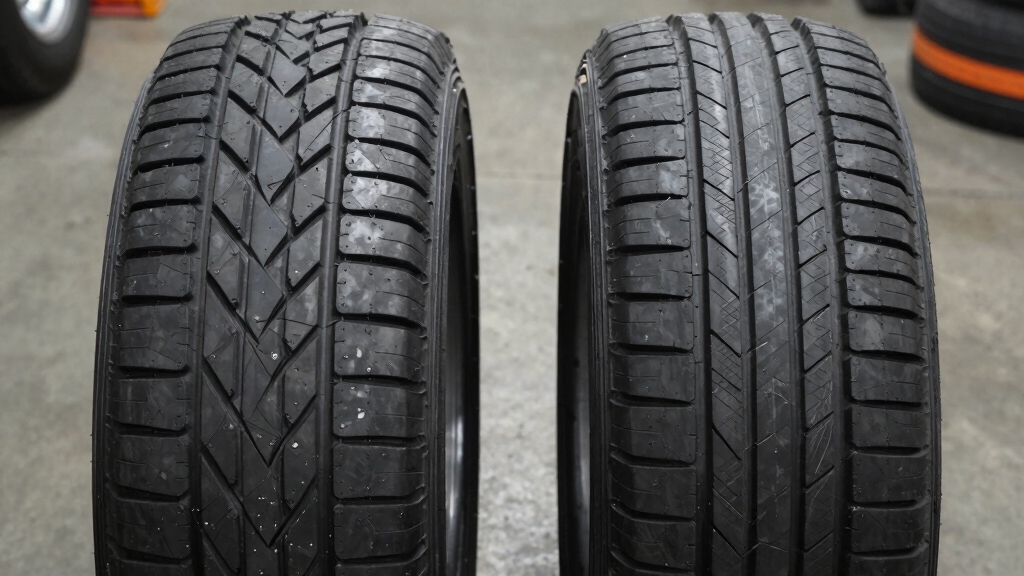
You’ll find bias ply trailer tires have cords arranged diagonally, creating thick, stiff sidewalls that resist punctures and handle rugged terrain. However, they generate more heat and wear unevenly.
Radial tires feature steel belts running perpendicular to travel, offering superior traction, stability, and longer tread life with better heat dissipation.
Bias ply suits low-speed, rough roads, while radials excel in highway performance and heavy loads. Understanding these differences helps you match tires to your towing needs effectively.

- 2 PACK TRAILER TIRES: Set of 2 bias ply trailer tires with Load Range C, each rated for 1360 lbs...
- OPTIMIZED TIRE SIZE: Features a 24.4 inch overall diameter and supports up to 50 PSI. These trailer...
- MAXIMUM TREAD DEPTH: This trailer tire is D.O.T. approved, and has a deep tread design, which...

- Set of 4 New Premium Radial Trailer Tires 225/75R15 10PR, Brand: FREE COUNTRY
- Full cap ply ( nylon overlay cross entire tread area), significant upgrade from most other products...
- Featured "Scuff Guard" ring on tire wall for better tire side protection
Key Takeaways
- Bias ply tires have cords arranged diagonally, providing rugged strength and resistance to sidewall flex on rough, slow-speed terrain.
- Radial tires feature steel belts and perpendicular cords, offering superior traction, stability, and fuel efficiency for highway use.
- Radials provide a smoother ride, better sway control, and longer tread life, often twice that of bias ply tires.
- Bias ply tires resist punctures with thick sidewalls but generate more heat and uneven wear under load.
- Radial tires with Load Range E support heavy-duty towing demands, balancing durability with comfort and safety.
Bias Ply vs Radial Trailer Tires Comparison for Safer Towing
| Feature | Bias Ply Trailer Tires | Radial Trailer Tires |
|---|---|---|
| Construction Style | Built with cords laid diagonally across the tire | Built with cords running perpendicular to travel and steel belts under the tread |
| Sidewall Strength | Has thicker, stiffer sidewalls for rugged use | Has more flexible sidewalls for smoother road contact |
| Best Driving Condition | Better for slow-speed, rough, or unpaved roads | Better for highway towing and long-distance travel |
| Ride Comfort | Can feel rougher and bouncier on paved roads | Provides a smoother and more stable ride |
| Heat Control | Builds heat faster, especially under speed or heavy load | Offers better heat dissipation, reducing blowout risk |
| Tread Life | Usually wears faster and may show uneven tread wear | Often delivers longer tread life and more even wear |
| Towing Stability | Good for rugged terrain, but may offer less highway stability | Better sway control, traction, and braking stability |
| Cost Factor | Usually has a lower upfront price | Costs more initially but can offer better long-term value |
| Best For | Utility trailers, farm trailers, short hauls, and rough terrain | RVs, boat trailers, highway towing, and frequent long trips |
How Bias Ply and Radial Tires Are Built?

When you examine how bias ply and radial trailer tires are built, you’ll notice their fundamental structural differences.
Bias ply tires have cords arranged diagonally at 30-45 degrees to the tread centerline. They cross from bead to bead in overlapping layers made of nylon or polyester, often reinforced with fiberglass belts.
This construction forms a thick, stiff sidewall that limits flexibility.
In contrast, radial tires orient cords perpendicularly at 90 degrees to the direction of travel. They place steel mesh belts circumferentially beneath the tread. This design separates the sidewall from the tread, allowing independent flexing.
The radial’s steel belts provide a thinner, more flexible layer that enhances tread contact and durability.
Additionally, radial construction offers better stability and performance for highway use, making it a preferred choice for many trailer applications.
Which Bias Ply or Radial Trailer Tire Performs Better?
Understanding which trailer tire performs better hinges on analyzing specific driving conditions and load demands.
If you frequently tow on highways at higher speeds, radial tires outperform bias ply by providing superior traction, stability, and fuel efficiency. This is due to their steel belt construction and flexible sidewalls.
Radial tires excel on highways, offering better traction, stability, and fuel efficiency thanks to their steel belts and flexible sidewalls.
Radials also offer smoother rides and better sway control, which is vital for long-distance travel.
Conversely, if your usage involves slow speeds on rough, unpaved roads or short hauls with heavy loads, bias ply tires perform better. They resist sidewall flex and reduce bounce.
Their stiffer construction handles rugged terrain more effectively, despite generating more heat and offering a rougher ride.
Ultimately, your choice should reflect whether you prioritize highway performance and comfort or rugged durability for off-road conditions.
Additionally, the load range ratings of tires are critical to ensure adequate capacity and safety depending on the trailer weight and towing demands.
How Durable Are Bias Ply vs Radial Tires?
Although both bias ply and radial trailer tires are designed for durability, their construction markedly influences how they withstand wear and stress over time.
Bias ply tires feature crisscrossed nylon or polyester cords at 30-45 degrees, producing thick, stiff sidewalls that resist punctures and provide rugged strength in harsh environments.
However, this design promotes heat buildup and uneven wear due to shape deformation under load.
In contrast, radial tires use steel belts oriented at 90 degrees, allowing the tread and sidewall to flex independently.
This design dissipates heat efficiently, reducing blowout risk and extending tread life—often twice that of bias tires—while maintaining even wear across a wider footprint.
Consequently, when durability under continuous highway use matters, radial tires generally outperform bias ply.
However, bias tires excel where sidewall toughness is critical.
Radial tires with Load Range E 10-ply construction provide the heavy-duty strength and stability essential for demanding trailer hauling applications.
When to Choose Bias Ply or Radial Tires for Your Trailer?
Selecting between bias ply and radial tires depends largely on how and where you plan to use your trailer.
If you tow frequently on highways or cover long distances at higher speeds, radial tires are your best choice. They offer superior stability, a smoother ride, and longer tread life.
Conversely, if your trailer operates mostly on rough, unpaved roads or at slower speeds, bias ply tires provide rugged durability. Their stiffer sidewalls minimize sway and bounce.
It’s also important to ensure the tires have the correct load capacity to safely support your trailer’s weight.
| Usage Scenario | Recommended Tire Type | Reason |
|---|---|---|
| Highway travel & long hauls | Radial | Better stability & tread life |
| Off-road & rough terrain | Bias Ply | Stronger sidewalls, rugged build |
| Occasional/low-speed use | Bias Ply | Cost-effective, durable |
Cost Considerations for Bias Ply and Radial Tires
When budgeting for trailer tires, you’ll notice that bias ply tires generally come with a lower upfront cost compared to radial tires. This makes them attractive for those prioritizing initial savings.
Bias ply tires use simpler construction with overlapping plies, which keeps manufacturing expenses down. However, radial tires have a higher initial price due to their steel belts and advanced design that improves durability and performance.
Over time, radials typically offer twice the tread life and better heat dissipation, reducing replacement frequency. This longevity often offsets their higher purchase price, especially if you tow frequently or cover long distances.
Conversely, if your use is infrequent or at low speeds, bias ply tires provide a cost-effective solution without sacrificing load capacity. Despite their faster wear and heat buildup, they remain a viable option for occasional use.
Radial tires also commonly feature a full nylon cap ply that enhances tread protection and sidewall durability for safer towing.
Frequently Asked Questions
How Do Temperature Extremes Affect Bias Ply and Radial Trailer Tires?
You’ll find temperature extremes impact bias ply tires more, as their construction traps heat, increasing wear and blowout risk under high temperatures.
Radial tires run cooler thanks to steel belts that dissipate heat, so they handle hot conditions better and last longer.
In cold extremes, radial tires maintain flexibility, while bias tires’ stiffer sidewalls become more rigid, potentially reducing traction and increasing brittleness.
You should choose based on your climate exposure.
Can Bias Ply or Radial Tires Be Used Interchangeably on the Same Trailer?
You might find mixing bias ply and radial tires on the same trailer less than ideal. While technically possible, it’s generally discouraged because their differing flex, sidewall stiffness, and heat dissipation characteristics can cause uneven handling, wear, and stability issues.
For consistent performance, you should use the same tire type on all wheels. Matching guarantees balanced traction, load distribution, and safer towing, especially under demanding conditions or at highway speeds.
What Maintenance Differences Exist Between Bias Ply and Radial Trailer Tires?
You’ll need to check bias ply tires more often for signs of heat damage and uneven wear since they run hotter and wear faster.
Radial tires require regular inspection for tread and sidewall flex but generally demand less frequent replacement due to longer life.
Both need proper inflation and alignment, but bias ply’s stiffer sidewalls tolerate rough terrain better.
Radial tires benefit from consistent pressure to maintain their smoother ride and durability.
How Do Bias Ply and Radial Tires Impact Trailer Braking Performance?
When you brake with bias ply tires, their stiffer sidewalls resist flex, causing less consistent road contact. This can reduce braking efficiency and increase stopping distance.
Radial tires, on the other hand, flex more under load, maintaining better tread contact and traction during braking. This flexibility improves stability and reduces sway, giving you more controlled and shorter stops.
This is especially important at higher speeds or on curves. So, radial tires typically enhance trailer braking performance.
Are There Specific Tire Pressure Recommendations for Bias Ply Versus Radial Tires?
You should follow the tire manufacturer’s specific pressure recommendations for both bias ply and radial tires, as they vary by design and load rating.
Generally, bias ply tires require slightly higher pressures to compensate for their stiffer sidewalls and reduced flex.
Radial tires operate efficiently at lower pressures due to their flexible construction and steel belts.
Always check the tire sidewall and trailer placard to guarantee peak inflation for safety and performance.
Match Your Trailer Tires to Road, Load, and Speed
Choosing between bias ply and radial trailer tires is like selecting the right tool for a job.
Imagine a craftsman relying on a reliable radial tire, which offers 20-30% better tread life and improved fuel efficiency.
Understanding their construction and performance helps you make an informed choice. This ensures durability, cost-effectiveness, and safety tailored to your trailer’s specific demands.

- 2 PACK TRAILER TIRES: Set of 2 bias ply trailer tires with Load Range C, each rated for 1760 lbs...
- OPTIMIZED TIRE SIZE: Features a 27.2 inch overall diameter and supports up to 50 PSI. These trailer...
- MAXIMUM TREAD DEPTH: This trailer tire is D.O.T. approved, and has a deep tread design, which...
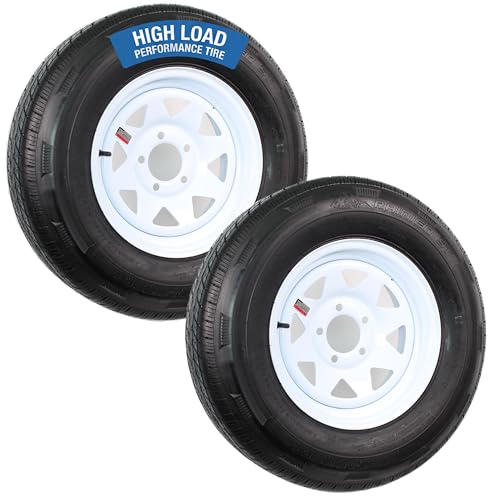
- COMPLETE TIRE SPECS: Radial trailer tire rated for 2040 lbs. max load and 65 PSI with a...
- RIM FITMENT DETAILS: 14X5.5 inch rim with 3.19" center bore and 5 lug on 4.5" center bolt pattern...
- COMPLETE DOT-APPROVED ASSEMBLY: Tire, wheel, and valve stem are DOT-approved, providing a...
Last update on 2026-06-09 / Affiliate links / Images from Amazon Product Advertising API