Optimize your RV basement by using clear, stackable bins that keep contents visible and manageable. Incorporate sliding trays to access deep storage without hassle. Choose waterproof, heavy-duty containers to protect gear from moisture and road vibration.
Secure everything with tie-downs and non-slip mats to prevent shifting during travel. Custom compartments help organize cables and tools neatly. Adding lockable, waterproof caddies keeps volatile items safe. For extra space, consider under-step or underchassis boxes.
Explore these ideas to transform your storage efficiently and stylishly.
Key Takeaways
- Use stackable, clear, heavy-duty plastic bins with sealed lids to protect from moisture and allow easy content visibility.
- Incorporate sliding trays or MORryde cargo trays for effortless access to deep basement compartments.
- Secure storage with sturdy tie-downs and place non-slip mats beneath bins to prevent shifting during travel.
- Organize tools and accessories using vertical dividers, pegboards, and PVC tubes for efficient space use.
- Choose smaller totes (around 12 gallons) to keep weight manageable and ensure safe lifting practices.
Identify the Best Storage Solutions for Your Fifth Wheel Basement
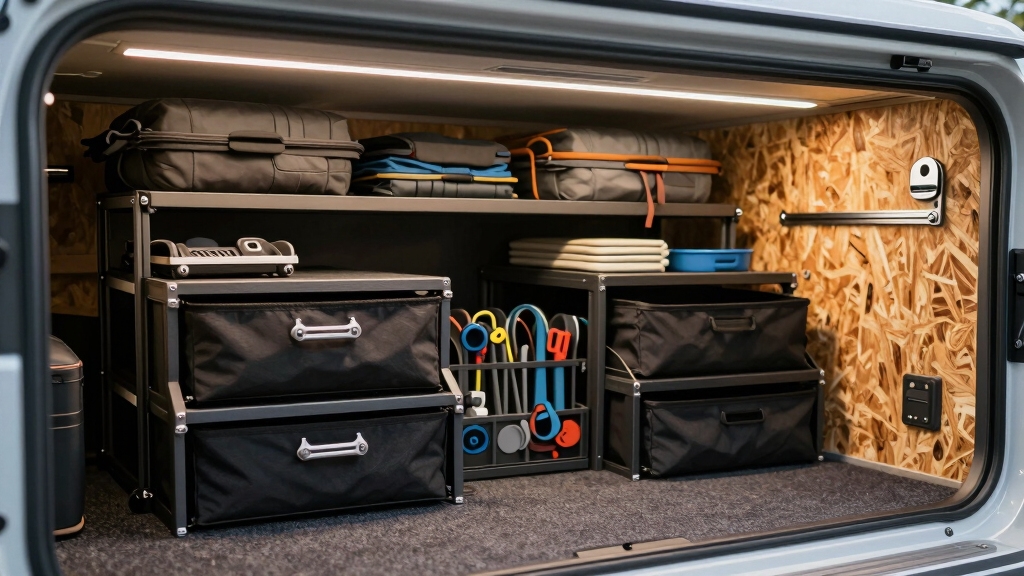
When outfitting your fifth wheel basement, choosing the right storage solutions hinges on balancing accessibility, protection, and space efficiency.
You want options that keep your gear secure yet easy to reach. Consider stacking sturdy, sealed containers that resist moisture and road vibration, keeping contents safe and organized.
Opt for sizes that won’t get too heavy when filled, so you can handle them effortlessly. Integrate sliding trays if you have deep compartments; they pull out smoothly, letting you grab items from the back without hassle.
Think about custom compartments using panels or dividers to separate cables, tools, and outdoor gear neatly. A clean, purposeful layout not only protects your belongings but also transforms your basement into a functional space you’ll enjoy accessing every trip.
Additionally, ensuring your storage solutions allow for easy access when using a jack with appropriate lifting height can help safely manage tire changes and other maintenance tasks.
Choose Clear Stackable Bins for Easy Basement Storage Visibility
Choose clear stackable bins to easily spot your gear without having to rummage through cluttered spaces. It’s such a hassle when you can’t find what you need!
By opting for smaller, 12-gallon totes, you can keep the weight manageable. Plus, these durable, heavy-duty plastic bins resist rust and water, so you know your items are safe.
And let’s not forget about the sealed lids! They protect your belongings from spills and any bumps along the way, ensuring everything stays secure and visible whether you’re on the go or just organizing your basement.
It’s all about making storage simple and effective! For power needs, consider batteries designed for enclosed trailers that offer maintenance-free options to keep your gear running smoothly.
Benefits of Clear Containers
Clear stackable bins frequently transform RV basement storage by offering immediate visibility of your belongings without the need to open each container. This clarity helps you stay organized, saving precious time during trips. You’ll appreciate how these bins enhance both function and style in your storage space.
Quickly identify items at a glance, reducing clutter and frustration. Stack securely to maximize vertical space without sacrificing accessibility. Use sealed lids to protect contents from dust, moisture, and road bumps. Choose durable, heavy-duty plastic that resists rust and corrosion.
Maintain a clean, streamlined aesthetic with uniform containers. For optimal cleanliness and odor control in your RV storage areas, consider incorporating airtight lids on your containers to keep contents fresh and secure.
Weight and Size Considerations
Visibility alone won’t solve all your storage challenges. Considering weight and size plays a major role in maintaining ease and safety.
When choosing clear stackable bins for your RV basement, opt for smaller containers, like 12-gallon totes, to keep them manageable. Avoid overloading bins; many hold up to 75 pounds, but heavier loads become difficult to lift and move.
Stack bins carefully to maximize vertical space without creating unstable piles. Clear bins not only reveal contents at a glance but also help you balance weight distribution by grouping similarly sized or weighted items together.
This practical approach guarantees you access what you need effortlessly while maintaining an organized, aesthetically pleasing basement that stands up to travel demands without strain or risk.
Additionally, protecting your stored items with a quality RV cover can prevent damage from moisture and UV exposure, preserving their condition during extended storage periods.
Durability and Sealing Features
Although organization is key, guaranteeing your storage containers are durable and well-sealed is just as important for protecting your belongings during travel. Choosing clear stackable bins gives you quick visibility while offering robust protection.
Look for containers made of heavy-duty plastic that resist rust, water, and corrosion. Sealed lids keep spills contained and guard against bumps on the road. Smaller 12-gallon totes balance capacity and manageability, preventing excessive weight.
Clear bins let you spot items without opening. Stackable design maximizes basement space efficiently. Heavy-duty plastic ensures long-lasting durability. Tight seals prevent moisture and dust intrusion. Lightweight sizes keep lifting practical and safe.
Investing in these features means your gear stays secure, dry, and easy to find on every trip. For added protection, consider applying a high-quality sealant to trailer decks to extend their lifespan and guard against weather damage.
Use Sliding Trays to Access Deep Fifth Wheel Basement Storage
When you slide out a MORryde cargo tray in your fifth wheel basement, you gain effortless access to even the deepest storage spaces. These trays glide smoothly, letting you reach tools, camping gear, or bulky items without crawling into cramped bays.
Effortlessly access tools and gear without squeezing into tight, cramped spaces. Their robust design supports heavy loads, ensuring durability while maintaining sleek functionality.
Installing sliding trays in forward or rear pass-through compartments maximizes storage efficiency and keeps your space organized. Pair them with stackable bins for clear visibility and neat arrangement, making every inch count.
The trays’ easy operation not only saves time but also protects your belongings from damage caused by shifting during travel. With sliding trays, your basement transforms into an accessible, practical, and visually tidy storage solution.
For enhanced convenience and safety, consider integrating an electric RV jack to ease trailer leveling and setup when accessing basement storage compartments.
Secure Basement Storage Items With Tie-Downs and Non-Slip Mats
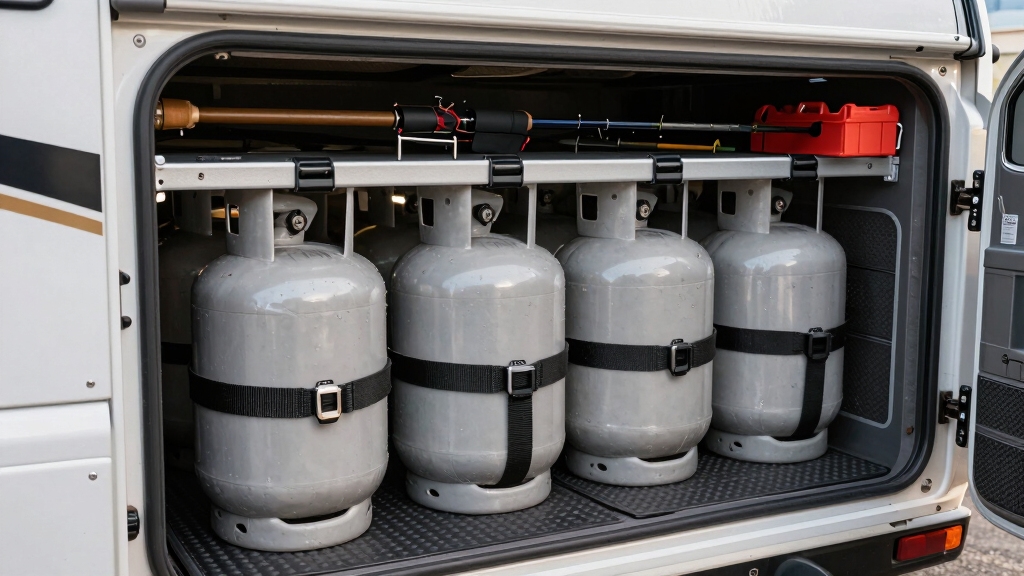
When you’re getting ready to store items in your basement, it’s super important to secure everything properly. Using sturdy tie-downs is a great way to keep your items firmly in place during travel. You definitely don’t want your stuff shifting around, right?
Plus, adding non-slip mats underneath your bins is a smart move. They create a stable surface, which helps reduce any shifting and protects your gear from those annoying bumps.
Honestly, these simple steps can make a huge difference! By maintaining order with tie-downs and non-slip mats, you not only keep everything in check but also prevent damage. It’s all about making your storage space practical and looking polished, too!
For enhanced protection during transport, consider incorporating adjustable widths in your securing systems to fit various storage configurations.
Effective Tie-Down Techniques
Securing your RV basement storage with effective tie-down techniques keeps your gear safe and prevents damage during travel. You want each item firmly anchored to avoid shifting, which can cause wear or breakage.
Start by choosing durable straps or bungee cords that match your storage weight. Here’s how to tie down efficiently:
Anchor tie-down points to built-in hooks or secure frames inside the basement. Use adjustable straps for a snug fit without crushing delicate items.
Cross straps over bulky bins to distribute pressure evenly. Pair tie-downs with padding or edge protectors to prevent strap wear. Regularly check and tighten straps before every trip for lasting security.
Master these steps, and your basement storage will stay organized, damage-free, and ready for any journey. For added safety during tire changes, consider using a jack with proper load capacity to ensure stability when accessing basement areas.
Benefits of Non-Slip Mats
Although tie-downs keep your RV basement items anchored, non-slip mats add an essential layer of stability by preventing bins and gear from sliding on smooth surfaces.
These mats grip both the floor and the base of your containers, minimizing movement during travel. When you place stackable bins or heavy-duty plastic containers on a textured non-slip mat, you create a secure foundation that cushions bumps and vibrations.
This not only protects your stored items but also maintains a clean, organized look by preventing shifting clutter. Plus, non-slip mats reduce noise caused by rattling objects, making your trip more peaceful.
Their durable material is easy to clean and resistant to moisture, helping you maintain a fresh storage area while enhancing safety and convenience. Choosing mats made from closed-cell EVA foam ensures moisture and temperature resistance, crucial for the variable conditions in RV basements.
Preventing Item Shifting
Keep your RV basement storage stable and organized by utilizing tie-downs alongside non-slip mats. These two essentials work together to keep your items secure, avoiding damage from road vibrations and sudden stops.
Non-slip mats provide a grippy base that reduces sliding, while tie-downs firmly anchor heavier or oddly shaped gear in place. To effectively prevent shifting, focus on these key strategies:
Place non-slip mats beneath all bins and equipment for added traction. Use adjustable tie-down straps or bungee cords to secure bulky items. Pack items tightly, minimizing empty space that allows movement.
Prioritize securing delicate or sensitive gear with extra fasteners. Regularly check and tighten straps to maintain a firm hold during travel.
Choosing durable materials with rust-resistant finishes can also help protect stored items from moisture damage inside the basement storage area. This practical approach guarantees everything stays exactly where you need it.
Build Custom Compartments for Organized Gear Separation
A well-designed custom compartment transforms your RV basement into a highly efficient storage space tailored to your specific gear. Start by installing plywood panels to create distinct sections, perfect for separating cables, tools, and accessories.
Use vertical dividers to neatly organize hoses and power cords, preventing tangles and damage. Seal all wood surfaces with moisture-resistant sealant to protect against leaks or ground dampness.
Consider adding PVC tubes for long items like fishing rods or oars, keeping them upright and secure. Maximize vertical space by mounting pegboards on the compartment walls, allowing you to hang smaller tools and gear within easy reach.
This approach not only enhances organization but also elevates your RV’s storage aesthetics, making every item accessible and neatly stowed.
Choose Waterproof Storage to Keep Gear Dry and Protected
Once you’ve customized compartments for neat gear separation, it’s equally important to choose waterproof storage solutions that protect your belongings from moisture and road conditions.
Opting for sealed, durable containers makes certain your gear stays dry and intact despite bumps or spills. Look for materials that clean easily and resist corrosion. Consider storage that locks securely for added safety.
Use sealed bins made from heavy-duty plastic for water and rust resistance. Select stackable containers to maximize space without sacrificing accessibility. Incorporate raised cargo trays to avoid ground moisture damage.
Choose lockable boxes for storing volatile or heavy tools safely. Pick industrial-grade bins that clean easily for indoor and outdoor use. These options keep your gear dry, organized, and ready for every adventure.
Add Under-Step and Underchassis Storage Boxes for Extra Space
Though your RV basement offers great storage potential, you can greatly increase capacity by adding under-step and underchassis storage boxes.
These supplemental compartments utilize often-overlooked spaces beneath your steps and chassis, perfect for stowing tools, camping gear, or seasonal items.
Under-step boxes blend seamlessly with your RV’s design, maintaining an aesthetic flow while providing quick access without entering the basement.
Underchassis containers, mounted discreetly below, free up interior space and are built to withstand road debris and weather exposure. Choose waterproof, lockable boxes to protect your belongings and bolster security.
By integrating these storage solutions, you maximize every inch available, keeping your basement organized and clutter-free. This practical upgrade guarantees your RV stays tidy and ready for adventure without sacrificing style or convenience.
Safely Store Volatile Items Using Lockable Cargo Caddies
Secure your volatile items with lockable cargo caddies designed to withstand movement and protect against accidental spills or damage.
Keep your volatile items safe and secure with lockable cargo caddies that prevent spills and damage during travel.
These specialized containers offer a secure, organized way to store propane tanks, fuel cans, and other sensitive materials safely in your RV basement.
Choose caddies made from durable, impact-resistant plastic and equipped with airtight seals to prevent leaks. Their lockable lids keep contents secure and unauthorized access at bay.
Lockable mechanisms enhance safety during travel and storage. Heavy-duty construction resists road vibrations and impacts. Airtight seals prevent fumes from escaping.
Compact designs fit snugly in basement compartments. Easy-to-clean surfaces maintain hygiene and durability. Using lockable cargo caddies guarantees peace of mind while maximizing your basement’s storage potential.
Frequently Asked Questions
How Do I Maintain and Clean My RV Basement Storage Regularly?
You should start by removing all items, then vacuum dust and debris thoroughly.
Wipe down surfaces with a mild cleaner to keep moisture and grime at bay.
Check seals on bins and trays for cracks or leaks, replacing if needed.
Apply waterproof sealant if you spot damp areas.
Regularly secure loose items with tie-downs, and air out compartments to prevent odors.
Doing this monthly guarantees your storage stays organized, clean, and ready for your next adventure.
What Are the Best Lighting Options for Basement Storage Visibility?
Think of your basement storage as a hidden treasure cave.
Bright LED strip lights or puck lights with motion sensors work best to illuminate every corner without fumbling for switches.
They’re energy-efficient, long-lasting, and easy to install under shelves or along compartments.
Combine them with rechargeable battery-operated lights for areas without wiring.
This setup guarantees you see everything clearly, making organization effortless and turning your storage space into a well-lit, inviting nook.
Can I Install Electrical Outlets in My RV Basement Storage?
Yes, you can install electrical outlets in your RV basement storage, but you should prioritize safety and proper wiring.
Use weatherproof, sealed outlets designed for RV use to withstand moisture and vibration.
Position outlets thoughtfully near your storage bins or trays for convenient charging or powering tools.
Make certain a licensed electrician handles the installation to comply with RV electrical codes and avoid overloads.
This will keep your space both functional and safe with a sleek, practical finish.
How Do I Prevent Odors and Mold in the Basement Storage Area?
To prevent odors and mold, you’ll want to keep your basement storage dry and well-ventilated.
Use moisture-absorbing packets or silica gel packs inside sealed, waterproof bins.
Install ventilation vents or small fans if possible to circulate air.
Regularly check for leaks or condensation, and apply sealant on wooden panels to block moisture.
Also, avoid storing damp items and consider using non-porous containers to maintain a fresh, mold-free space.
What Tools Are Essential for Assembling Custom Storage Compartments?
You’ll want a reliable cordless drill for precise screwing and drilling, plus a quality jigsaw or circular saw to cut plywood cleanly for custom compartments.
A tape measure and carpenter’s square guarantee accurate dimensions and straight edges.
Don’t forget clamps to hold pieces steady while you work and a level for perfect alignment.
Sandpaper or an electric sander smooths edges, giving your compartments a polished, professional look.
From Clutter to Command Center: Unlock the Full Power of Your RV Basement
Think of your RV basement as a treasure chest, organized, accessible, and secure. By choosing clear bins, sliding trays, and custom compartments, you’ll open effortless storage that keeps your gear dry and in place.
Adding waterproof containers and lockable caddies is like casting a protective spell over your valuables. With these smart solutions, your basement transforms from cluttered chaos into a streamlined sanctuary, ready to fuel every adventure with ease and style.