
You can protect your RV roof using durable materials like EPDM or TPO rubber for flexibility and UV resistance. PVC offers long-lasting waterproofing with heat-welded seams, while fiberglass sheets provide high strength and minimal leaks.
Temporary tarps provide quick, UV-resistant coverage but require secure fastening. Regular inspections, cleaning, and resealing are essential to maintain integrity. Choosing the right material and maintenance approach will extend your roof’s lifespan and performance.
Explore detailed options and care tips next.
Key Takeaways
- Fiberglass roof covers offer long-lasting durability and UV resistance, with seamless installation reducing leak risks and minimizing maintenance.
- PVC roofs provide energy-efficient, reflective surfaces with heat-welded seams for superior waterproofing and minimal upkeep.
- Rubber (EPDM) is an affordable, flexible option resistant to weather and UV but requires regular inspections to prevent cracks.
- Applying urethane or acrylic coatings can enhance roof protection, reflectivity, and flexibility, extending roof life with periodic recoating.
- Temporary tarp covers offer quick, UV-resistant protection secured with tie-downs, ideal for short-term shielding during repairs or bad weather.
Benefits of EPDM and TPO Rubber Roof Covers
When you choose EPDM or TPO rubber roof covers for your RV, you get durable, lightweight materials that simplify installation and reduce maintenance costs.
EPDM costs about $0.80 per square foot and installs easily with adhesive and rolling, minimizing labor expenses. TPO’s heat-welded seams speed up installation compared to EPDM’s cemented seams. Both materials contribute to long-term durability in various environmental conditions.
EPDM installs quickly with adhesive, while TPO’s heat-welded seams further accelerate installation and reduce labor costs.
Both are light enough to eliminate roof deck reinforcement, aiding weight management and fuel efficiency. Their flexibility allows seamless fitting on curved or irregular roofs, enhancing protection and durability.
EPDM’s longevity exceeds 25 years with proper care, resisting cracks and scratches, while TPO offers solid durability with slightly less lifespan.
EPDM excels in UV and ozone resistance, maintaining roof integrity, though it darkens and absorbs more heat. TPO reflects sunlight better, reducing interior temperatures.
Advantages of Metal Roof Covers for RVs
Although metal roof covers may initially cost more than some alternatives, their durability and resistance to harsh weather conditions make them a practical choice for your RV.
Made from galvanized steel or aluminum, metal roofs resist rust, dents, and UV damage while providing fire resistance. They require minimal maintenance, reduce interior temperature extremes, and block pests and moisture effectively.
Their reinforced structures ensure they maintain structural integrity even under heavy snow loads and freezing temperatures. Many RV owners also find that investing in a durable material like metal reduces long-term maintenance concerns.
| Feature | Benefit | Impact |
|---|---|---|
| Corrosion resistance | Long-lasting structural integrity | Fewer repairs and replacements |
| Thermal regulation | Maintains comfortable interior temperatures | Prevents pipe freezing and heat buildup |
| Pest/moisture barrier | Protects internal framework | Reduces mold, mildew, and damage |
Choosing metal means investing in a robust, low-maintenance roof that enhances your RV’s safety and longevity.
Features of Fiberglass Roof Covers
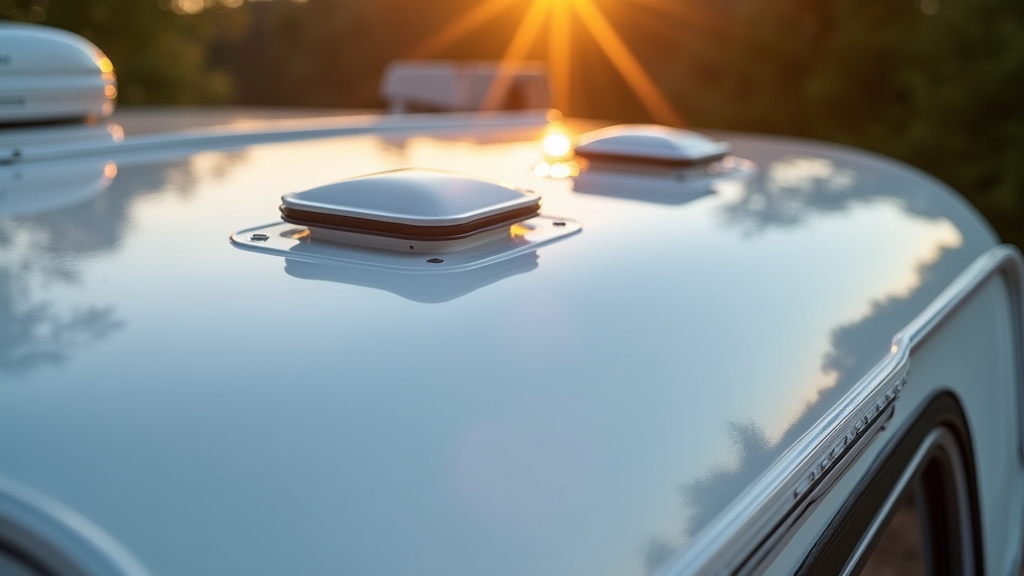
You’re going to love fiberglass roof covers! They really stand out when it comes to durability, especially since they resist common RV roof issues like seam separation and blistering. That’s a huge plus, right? These covers also maintain their integrity across a wide temperature range, helping prevent cracks in extreme weather.
Plus, their reflective surface does wonders for insulation. It helps keep the interior cool by reducing heat buildup, which is always a bonus during those hot summer trips. They also provide high reflexivity which helps reduce UV damage to the roof surface.
And let’s not forget about the flexible coating—it really helps minimize cracking and leaks over time, so you can enjoy peace of mind.
When it comes to maintenance, you’ll find it’s pretty straightforward. With easy DIY application and moisture-resistant properties, these covers can help extend your roof’s lifespan without the hassle of frequent repairs.
Durability and Longevity
Because fiberglass roof covers combine exceptional strength with resistance to environmental factors, they offer durability that can exceed 20 years. With proper maintenance, they often reach 30 to 50 years. Fiberglass roofs are typically installed in large, continuous sheets, creating a seamless coverage that enhances their leak resistance.
Their high tensile strength surpasses some steel grades, making them resistant to dents, cracks, and breaks. The rigidity supports maintenance without damage, while fewer seams reduce leak risks. This longevity is comparable to the extended lifespan that quality trailer hitch greases provide by protecting metal components from corrosion.
You’ll benefit from less frequent repairs and a longer-lasting roof that maintains your RV’s integrity.
| Feature | Benefit | Your Advantage |
|---|---|---|
| High Strength | Resists dents & cracks | Durable, reliable cover |
| Few Seams | Minimizes leaks | Peace of mind |
| Long Lifespan | 30-50 years potential | Cost-effective over time |
Insulation and Protection
Its rigid structure and 100% acrylic resin coatings improve thermal resistance, reducing heat transfer and maintaining comfortable interior temperatures. Additionally, using durable materials like fiberglass helps protect against minor injuries that could occur during maintenance, emphasizing the importance of having a well-stocked RV first aid kit nearby.
The reflective surface considerably lowers solar heat gain, boosting energy efficiency. Sealed tightly with lap sealants, it resists moisture intrusion, preventing mold and mildew.
Unlike foam insulation, it doesn’t off-gas or compress, ensuring lasting performance. Key features include:
- Rigid fiberglass barrier limits heat flow, aiding temperature regulation
- Reflective acrylic coatings reduce interior heat buildup
- Dense, sealed surface resists water penetration and biological growth
- Lightweight yet stronger than some steel grades for structural support
- Stable insulation without sagging or harmful emissions
- The coating is applied un-thinned at 350 sq ft per gallon to ensure optimal coverage and protection.
This combination provides robust insulation and a durable protective shield for your RV roof.
Maintenance and Cost
Maintaining a fiberglass roof cover involves regular inspections for cracks and delamination, alongside cleaning with mild soap and water to preserve its finish. Fiberglass is often chosen for its durability and resistance to environmental damage, complementing its aesthetic appeal. Proper maintenance also includes monitoring load capacity to avoid structural stress that could cause damage.
You should reseal fasteners and roof protrusions every 1–2 years to prevent leaks, avoiding harsh chemicals or abrasive tools that could damage the surface.
While initial installation costs are higher than rubber or TPO roofs due to materials and labor, fiberglass offers lower long-term maintenance expenses thanks to its durability and resistance to UV rays and weathering.
Repairs require specialized materials and expertise; minor cracks can be filled with resin, but significant damage often needs professional intervention, which is costlier.
Despite higher upfront and replacement costs, fiberglass roofs typically last over 20 years, maintaining structural integrity and appearance with proper care.
Why Choose PVC Roof Covers for Your RV?
When selecting a roof cover for your RV, you’ll find that PVC stands out due to its exceptional durability and energy efficiency. Its high tensile strength resists tears and punctures, while heat-welded seams ensure lasting waterproof integrity.
PVC’s reflective white surface reduces heat absorption, keeping your RV cooler and lowering energy costs. Maintenance is minimal since PVC resists weathering, chemicals, and UV damage without frequent conditioning.
PVC’s reflective surface lowers heat absorption and energy costs while resisting weathering and UV damage with minimal maintenance. Although it has a higher upfront cost, its longevity and reduced repair needs offer long-term savings.
- Lasts 20–30 years with proper care
- Superior tear and puncture resistance
- Highly reflective for energy efficiency
- Seamless heat-welded installation
- Resistant to chemicals and UV exposure
For ongoing protection, applying a UV protection wax designed for RV surfaces can further extend the life of your PVC roof cover.
Using Tarps and Poly Covers as Temporary Solutions
A well-chosen tarp or poly cover can provide quick, effective temporary protection for your RV roof after damage or during maintenance.
Fold tarp sides to RV width, roll with ropes inside for smooth deployment, and use a ladder with help to navigate obstacles. When rolling the tarp, it is helpful to use a wide pole or 2×2 along the edge to facilitate a compact and neat roll.
Secure edges with tie-downs, weights, and fasten overlaps tightly to prevent wind uplift and water intrusion. Choose heavy-duty, UV-resistant materials sized for full coverage plus overhang. Regularly inspect, clear debris, and re-tighten fasteners to maintain coverage.
| Step | Technique | Purpose |
|---|---|---|
| Folding | Align tarp with RV width | Easier handling |
| Rolling | Rope inside tarp | Smooth deployment |
| Securing | Ropes, straps, weights | Wind resistance |
| Material Selection | Heavy-duty, UV-resistant tarps | Durability, weatherproof |
| Maintenance | Inspections, debris clearing | Prolong protection |
Essential Maintenance Tips for RV Roofs
Since your RV roof faces constant exposure to weather and environmental hazards, conducting regular inspections is essential to catch early signs of damage like cracks, loose sealant, or material separation.
Check seams, vents, and edges every 3–4 months, and after severe weather events. Using techniques such as simulating rain or employing an infrared camera can help in locating hidden leaks effectively. Additionally, understanding the reserve capacity of your RV’s power systems can help you manage electrical needs during roof maintenance.
Clean the roof quarterly to prevent moisture buildup and material degradation. Maintain sealant integrity by removing old, cracked layers before reapplying every two years. Monitor structural components such as fasteners and trim for tightness and corrosion.
- Inspect roof seams, vents, and AC units quarterly.
- Perform monthly checks if frequently exposed to harsh conditions.
- Remove debris and wash roof surfaces every three months.
- Reseal penetrations thoroughly after removing old sealant.
- Tighten fasteners and replace corroded hardware promptly.
Best Roof Sealants and Protective Products for RVs
When it comes to selecting sealants and coatings for your RV roof, it’s super important to consider both the type of roof you have and the environmental conditions it faces. This way, you can really boost durability and waterproofing. Choosing products that complement your roof’s material helps maintain its tread and traction over time.
For example, if you’ve got a rubber roof, Dicor sealants are a solid choice. On the flip side, if your RV has a fiberglass roof, Geocel is the way to go, thanks to its quick-setting and paintable formula.
But here’s the thing: how you apply these products matters just as much as which ones you choose. Make sure you’re prepping the surface properly and using the right tools. Regular maintenance and inspections can extend your roof’s life and help catch issues early.
When everything’s done right, you’ll end up with a tight seal that stands up to cracking and weather damage over time. So, take your time with the process for the best results!
Top RV Sealants
When selecting top RV roof sealants, understanding the specific types and their performance characteristics is vital for effective repairs and long-term protection.
You’ll find lap sealants ideal for seams, while cap sealants suit vertical or overhead surfaces. Many products are designed to be DIY-friendly, allowing RV owners to apply sealants with little to no experience. Regular maintenance and proper evaluation ensure the right amount is used for maximum effectiveness when applying these products.
Silicone sealants offer flexibility and UV resistance, but sometimes average bonding.
Butyl sealants excel in adhesion and durability on metal roofs.
Sealant tapes like TitanPatch provide quick, waterproof fixes with strong adhesion.
Key points to consider:
- Flexibility: High elongation prevents cracking under movement.
- Adhesion: Varies; some need primers, others bond strongly without.
- Water displacement: Essential for watertight seals on seams.
- UV resistance: Prevents drying and brittleness.
- Surface prep: Clean, dry surfaces guarantee maximum adhesion and longevity. Proper surface preparation also contributes to environmental impact by reducing the need for frequent reapplications.
Protective Roof Coatings
Although selecting the right protective roof coating for your RV can be complex, understanding the distinct properties of silicone, urethane, and acrylic formulations will help you make an informed choice.
Silicone coatings offer permanent ponding water resistance, excellent elasticity, and UV protection. This makes them ideal for extreme weather and long-term durability. They tend to require only a single coat, which can often reduce overall project costs despite their higher per gallon price.
Urethane coatings provide superior impact resistance and moderate ponding water protection, suited for high-traffic roof areas. They require multiple coats and emit strong odors during application.
Acrylic coatings serve as a budget-friendly option with good reflectivity but degrade faster under ponding water. They also require primers and fabric reinforcement.
Each coating forms a waterproof, reflective barrier that lowers interior temperatures, resists mildew, and flexes with thermal expansion. This reduces cracking and maintenance needs. It is important to note that acrylic coatings are prone to degradation when exposed to ponding water or harsh weather conditions.
Consider advanced options like polyurea or liquid rubber for enhanced durability and easy application.
Frequently Asked Questions
How Do Roof Materials Affect RV Resale Value?
Roof materials directly impact your RV’s resale value by influencing durability and buyer perception.
Fiberglass roofs, known for longevity, often increase value, especially on luxury models. Well-maintained single-ply membranes like TPO or PVC generally hold value.
Older rubber roofs may lower it due to leak risks.
Upgraded or coated roofs with warranties also boost appeal. However, poor maintenance or visible damage will reduce your RV’s market price and buyer confidence.
Can I Install a Solar Panel on Any RV Roof Type?
You can install solar panels on almost any RV roof type. It’s not rocket science!
Flat roofs need brackets or tilt frames for the best angle.
Metal roofs, especially standing seam ones, let you clamp panels without drilling.
Fragile roofs like wood shake or slate pose challenges. They may require special mounts or no installation at all.
Portable panels are your go-to if you want to avoid roof damage or drilling altogether.
What Are the Environmental Impacts of Different RV Roof Materials?
You’ll find asphalt roofs rely on fossil fuels, cause more waste, and trap heat, increasing cooling needs.
Rubber roofs last longer, often recycle, and reduce heat absorption, cutting emissions.
Single-ply membranes vary: TPO and PVC reflect sunlight and recycle well, while EPDM’s durability and recyclability depend on additives.
Metal roofs excel in durability, reflectivity, and recyclability, lowering energy use.
Natural materials are sustainable but heavier, increasing fuel consumption during travel.
How Does Roof Color Influence RV Interior Temperature?
You’ll notice that choosing a “warm embrace” roof color like dark gray subtly invites more solar energy inside, raising your RV’s interior temperature.
Conversely, opting for a “cool handshake” with light colors like white reflects sunlight efficiently, keeping your space invigoratingly cooler.
This color decision directly affects heat absorption through the roof, influencing your cooling needs and energy use.
Selecting the right hue helps you maintain comfort and optimize energy efficiency.
Are There Warranties Specific to Each RV Roof Material?
Yes, each RV roof material has specific warranties.
EPDM and TPO membranes usually offer 10-12 year prorated warranties covering material defects but exclude damage from impacts or improper installation.
Fiberglass roofs typically have a 10-year prorated warranty with limits on cracking coverage.
Advanced spray-on systems provide lifetime, non-prorated warranties, including labor, with no maintenance required.
Sealants and labor often carry separate, shorter warranties around 90 days.
Find the Perfect RV Roof Cover: Durability, Flexibility, and Protection Compared
Choosing the right RV roof cover means weighing durability, flexibility, and protection. You can opt for EPDM or TPO for long-lasting weather resistance, metal for strength and impact resistance, fiberglass for lightweight durability, or PVC for chemical and UV protection.
Temporary tarp solutions offer quick fixes, but consistent maintenance and using top-quality sealants maintain your roof intact. By prioritizing these factors, you’ll ensure your RV roof performs reliably, resists damage, and extends its lifespan effectively.