
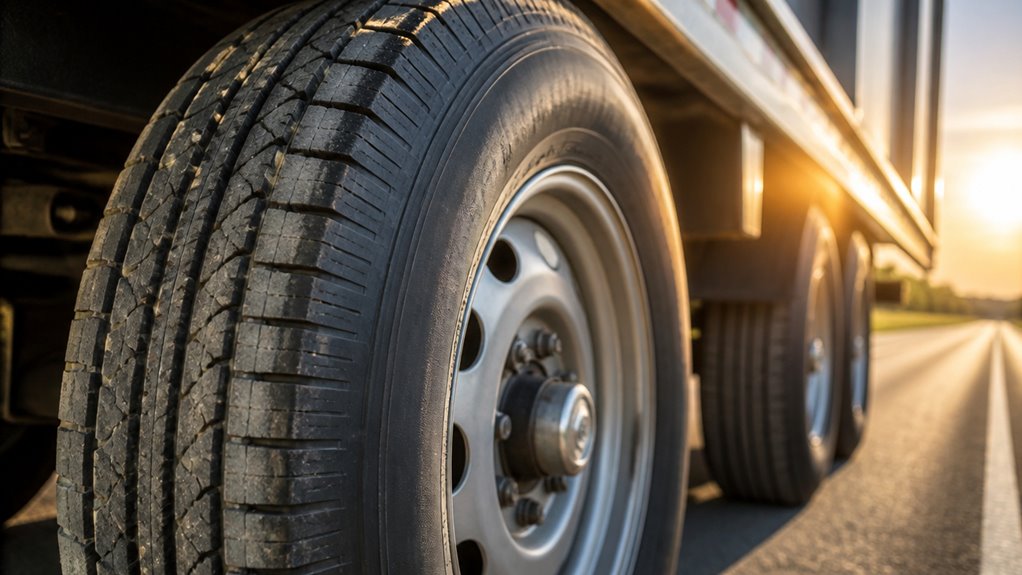
You should replace Goodyear Endurance trailer tires every 3 to 5 years, regardless of mileage, to guarantee safety and account for rubber aging that degrades performance over time.
Though some owners report lasting 5 to 7 years under ideal conditions, chemical breakdown and cracking compromise tire integrity.
Mileage alone isn’t a reliable indicator; calendar age and tire condition matter most.
Understanding factors like load, storage, and wear signs can help you maximize their lifespan and maintain safe operation.
Key Takeaways
- Goodyear Endurance trailer tires typically last 3 to 5 years under normal RV use conditions.
- Some owners report Goodyear Endurance tires lasting 5 to 7 years with minimal wear and ideal storage.
- Calendar-based replacement every 3 to 5 years is recommended regardless of mileage to prevent aging-related failure.
- Rubber aging causes hardening and cracking, so replace tires by age even if tread remains serviceable.
- Proper storage, inflation, and load management can extend Goodyear Endurance tire lifespan beyond typical limits.
How Long Do Goodyear Endurance Trailer Tires Last in RV Use?

Typically, Goodyear Endurance trailer tires last between 3 to 5 years in RV use.
This lifespan depends more on age and condition than mileage alone.
Reported mileage varies widely—from 15,000 to over 30,000 miles—due to differing usage patterns, storage conditions, and maintenance.
Because trailers often remain parked for long periods, the rubber ages even without significant mileage accumulation.
You should focus on regular inspections of tread depth, sidewall integrity, and visible damage to determine safe serviceability.
Proper inflation and load management also influence tire longevity.
While some tires last 5 to 7 years with minimal wear, the practical service life ends when age-related deterioration or tread wear reach critical limits.
Ultimately, you’ll base replacement timing on combined age and condition parameters, not mileage alone.
Additionally, selecting tires with an appropriate load capacity that matches your trailer’s weight is crucial to avoid premature wear and ensure safety.
Why Age Matters More Than Mileage for Trailer Tires?
While mileage offers some insight into tire wear, it’s the age of Goodyear Endurance trailer tires that plays a more decisive role in their safe service life. Trailer tires often sit unused, causing rubber degradation independent of miles driven.
You should prioritize replacement based on calendar age—typically every 3 to 5 years—rather than mileage alone. Aging rubber becomes prone to cracking and failure.
Additionally, choosing the right tires with the proper load capacity ensures safety and maximizes tire longevity.
| Factor | Typical Range |
|---|---|
| Recommended Age | 3 to 5 years |
| Maximum Age | 6 years (absolute) |
| Mileage Range | 15,000 to 35,000+ mi |
| Age Impact | Rubber hardening/cracking |
| Mileage Impact | Tread wear |
Relying solely on mileage risks overlooking age-related deterioration and compromising safety.
How Storage Conditions Affect Your Endurance Tire Life?
Protecting your Goodyear Endurance trailer tires from harsh storage environments greatly prolongs their lifespan by minimizing rubber degradation.
Exposure to UV rays, ozone, and extreme temperatures accelerates rubber oxidation, leading to cracks and loss of elasticity.
To maximize tire life, store your trailer in a cool, shaded area or use tire covers to block sunlight and ozone exposure.
Avoid prolonged contact with chemicals like gasoline or oil, which deteriorate rubber compounds.
Maintain proper inflation pressure even during storage to prevent sidewall deformation and stress.
Additionally, keeping tires off the ground using blocks or stands reduces moisture absorption and flat spots.
Consistent, controlled storage conditions markedly delay age-related deterioration, helping your Endurance tires retain structural integrity and safety over their recommended service life.
Using products with UV protection can further help shield tires from harmful environmental effects during storage.
How Load and Inflation Impact Endurance Tire Durability?
Because load and inflation directly affect tire stress and heat buildup, they play a crucial role in determining the durability of your Goodyear Endurance trailer tires.
Overloading increases internal friction and heat, accelerating rubber degradation. Underinflation causes excessive flexing, leading to sidewall damage.
Overinflation reduces the contact patch, impacting tread wear unevenly. Maintaining the manufacturer’s recommended inflation pressure matched to your trailer’s load maximizes tire lifespan and safety.
| Load Condition | Inflation Status | Durability Impact |
|---|---|---|
| Overloaded | Underinflated | Rapid heat buildup, sidewall stress |
| Properly Loaded | Correctly Inflated | Prime wear, extended service life |
| Light Load | Overinflated | Reduced tread contact, uneven wear |
You must regularly check load and tire pressure to maximize endurance and prevent premature failure.
Additionally, features like the Goodyear Endurance’s Scuff Guard protection help reduce sidewall damage caused by improper inflation and loading, further enhancing tire longevity.
What Mileage Range Do Owners Report for Endurance Trailer Tires?
Owners often report a wide mileage range for their Goodyear Endurance trailer tires, reflecting diverse usage patterns and conditions.
Many users replace their tires between 15,000 and 20,000 miles, while others report continued service well beyond 30,000 miles with tread remaining.
For example, some owners note about 18,000 miles with substantial tread life left, and others mention 20,000 miles over three years without wear bar exposure.
This variability stems from differences in load, inflation, storage, and road exposure.
Because trailers often sit unused, tires may age before reaching wear limits.
You should understand that mileage alone doesn’t dictate replacement; instead, it’s the interplay of age, usage, and maintenance that determines effective service life.
Expect practical range to fall between 15,000 and 35,000 miles under typical conditions.
Proper selection of Load Range E trailer tires with adequate ply rating and construction can significantly influence tire longevity.
Key Inspection Points for Goodyear Endurance Trailer Tires
When inspecting your Goodyear Endurance trailer tires, focus on tread depth, sidewall condition, and any visible damage. Measure tread depth carefully to ensure it hasn’t approached the wear bars, signaling reduced traction.
Examine sidewalls for cracks, bulges, or cuts, which compromise structural integrity. Look for embedded objects, dry rot, or signs of weathering caused by UV exposure and ozone.
Check for uneven wear patterns that may indicate alignment or inflation issues. Monitor tire pressure regularly, as improper inflation accelerates wear and risks failure.
Inspect the bead area for damage or deformation that could cause air leaks. Prioritize consistent, thorough inspections to catch early signs of deterioration.
Age and exposure impact tire safety more than mileage alone. Your vigilance helps maintain peak performance and prevents premature tire replacement.
Additionally, maintaining the recommended ply rating and tire pressure ensures optimal load capacity and reduces the risk of blowouts.
Signs Your Goodyear Endurance Trailer Tires Need Replacing
Although Goodyear Endurance trailer tires often show minimal wear, you need to replace them once signs of aging or damage become evident.
Key indicators include cracks or dry rot on sidewalls, which compromise structural integrity. Bulges, blisters, or cuts signal internal damage that can lead to failure.
Tread depth approaching the wear bars indicates insufficient traction and reduced safety margins. You should also watch for uneven wear patterns caused by improper inflation or alignment.
Additionally, any embedded objects or visible cords require immediate attention. Regular inspection for these signs, combined with monitoring tire age, guarantees timely replacement before performance deteriorates.
Ignoring these indicators increases the risk of blowouts or accidents, so act promptly to maintain safe trailer operation.
Maintaining proper tire pressure is essential to maximize safety and lifespan during towing.
Why Replace Endurance Trailer Tires Every 3 to 5 Years?
You should really think about replacing your Goodyear Endurance trailer tires every 3 to 5 years. Why? Well, rubber naturally degrades over time, which can mess with the tire’s structural integrity, even if the tread still looks good.
As the rubber ages, it loses its grip, which can make driving a lot more dangerous. Nobody wants to deal with a tire failure on the road, right? So, focusing on time rather than just mileage will help keep your trailer safe, no matter how you store or use it.
It’s all about keeping you and your trailer secure out there! Additionally, maintaining proper inflation is crucial to maximizing tire lifespan and safety.
Rubber Aging Effects
Due to chemical changes in the rubber compounds, trailer tires like the Goodyear Endurance degrade over time even without significant mileage.
Exposure to oxygen, ozone, and ultraviolet light initiates oxidation and polymer chain breakdown within the tire’s rubber matrix.
This degradation reduces elasticity, causing the rubber to harden and become brittle.
As a result, microcracks develop in the sidewalls and tread, compromising structural integrity and increasing the risk of failure.
Even if tread depth appears sufficient, internal rubber aging can undermine performance and safety.
Hence, relying solely on mileage is insufficient.
Time-based replacement every 3 to 5 years mitigates these chemical aging effects and helps secure reliable, safe operation of your trailer tires under various storage and use conditions.
Regularly checking tire pressure and inspecting for wear can help identify early signs of aging and prevent unexpected failures related to tire maintenance.
Safety Over Mileage
Chemical aging in Goodyear Endurance trailer tires steadily undermines rubber integrity, making safety concerns more pressing than mileage tracking alone.
You can’t rely solely on tread depth or mileage because exposure to heat, UV light, and ozone causes the rubber to harden and crack over time.
This degradation compromises traction, flexibility, and ultimately safety. That’s why experts recommend replacing these tires every 3 to 5 years regardless of miles driven.
Even if tread appears sufficient, internal aging increases the risk of sudden failure. Regular inspections help, but calendar age remains the most reliable predictor of safe service life.
Maintaining the recommended tire inflation pressure is also critical to preserve tire load capacity and prevent premature wear or blowouts.
Owner Reports: Lasting 5 to 7 Years With Endurance Tires
Hey there! If you’re considering Goodyear Endurance tires, you might be pleased to know they can last anywhere from 5 to 7 years when kept under ideal conditions. That’s pretty impressive, right?
Of course, there are a few factors at play here. Things like how you store them, the load they carry, and keeping them properly inflated all play a big role in extending their lifespan. Plus, regular inspections are key to making sure they stay in good shape.
But remember, while it’s great that these tires can last a while, safety should always come first. So, keep an eye on both the age and condition of your tires, no matter how much tread is left. Better safe than sorry!
Longevity Beyond Expectations
Although Goodyear Endurance trailer tires are generally recommended for replacement within 3 to 5 years, many owners report these tires lasting well beyond expectations.
Often, they reach 5 to 7 years with minimal wear.
Under ideal conditions, such as proper inflation, limited road exposure, and controlled storage, these tires maintain structural integrity and tread depth longer than standard guidelines suggest.
Owner data indicates usable tread can persist past typical age limits without compromising safety, provided regular inspections confirm no sidewall cracks or degradation.
While this longevity is encouraging, it doesn’t negate the importance of systematic monitoring.
You should still prioritize age and condition over mileage alone, as extended service life hinges on maintaining tire health rather than relying solely on calendar thresholds.
Factors Influencing Extended Life
When owners report Goodyear Endurance tires lasting 5 to 7 years, several key factors typically contribute to this extended lifespan.
You must recognize that practical durability depends on more than mileage alone. Consider these critical variables:
- Storage Conditions: Tires kept in shaded, cool environments resist aging and cracking.
- Load Management: Consistently maintaining appropriate load limits reduces stress and wear.
- Inflation Maintenance: Proper tire pressure prevents uneven wear and structural damage.
- Inspection and Care: Regular checks for tread depth and sidewall integrity catch issues early.
Safety Considerations Over Time
Extending the lifespan of Goodyear Endurance tires to 5 to 7 years depends heavily on careful maintenance and ideal conditions. Safety remains a paramount concern throughout their service.
Even when tread appears adequate, you must prioritize regular inspections to detect sidewall cracks, dry rot, or other age-related deterioration. Rubber compounds degrade over time, increasing the risk of blowouts or tread separation regardless of mileage.
You should replace tires once they reach the 6-year mark or sooner if any damage is evident. Maintaining proper inflation and avoiding prolonged UV exposure can help delay aging effects, but they don’t eliminate risk.
Ultimately, safety considerations dictate that calendar age and visible condition guide replacement decisions more than tread depth or mileage alone.
When to Replace Endurance Tires Based on Age and Tread Wear?
Because tire age markedly impacts safety, you should prioritize replacing Goodyear Endurance trailer tires based on their calendar life alongside tread wear.
Even if tread depth remains adequate, rubber degradation over time compromises performance and increases failure risk.
Follow this replacement guidance to maintain safety and reliability:
- Replace tires every 3 to 5 years regardless of mileage, per manufacturer and RV industry standards.
- Conduct regular inspections for tread wear, cracks, sidewall damage, and dry rot.
- Consider replacement at 6 years maximum, even if tires appear serviceable.
- Monitor tread depth closely; replace tires once tread nears wear indicators or shows uneven wear.
Frequently Asked Questions
Are Goodyear Endurance Tires Suitable for All Trailer Types?
Yes, Goodyear Endurance tires suit most trailer types, including utility, travel, and RV trailers. They’re engineered for durability, heat resistance, and load capacity, making them reliable across varied trailer applications.
However, you should verify the tire’s load rating and size match your trailer’s specifications. Proper inflation and regular inspections guarantee peak performance.
While versatile, always confirm compatibility with your trailer’s weight and usage conditions before installation.
How Do Goodyear Endurance Tires Compare to Other Trailer Tire Brands?
You’ll appreciate that Goodyear Endurance tires often last up to 35,000 miles, outperforming many competitors in durability.
Compared to other brands, they excel in heat resistance and tread life, thanks to advanced rubber compounds and reinforced sidewalls.
While some brands prioritize cost, Goodyear focuses on longevity and reliability. This makes their Endurance line a top choice for serious trailer owners who want consistent performance under varied loads and conditions.
Can I Rotate My Goodyear Endurance Trailer Tires for Longer Life?
You can rotate your Goodyear Endurance trailer tires to promote even wear and potentially extend their life, especially if your trailer has multiple axles with similar tire sizes.
However, because trailer tires often age out before they wear out, rotation won’t drastically increase lifespan.
Always follow manufacturer guidelines for rotation patterns and tire maintenance.
Prioritize regular inspections for sidewall damage, tread depth, and inflation to guarantee safety and peak performance.
What Warranty Coverage Comes With Goodyear Endurance Trailer Tires?
Sure, Goodyear Endurance trailer tires come with a limited warranty that covers defects in workmanship and materials for 5 years from the purchase date or until the tread wears down to 2/32 inch, whichever comes first.
You won’t get a free tire for normal wear or damage from road hazards. However, if a manufacturing flaw shows up, Goodyear’s got your back with repair or replacement options under their precise warranty terms.
How Does Weather Affect the Rubber Compound of Endurance Tires?
Weather directly impacts the rubber compound of Endurance tires by accelerating aging and degradation.
Exposure to UV rays, ozone, and fluctuating temperatures causes rubber to harden, crack, and lose elasticity.
You’ll notice this particularly in extreme heat or cold, which breaks down molecular bonds and promotes dry rot.
To maintain tire integrity, you should store your trailer in shaded, cool areas and regularly inspect for sidewall cracks or stiffness caused by environmental stressors.
Check Your Goodyear Endurance Tires Before Every Trip
Your Goodyear Endurance trailer tires are the steadfast guardians of your journey, but even the strongest shields wear thin.
Age and storage conditions silently erode their strength, while load and inflation shape their lifespan.
Typically, they serve you well for 3 to 5 years, sometimes stretching to 7 with careful care.
Watch for signs of wear; replacing them on time isn’t just smart—it’s essential to keep your travels safe and smooth.