Yes, your RV fridge can run off battery power while driving, especially if it’s a 12V compressor model designed for direct DC use.
These fridges cycle efficiently and maintain consistent cooling on battery power. However, absorption fridges rely mainly on propane or shore power and can’t effectively run cooling solely on batteries.
Battery capacity, charging systems like DC-to-DC chargers, and proper alternator output are vital for performance.
Keep exploring to better understand how to optimize fridge operation on the road.
Key Takeaways
- 12V compressor RV fridges run efficiently on battery power while driving, cycling based on temperature needs.
- Absorption RV fridges generally do not run cooling on battery power alone during transit.
- Engine alternators recharge batteries while driving, supporting continuous fridge operation if battery and charging system are sufficient.
- DC-to-DC chargers optimize battery charging voltage and current for stable fridge performance on the road.
- Lithium batteries and battery monitors improve runtime and prevent vehicle battery drain during driving.
Can Your RV Fridge Run on Battery Power While Driving?
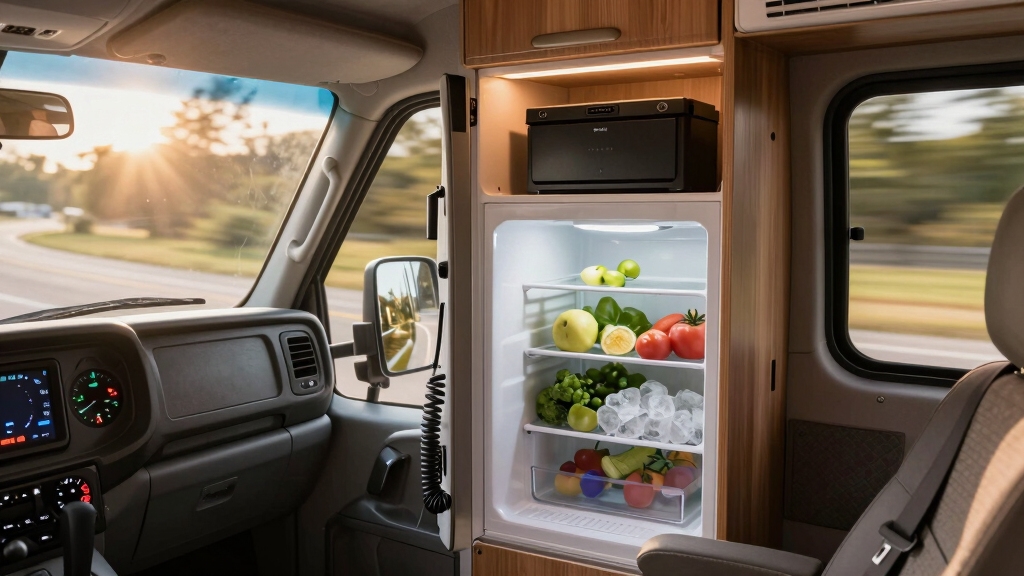
Typically, whether your RV fridge can run on battery power while driving depends largely on the fridge type and your RV’s electrical setup.
If you have a 12V compressor fridge, it can operate directly off the battery, provided your battery bank has sufficient capacity and is adequately charged during transit.
Conversely, absorption fridges generally don’t use battery power for cooling; they rely primarily on propane or AC power. The 12V system only supports controls and ventilation fans.
Your RV’s charging system, such as engine-driven alternator output via a 7-pin connector or a DC-to-DC charger, also influences the battery’s ability to sustain fridge operation on the road.
Ensuring your battery bank meets the fridge’s power draw and that charging input offsets consumption is essential for continuous, battery-powered refrigeration while driving.
Compressor-based RV refrigerators are preferred for their consistent cooling performance even with fluctuating battery power and ambient conditions.
How Different RV Fridge Types Use Battery Power on the Road?
When it comes to RV fridges, there are some key differences in how they use battery power while you’re on the road.
For instance, compressor fridges are pretty straightforward—they run directly on 12V battery power. This makes them really efficient for driving, which is a big plus when you’re out exploring.
Now, absorption fridges are a bit different. They primarily rely on propane or shore power for cooling, and they only use battery power for things like controls and fans.
Many modern 12V compressor fridges also feature battery protection systems to prevent vehicle battery drain during extended use.
Compressor Vs Absorption
Frequently, the type of RV refrigerator determines how it uses battery power while on the road.
Compressor fridges are engineered to run directly on 12V DC battery power, making them efficient and reliable during transit. They use an electric compressor to circulate refrigerant, drawing consistent power from your battery bank.
Absorption fridges, however, rely primarily on propane or AC power for cooling. While they may use 12V DC for controls and fans, their cooling process doesn’t run off battery power alone.
This fundamental difference means compressor fridges are generally easier to maintain cold temperatures when driving solely on batteries.
Absorption models depend on alternative energy sources. Understanding this distinction helps you optimize your RV’s power management and guarantees your fridge operates effectively on the road.
Choosing the right battery type, such as Lithium batteries with high capacity and efficient discharge rates, can further enhance your fridge’s performance during travel.
Battery Dependency Variations
Understanding how different RV fridge types draw power from your battery while driving helps you manage energy use more effectively.
Compressor fridges run directly on 12V battery power, making them efficient for road use. Absorption fridges primarily rely on propane or shore power, using batteries only for controls and fans.
Your RV’s charging setup, such as a 7-pin connector or DC-to-DC charger, also influences battery dependency.
| Fridge Type | Battery Usage | Typical Power Source |
|---|---|---|
| Compressor | High (direct cooling) | 12V battery |
| Absorption | Low (fans/controls) | Propane, AC power |
| Hybrid/Modern | Moderate | Battery + propane/shore |
Selecting appropriate stabilizers with corrosion-resistant materials can also help maintain your RV’s overall energy efficiency and safety while on the road.
How Much Battery Capacity Do You Need to Run Your RV Fridge?
Calculating the battery capacity needed to run your RV fridge depends primarily on the fridge’s power consumption and the duration you plan to operate it off-grid.
Modern 12V compressor fridges typically require a battery bank with at least 200 amp-hours to sustain cooling over extended periods.
A 200 amp-hour battery bank is recommended for reliable, long-term operation of modern 12V compressor fridges.
A single 100Ah battery might suffice for short overnight trips, but longer boondocking or off-grid use demands higher capacity, especially in warmer climates or with frequent door openings.
Power draw varies widely, often between 300 to 500 watts, so you must estimate total watt-hours by multiplying average draw by hours of use.
Lithium batteries are preferable for deeper discharge and longer runtimes.
Monitoring your battery’s state of charge and ensuring efficient fridge operation will help optimize battery capacity and prevent unexpected power loss.
For best performance and safety, consider batteries with integrated Battery Management Systems that protect against overcharging and extend cycle life.
How Engine Charging Helps Power Your RV Fridge on the Move?
When you hit the road in your RV, your vehicle’s alternator steps up to the plate. It generates power that recharges your batteries, which is essential for keeping your fridge running smoothly.
Now, if you really want to amp up that process, consider using a DC-to-DC charger. This nifty device delivers a stable and efficient charge that’s customized for your specific battery type. Plus, it helps prevent those annoying voltage drops that can happen while you’re driving.
With this setup, your fridge gets a reliable supply of power as you travel. This means you won’t have to rely solely on the energy stored in your batteries, giving you peace of mind and more freedom on the road. Using an automatic transfer switch can further enhance power management by seamlessly switching between power sources to protect your RV appliances.
Vehicle Alternator Role
Your vehicle’s alternator plays a crucial role in powering your RV fridge while on the move. It converts mechanical energy from the engine into electrical energy that charges your batteries.
This charging process replenishes the battery bank, allowing 12V compressor fridges to operate efficiently during transit without draining stored energy. The alternator’s output voltage and current capacity directly influence how effectively it supports your RV’s electrical loads, including the fridge.
While driving, the alternator maintains battery voltage typically between 13.8 and 14.4 volts, ensuring continuous battery charge. However, the alternator’s ability to meet demand depends on its rating and existing electrical loads.
Proper alternator function and clean wiring connections are essential to maximize charging efficiency and maintain fridge operation on the road. Using a reliable RV battery disconnect switch can help preserve battery health and ensure consistent power delivery to your fridge during travel.
DC-to-DC Charging Benefits
While the vehicle’s alternator provides baseline charging to the RV battery bank, relying solely on the standard 7-pin trailer connection often limits the current available for recharging.
A DC-to-DC charger optimizes this process by regulating voltage and current specifically for your RV’s battery type. This ensures safer and more efficient charging during transit.
Unlike the 7-pin’s fixed output, DC-to-DC chargers accommodate varying engine speeds and electrical loads. This maintains consistent battery voltage and prevents overcharging.
This improves your battery’s state of charge, extending runtime for your 12V compressor fridge while driving.
Additionally, DC-to-DC charging minimizes electrical noise and protects sensitive electronics.
Integrating this technology enhances your overall power management, making it a vital upgrade for dependable refrigeration on the road.
Many modern RV systems also benefit from 12V DC power options that support efficient operation of appliances like compressor fridges during transit.
Why RV 12V Compressor Fridges Run Better Off Battery Than Absorption Models?
Understanding the fundamental operational differences between 12V compressor fridges and absorption models clarifies why compressor types perform more efficiently on battery power.
Compressor fridges use a motor-driven compressor that runs directly on DC electrical power, making them optimized for battery operation.
They cycle on and off based on temperature demands, drawing predictable wattage and enabling efficient energy use.
Conversely, absorption fridges rely on heat sources like propane or AC electricity to drive a chemical cooling process, with minimal direct battery involvement aside from powering controls and fans.
This indirect cooling method results in higher energy consumption when attempting battery use alone.
Since compressor fridges integrate seamlessly with your RV’s 12V electrical system, they maintain cooler temperatures reliably while conserving battery capacity.
This is especially important on the road where charging options fluctuate.
Many compressor models also feature battery protection to prevent vehicle battery drain during operation, enhancing their suitability for mobile use.
How Solar and Auxiliary Power Extend RV Fridge Runtime on the Road?
Harnessing solar and auxiliary power greatly extends your RV fridge’s runtime by supplementing battery capacity and reducing reliance on the vehicle’s alternator.
Solar panels convert sunlight into DC power, continuously charging your batteries even while stationary or driving. This maintains voltage levels needed for 12V compressor fridges.
Auxiliary power sources, like portable generators or battery banks, provide additional energy reserves during low solar input or high demand periods.
Integrating these systems guarantees your fridge operates efficiently without depleting the battery bank quickly.
Properly sized solar arrays paired with quality charge controllers optimize energy capture. Auxiliary generators offer reliable backup power.
This multi-source approach stabilizes your onboard power system, enabling longer off-grid refrigeration. It balances consumption and charging, vital for maintaining consistent cooling during extended road trips.
Choosing high-efficiency monocrystalline solar panels ensures maximum power generation within the limited space on your RV roof, enhancing battery charging performance.
Tips to Keep Your RV Fridge Cold and Battery Charged While Driving
To keep your RV fridge cold and your battery charged during transit, you need to optimize the electrical system and monitor power consumption carefully.
Make sure your battery connections are clean and secure to avoid voltage drops. Use a battery monitor or voltmeter to track state of charge in real time.
If possible, install a DC-to-DC charger to improve engine charging efficiency beyond the standard 7-pin connector.
Maintain proper airflow around the fridge by keeping vents unobstructed, which reduces compressor workload.
Consider upgrading to lithium batteries for deeper discharge and longer runtimes.
Supplement your system with auxiliary power sources like solar panels or generators when driving alone can’t meet energy demands.
Regularly inspect alternator output and fridge components to sustain reliable operation and prevent unexpected power loss.
Frequently Asked Questions
Can RV Fridge Battery Use Damage the Vehicle’s Starter Battery?
Yes, using your RV fridge battery can damage the vehicle’s starter battery if they share the same circuit without proper isolation.
Drawing significant power for the fridge may drain the starter battery, risking a no-start situation.
To prevent this, you should install a battery isolator or DC-to-DC charger. This ensures the starter battery stays charged and protected while the fridge runs off a dedicated house battery bank during driving or camping.
How Does Altitude Affect RV Fridge Battery Performance While Driving?
Think of your RV fridge battery like a marathon runner climbing a steep mountain. As altitude rises, oxygen thins, and performance can dip.
Higher altitudes lower air pressure, reducing the absorption fridge’s propane efficiency and the battery’s chemical reactions. This means your battery may drain faster, and cooling efficiency drops.
To compensate, monitor battery voltage closely. Ensure good airflow and consider extra charging sources or larger capacity batteries when driving at high elevations.
Are There Safety Concerns Running an RV Fridge on Battery During Travel?
Yes, you should consider safety when running your RV fridge on battery during travel.
Make certain your battery bank and wiring are rated for continuous load to avoid overheating or voltage drops.
Use a properly fused circuit and maintain good ventilation around the fridge to prevent heat buildup.
Monitor battery voltage to avoid deep discharge that can damage your batteries or leave you stranded.
Regularly inspect connections and alternator function for safe, reliable operation.
What Maintenance Is Needed Specifically for RV Fridge Batteries?
You need to regularly inspect battery cables for corrosion, tightness, and wear to guarantee efficient power delivery.
Check battery terminals and clean them as needed to prevent buildup.
Monitor battery voltage and state of charge with a voltmeter or battery monitor during travel.
Maintain electrolyte levels in flooded lead-acid batteries.
Test the alternator’s charging output and verify the fridge’s DC connections are secure.
Proper airflow around the battery prevents overheating and extends battery life.
Can Cold Weather Reduce RV Fridge Battery Efficiency on the Road?
Cold weather can reduce your RV fridge battery efficiency by up to 50%. This makes it harder to keep your fridge running smoothly on the road.
Low temperatures slow chemical reactions inside the battery, decreasing its capacity and output voltage. To counter this, insulate your battery compartment and monitor charge levels closely.
Using lithium batteries or adding auxiliary heat can also help maintain performance during chilly trips. This ensures your fridge stays cold without draining your battery prematurely.
Choose the Best Power Setup for Your RV Fridge
Think of your RV fridge as a loyal companion on a road trip, relying on your battery’s energy to keep its cool.
Just like a traveler needs steady fuel, your fridge thrives when paired with the right battery capacity, engine charging, or solar support.
By understanding these power sources and managing them wisely, you make certain your fridge stays chilled and your journey smooth.
This turns your RV into a well-oiled machine on the move.