Yes, you can register a camper with a salvage title, but you’ll need to rebuild it to meet safety and repair standards first.
After repairs, passing state-mandated inspections and providing detailed documentation is essential. This includes repair records, proof of ownership, and vehicle identification.
Keep in mind that salvage title rules vary by state, affecting your ability to retitle and register the camper. Understanding these steps guarantees a smoother process.
Exploring further will clarify your specific state’s requirements and best practices.
Key Takeaways
- Salvage-titled campers can often be registered after repairs and passing state-mandated inspections.
- Rebuilt or revived titles are required before standard registration of salvage campers is allowed.
- State-specific rules and documentation, including repair records and inspection certificates, must be submitted for registration.
- VIN verification and safety systems inspections are mandatory to confirm identity and roadworthiness.
- Junk titles generally disqualify campers from registration, limiting use to parts or stationary purposes only.
What a Salvage Title Means for Your Camper?
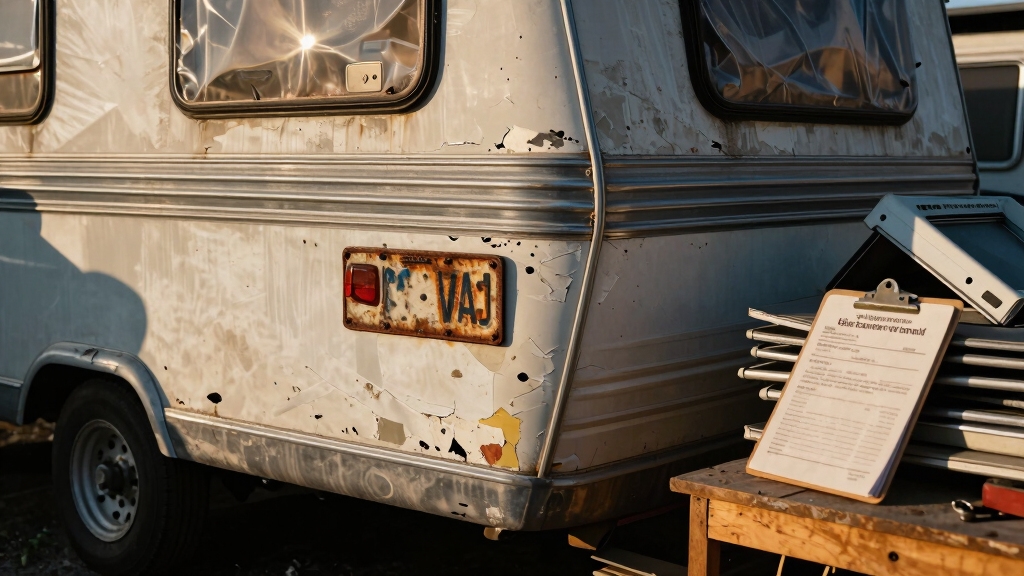
Although a salvage title might sound alarming, it simply means that your camper was declared a total loss by an insurer or DMV due to damage, theft recovery, or a similar event.
A salvage title means your camper was deemed a total loss due to damage or theft recovery.
This designation doesn’t necessarily mean your camper is permanently unusable. In many states, salvage titles indicate that the vehicle is repairable, distinguishing them from junk titles, which usually denote nonrepairable units unfit for road use.
Understanding this difference is vital because salvage-titled campers can often be rebuilt and retitled after passing inspections.
Keep in mind that state definitions and requirements vary, and the “camper” category may include travel trailers, fifth wheels, or motorized RVs.
Knowing the basics of salvage branding helps you assess your camper’s condition and potential for restoration or resale.
For added security during transport or storage, using a heavy-duty trailer hitch lock can protect your camper from theft and unauthorized towing.
Registering a Camper With a Salvage Title
When it comes to registering a camper with a salvage title, it’s important to know the rules specific to your state. Each state has its own set of regulations regarding salvage titles, so you’ll want to do a bit of homework before diving in.
Typically, you’ll need to rebuild the camper first. After that, passing a series of inspections is a must. This step is crucial because it ensures that your camper meets safety standards. Once you’ve successfully passed the inspections, you can apply for a rebuilt or revived title.
Getting that title is key—it officially recognizes your camper as roadworthy. Once you have it, you’ll be all set to register your camper. Just keep in mind that following these steps will help you navigate the process smoothly and ensure everything is in order!
Before storing your camper, consider winterizing the water system to prevent damage during colder months.
Salvage Title Regulations
Because salvage title regulations vary markedly by state, you’ll need to understand your local DMV’s specific requirements to register a camper with a salvage title.
Most states treat salvage titles as temporary designations indicating damage but allow registration once repairs and inspections prove roadworthiness.
You’ll typically need to submit a detailed application, proof of ownership, and pass a safety or vehicle inspection.
Some states require specialized forms or electronic verification of safety systems.
Importantly, a salvage title alone usually prohibits registration until it’s converted to a rebuilt or revived title after meeting all state-mandated criteria.
Make sure you check for any additional fees or documentation your state demands.
Staying compliant with these regulations guarantees your camper can be legally and safely registered for highway use.
Using anti-theft features such as high-strength locks can provide additional security for your camper once registered.
Rebuilt Title Requirements
To register a camper with a salvage title, you’ll need to meet your state’s rebuilt title requirements. This typically involves submitting a detailed application, proving ownership, and passing a thorough vehicle inspection.
These steps guarantee your camper is roadworthy and complies with state laws before retitling. Expect to provide documents like a bill of sale, repair receipts, and inspection certificates. Fees and specific forms may also apply.
| Requirement | Description | Purpose |
|---|---|---|
| Application | Completed title/registration forms | Formal request for retitling |
| Ownership Proof | Bill of sale, transfer documents | Verify legal ownership |
| Inspection | VIN check, safety & roadworthiness | Confirm camper is safe to use |
It is also important to consider corrosion resistance in any repairs or modifications to ensure long-term durability and safety of the camper’s structure.
Following this process helps you legally register your rebuilt camper.
How to Rebuild and Register a Salvage Camper?
Start by thoroughly evaluating the damage to your salvage camper and documenting all necessary repairs. You’ll need a detailed repair plan addressing structural, mechanical, and safety-related issues to guarantee roadworthiness.
Perform or hire qualified professionals for repairs, keeping receipts and records. Once restored, schedule a state-required inspection, which often includes VIN verification and safety checks. Passing this inspection is vital to demonstrate your camper meets standards for a rebuilt title.
To ensure a watertight and durable restoration, consider using flexible RV window sealants to prevent leaks and withstand temperature changes.
Documents Required for Rebuilt Salvage Camper Registration
Gathering the right documents is essential when registering a rebuilt salvage camper, as each state mandates specific paperwork to verify ownership, repairs, and compliance with safety standards.
You’ll typically need a completed title or registration application, proof of ownership such as a bill of sale, and the original salvage title.
In addition, many states require documentation showing that repairs meet safety criteria, which might include repair receipts or affidavits.
Verification of the camper’s identity through a VIN inspection is often mandatory.
Some jurisdictions also ask for safety system inspection reports or equivalent certifications confirming roadworthiness.
Make sure you check your state’s DMV requirements closely, as additional forms or fees may apply.
Proper documentation streamlines the process and prevents delays in obtaining your rebuilt salvage camper’s registration.
It is also important to consider the durability and material of any replacement components used during repairs to ensure long-term safety and compliance.
Required Inspections for Salvage Camper Registration
To register your salvage camper, you’ll need to go through a few inspections that help verify its identity and ensure it’s safe.
First up, you’ll typically have to complete a vehicle identification verification. This step is all about confirming that your camper matches the details on its title.
Next, there’s the safety systems inspection. This one’s crucial because it checks that your camper is roadworthy and safe to drive.
You definitely want to make sure everything’s in good shape before hitting the road!
Oh, and don’t forget about the paperwork! You’ll need to submit some state-specific inspection forms as part of the registration process.
Just a little heads-up to keep everything running smoothly!
Additionally, ensuring your camper’s electrical system includes an automatic transfer switch can greatly enhance safety during power source transitions.
Vehicle Identification Verification
Vehicle identification verification plays a crucial role in registering a salvage camper. It ensures the unit’s identity matches official records and verifies it hasn’t been tampered with or stolen.
When you go through this process, expect your state’s DMV or authorized inspector to physically examine the camper’s Vehicle Identification Number (VIN). This includes checking the VIN plate, frame stamps, and other identifying marks for consistency.
Authorities may also compare the VIN against databases to confirm the camper’s history and salvage status. You’ll need to provide documentation like the salvage title and any repair receipts.
Failing to verify the camper’s identity accurately can delay or prevent registration. This step safeguards both you and the public by confirming the camper’s legitimacy before it’s approved for rebuilt or revived registration. Additionally, maintaining proper electrical system safety with devices like RV battery disconnect switches can be important during the inspection and repair process.
Safety Systems Inspection
Once the camper’s identity and salvage status are verified, you’ll need to demonstrate that its safety systems meet state standards. This inspection confirms roadworthiness by evaluating critical components such as brakes, lighting, and structural integrity.
Failure to pass can delay registration or require further repairs.
| Safety Component | Inspection Focus | Common Issues Found |
|---|---|---|
| Brakes | Functionality and wear | Leaks, worn pads |
| Lighting | Headlights, signals | Burned-out bulbs, wiring |
| Structural Integrity | Frame and body damage | Cracks, rust, weak joints |
| Tires | Tread depth and condition | Bald spots, sidewall cracks |
| Safety Equipment | Fire extinguisher, alarms | Missing or expired items |
Prepare for this inspection to guarantee smooth registration of your rebuilt salvage camper. Proper maintenance and regular inspections are crucial to ensure structural integrity and safety compliance.
State-Specific Inspection Forms
Because each state governs salvage camper registration differently, you’ll need to complete specific inspection forms tailored to local requirements.
These forms document that your camper meets roadworthiness standards after repairs and verify its identity. They often include VIN inspection and safety system checks.
For example, California requires completing forms like REG 343 and submitting CHP inspection certificates. Other states may have their own unique documents and inspection checklists.
You must obtain and submit the correct forms to avoid registration delays or denials. It’s essential to check your state’s DMV or motor vehicle department website for exact inspection form names, submission procedures, and fee details.
Completing these state-specific forms accurately guarantees your salvage camper can progress toward rebuilt or revived title status and successful registration.
Additionally, ensuring proper sealing and weatherproofing with flexible RV sealants after repairs helps maintain the camper’s integrity and longevity.
State Differences in Salvage Camper Title Rules
Although salvage title regulations share some common elements, you’ll find significant variations from state to state when registering a camper with a salvage brand.
Some states allow you to register after repairs and inspections, while others impose stricter documentation or outright prohibit registration. Understanding your state’s definitions of salvage, rebuilt, and junk titles is vital before proceeding.
| State | Salvage Title Outcome | Registration Requirement |
|---|---|---|
| California | Can convert to revived title | Requires inspection and specific forms |
| Texas | Distinguishes salvage vs junk | Junk titles generally non-registerable |
| Florida | Allows rebuilt titles after repair | Safety inspection and paperwork needed |
| New York | Strict salvage title enforcement | Extensive documentation required |
Check your local DMV’s rules carefully to ensure compliance.
What to Watch Out for When Buying a Salvage Camper?
When buying a salvage camper, you need to carefully assess the extent of previous damage and the quality of repairs. These factors directly affect safety and future registration prospects.
Verify that repairs meet state standards and that the camper passes necessary inspections. Check for a clear title history and confirm the salvage brand isn’t a junk designation, which usually disqualifies registration.
Make certain all documentation, such as bills of sale, repair receipts, and inspection reports, is complete and accurate. Be aware that incomplete or poor repairs can delay or prevent retitling and registration.
Finally, consider the potential resale impact of a salvage title and factor in extra costs for inspections, fees, and possible additional repairs before committing to purchase.
What Junk Titles Mean for Your Camper’s Registration?
Understanding the differences between salvage and junk titles is key to knowing your camper’s registration options.
While a salvage title indicates the camper suffered significant damage but might be repairable and eligible for rebuilt or revived status, a junk title usually means the camper is deemed nonrepairable and permanently unfit for road use.
If your camper carries a junk title, you typically can’t register it for highway use or normal operation.
Most states treat junk-titled campers as scrap, limiting your options to selling for parts or stationary use.
Unlike salvage titles, junk titles rarely allow for reinspection or retitling.
To register your camper, you must confirm your state’s specific rules, but generally, a junk title represents a final barrier to conventional registration and roadworthiness certification.
Frequently Asked Questions
Can Insurance Cover a Camper With a Salvage Title?
Yes, you can get insurance for a camper with a salvage title, but coverage options might be limited.
Many insurers offer liability or full coverage, but full replacement or collision coverage may be harder to find or more expensive.
You’ll need to provide proof of repairs and inspections.
It’s wise to shop around and disclose the salvage status upfront to avoid claim denials or coverage gaps.
How Does a Salvage Title Affect Camper Loan Eligibility?
Getting a camper loan with a salvage title can feel like steering through a stormy sea. You’ll face rougher waters.
Lenders often hesitate or deny loans because salvage titles signal higher risk and lower resale value.
If approved, expect higher interest rates or larger down payments.
To improve your chances, you’ll need thorough documentation proving repairs and roadworthiness. Be prepared: some lenders simply won’t finance salvage-titled campers at all.
Are There Special Storage Rules for Salvage-Titled Campers?
You typically don’t face special storage rules solely because your camper has a salvage title.
However, local ordinances may impose restrictions on storing damaged or non-operational vehicles.
Check your city or county regulations, especially if the camper isn’t roadworthy or is visibly damaged.
Proper storage should comply with zoning laws, prevent hazards, and avoid fines.
Always secure your salvage camper to avoid theft or environmental issues.
Can a Salvage Title Camper Be Used for Rental Purposes?
Imagine you want to rent out a camper with a salvage title.
You can, but only after fully repairing it, passing all safety inspections, and obtaining a rebuilt or revived title.
For example, Sarah restored her salvage camper, met California’s inspection requirements, and legally rented it out.
Without these steps, insurance may refuse coverage, and renters could face safety risks.
How Long Does the Rebuilt Title Process Typically Take?
The rebuilt title process typically takes several weeks to a few months, depending on your state’s DMV workload and inspection scheduling.
You’ll need to complete repairs, gather documents proving ownership and repairs, pass required inspections, and submit forms with fees.
Delays can happen if paperwork is incomplete or inspections are backlogged.
Staying organized and responding promptly to DMV requests helps speed up your rebuilt title approval and registration timeline.
Final Answer: Can You Register a Camper With a Salvage Title?
Think of your salvage camper like a phoenix. Once damaged, it can rise anew with the right care and paperwork.
Registering it isn’t just about ticking boxes; it’s about proving your camper’s rebirth through inspections and proper documentation.
While rules vary by state, staying informed guarantees your journey on the road is smooth and legal.
With patience and diligence, your camper can transform from a title of loss to one of renewed adventure.