
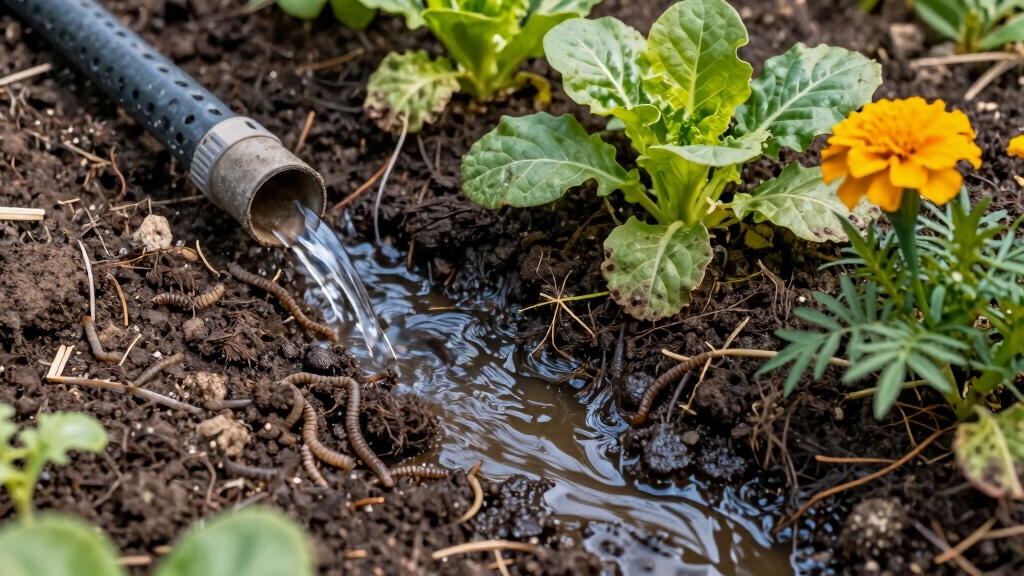
You can dump greywater on the ground if you follow proper guidelines: avoid putting it in floodways, keep at least five feet above groundwater, and make sure it stays on your property to prevent runoff.
Use subsurface irrigation to limit contact and reduce odor or bacterial growth. Choose plants suited to greywater’s nutrient and salt content, and use low-sodium, biodegradable detergents.
Managing these factors carefully prevents environmental and health issues. Here’s how to do it right and safely.
Key Takeaways
- Greywater can be applied to the ground using subsurface irrigation to prevent human contact and runoff beyond the property.
- Systems must maintain at least five feet vertical separation above groundwater to avoid contamination risks.
- Dumping greywater directly on the surface can cause odors, bacterial growth, and soil damage if stored over 24 hours.
- Use greywater only on-site, avoiding discharge into waterways or flood-prone areas to comply with legal guidelines.
- Avoid applying greywater to edible crops; direct it to ornamental or native plants that tolerate trace detergents and nutrients.
What Is Greywater and Where Does It Come From?

When you think about household wastewater, greywater stands out as the relatively clean water generated from sources like sinks, showers, baths, washing machines, and dishwashers.
Unlike blackwater, greywater excludes sewage from toilets and contains fewer pathogens, making it suitable for certain reuse applications. You’ll find greywater carries residues such as soap, detergents, hair, dirt, and food particles, which influence its quality and handling requirements.
Its composition varies by source; for instance, kitchen sink water often contains higher organic loads and may require treatment before reuse. Understanding these origins helps you design appropriate collection and irrigation systems that prevent contamination and promote environmental safety.
Proper management guarantees greywater serves as a sustainable water resource, reducing freshwater demand while minimizing health risks related to improper disposal or storage. Choosing biodegradable and non-toxic cleaning agents is essential to minimize environmental impact when managing greywater.
Legal Guidelines for Greywater Use on Your Property
Although greywater offers significant environmental benefits, you must make certain you comply with strict legal guidelines to use it safely on your property.
Position your greywater system outside floodways, avoiding discharge into waterways. Maintain a vertical separation of at least five feet above the groundwater table.
Clearly label all greywater pressure piping to distinguish it as non-potable. Use greywater exclusively on-site to prevent runoff beyond your property boundary.
Be aware that jurisdictions differ; some exclude kitchen sink water unless treated. Adhering to these regulations helps prevent contamination and protects local water resources.
It also ensures your greywater reuse system operates legally and effectively. Before installation, consult local codes to confirm compliance and system design requirements.
Following precise legal frameworks supports sustainable water management without compromising public health or environmental integrity.
Using hoses made of lead-free and BPA-free materials is essential when connecting greywater systems to maintain water safety and prevent chemical contamination.
Safety Tips: How to Avoid Direct Contact With Greywater?

Hey there! When you’re dealing with greywater, it’s super important to keep safety in mind. First off, make sure to wear waterproof gloves and boots. Trust me, this will help you avoid any skin contact with those pesky contaminants.
Also, consider using subsurface irrigation methods. This way, you can minimize direct contact with the greywater and prevent it from pooling up on the surface.
Following these simple practices can really help reduce any health risks and ensure you’re using greywater safely and in compliance with regulations on your property. Stay safe out there! Using environmentally safe treatments can further protect your plumbing and the surrounding nature when managing greywater.
Protective Gear Recommendations
Minimize your exposure to greywater by always wearing appropriate protective gear during handling and maintenance tasks.
Use waterproof gloves made of nitrile or latex to prevent skin contact with contaminants and potential pathogens.
Wear long-sleeved shirts, long pants, and closed-toe rubber boots to shield your skin from splashes and spills.
Eye protection, such as safety goggles, is essential to avoid irritants or debris entering your eyes.
If you’re working in confined spaces or areas with aerosolized greywater, consider a respirator mask to reduce inhalation risks.
After completing tasks, thoroughly wash your hands and any exposed skin with soap and clean water.
Regularly inspect and replace protective gear to maintain effectiveness.
It’s also advisable to keep a well-stocked first aid kit nearby to treat any minor injuries that might occur during greywater system maintenance.
Safe Irrigation Practices
Frequently, safe irrigation practices hinge on preventing direct contact with greywater to reduce health risks.
You should use subsurface irrigation systems to keep greywater below the soil surface, minimizing exposure to pathogens and contaminants.
Avoid storing greywater over 24 hours to prevent bacterial growth and odors.
When applying greywater, make certain it doesn’t pond or run off, and never use it on edible root crops or where edibles contact the water directly.
Always select low-phosphorus, biodegradable detergents to reduce soil and plant toxicity.
Clearly label greywater pressure pipes as non-potable to prevent accidental ingestion.
Maintain at least five feet of vertical separation above the groundwater table to avoid contamination.
Following these steps makes your irrigation both safe and compliant with regulatory standards.
Best Practices for Applying Greywater to Your Garden
When applying greywater to your garden, make certain the system directs water only to appropriate plants such as ornamental gardens, trees, and native species. Avoid root crops or edible plants that come into direct contact with the water.
Follow these best practices to guarantee safe and effective greywater use:
- Use low-phosphorus, biodegradable detergents to minimize soil and plant stress.
- Employ subsurface irrigation methods to reduce human contact and prevent surface runoff.
- Avoid storing greywater more than 24 hours to limit bacterial growth and odors.
Clearly label greywater piping as non-potable and maintain vertical separation above groundwater by at least five feet.
Additionally, selecting eco-friendly treatments can help minimize environmental impact and ensure safety when reusing greywater.
Implementing these steps helps optimize greywater benefits while complying with safety and regulatory standards.
How Greywater Impacts Soil and Plant Health?
Although greywater offers valuable nutrients for plants, it also contains compounds like chlorides, sodium, and sulfates that can negatively affect soil structure and plant health.
These elements may increase soil alkalinity and reduce its water infiltration capacity, leading to poor root development and nutrient uptake.
To minimize damage, apply greywater using subsurface irrigation, avoiding surface runoff or ponding zones that stress seedlings or barren areas.
Regularly monitor soil salinity and pH to prevent cumulative buildup.
Use low-sodium, phosphorus-free detergents to reduce harmful chemical loads.
Greywater breaks down faster than blackwater, posing fewer pathogen risks, but shouldn’t be stored over 24 hours to limit bacterial growth.
For effective water use in mobile settings, consider systems with salt-free water softening to reduce harmful mineral buildup and improve water quality.
Which Plants Are Safe to Irrigate With Greywater
Understanding which plants tolerate greywater irrigation helps you maximize benefits while minimizing risks to your garden.
Knowing which plants tolerate greywater ensures you enhance growth while protecting your garden’s health.
You should avoid using greywater on root crops or edible plants that contact water directly, as contaminants may accumulate.
Instead, focus on landscaping plants and ornamental gardens that can handle trace detergents and nutrients.
Trees and shrubs thrive on nutrients from organic matter in greywater.
Native plants are adapted to local soil and water conditions, especially when using low-phosphorus detergents.
Opt for established plants rather than seedlings or barren areas, which are more vulnerable to salt and chemical buildup.
Using biodegradable and environmentally friendly RV toilet chemicals can help reduce harmful substances in greywater.
Preventing Odors and Bacterial Growth in Greywater Systems
When it comes to greywater systems, it’s really important to avoid storing greywater for more than 24 hours. Why? Well, doing so can lead to odor problems and encourage bacterial growth, which is definitely something you want to steer clear of.
To tackle this issue, consider implementing subsurface irrigation. This method helps minimize exposure to the greywater, which in turn effectively controls microbial growth. It’s a smart move!
Also, don’t forget that proper system design and maintenance are key. Keeping everything in check will help you maintain water quality and prevent any unwanted nuisances. So, stay on top of it, and your greywater system will run smoothly!
Using tanks made from NSF-approved polyethylene can enhance system durability and safety during greywater storage and handling.
Avoiding Greywater Storage
Since greywater contains organic matter and nutrients that promote bacterial growth, you must avoid storing it for more than 24 hours to prevent odors and health hazards. Prolonged storage fosters microbial proliferation, causing foul smells and potential pathogen risks.
To effectively manage greywater without storage, follow these practices:
Design systems for immediate ground application or subsurface irrigation to minimize retention time. Use gravity-fed or pressurized piping to ensure continuous flow and prevent stagnation. Incorporate appropriately sized drains and outlets for rapid discharge.
Monitor system performance regularly to detect and resolve flow obstructions promptly. Ensuring proper water flow and pressure in your system helps maintain efficient greywater disposal and reduces the risk of blockages or leaks.
Minimizing Odor Formation
Effectively minimizing odor formation in greywater systems requires controlling bacterial growth and organic matter decomposition.
To do this, avoid storing greywater longer than 24 hours since prolonged storage accelerates anaerobic decomposition, causing foul odors.
Implement immediate subsurface irrigation to disperse greywater evenly, reducing stagnant zones where odor-causing bacteria thrive.
Use low-phosphorus, biodegradable detergents to limit organic loads and chemical residues that exacerbate smell issues.
Maintain vertical separation of at least five feet above the groundwater table to promote aerobic breakdown.
Regularly inspect and clean pressure piping labeled as non-potable to prevent blockages and biofilm buildup.
In addition, managing runtime and efficiency of system components helps ensure consistent operation and reduces conditions that favor odor generation.
Controlling Bacterial Growth
Although greywater offers valuable reuse opportunities, controlling bacterial growth is essential to prevent odors and maintain system safety.
To minimize microbial proliferation and associated nuisances, you should implement specific management practices.
Avoid storing greywater beyond 24 hours since organic matter accelerates bacterial multiplication and odor formation.
Use subsurface irrigation systems to reduce human contact with greywater and limit pathogen exposure.
Employ low-phosphorus, biodegradable detergents to reduce nutrient loads that promote bacterial growth.
Maintain a vertical separation of at least five feet above the groundwater table to prevent contamination and facilitate natural microbial degradation.
- Limit greywater storage duration to under 24 hours
- Utilize subsurface irrigation to minimize exposure
- Select detergents that inhibit excessive nutrient input
- Assure proper system placement respecting groundwater separation
These steps help you maintain a hygienic and odor-free greywater system.
How Greywater Conserves Water and Lowers Utility Bills?
Water conservation through greywater reuse offers a practical solution to reduce your household’s freshwater consumption substantially.
By redirecting greywater from sinks, showers, and laundry to landscape irrigation, you decrease reliance on potable water for non-drinking purposes.
This reuse can account for up to 65% of your total wastewater, markedly lowering your water bills.
Additionally, greywater irrigation supplies plants with nutrients like dirt and organic matter, lessening fertilizer needs.
Implementing a compliant greywater system safeguards soil and plant health by ensuring appropriate treatment and application methods.
This approach not only conserves water but also reduces energy and chemical use associated with conventional wastewater treatment, providing environmental and financial benefits.
Frequently Asked Questions
Can Greywater Be Safely Used for Washing Vehicles or Outdoor Surfaces?
You can use greywater for washing vehicles or outdoor surfaces, but you should do so cautiously.
Avoid using greywater containing harsh chemicals or detergents with microplastics, which can harm soil and plants nearby.
Make sure runoff doesn’t reach storm drains or natural waterways. Use biodegradable, low-phosphorus cleaners to minimize environmental impact.
Also, avoid prolonged pooling to prevent bacterial growth and odors.
Proper management and treatment make greywater use safer and more sustainable.
What Are the Best Materials for Greywater Piping to Prevent Leaks?
You should use durable, non-corrosive materials like PVC or CPVC piping for greywater systems to prevent leaks.
These plastics resist chemical breakdown from soaps and detergents.
Make certain all joints have solvent-welded or threaded fittings to maintain watertight seals.
Avoid metal pipes prone to corrosion.
Clearly label greywater pipes to differentiate them from potable water lines.
Proper installation and regular inspection will help you avoid leaks and contamination effectively.
How Does Greywater Affect Soil Microorganisms and Earthworms?
Don’t worry, greywater won’t harm soil microorganisms or earthworms if managed correctly.
You’ll want to avoid storing it long, as bacterial growth can spike. Its nutrients actually feed microbes and earthworms, improving soil health.
But watch for chemicals like chlorides or detergents, which can disrupt soil life.
Using low-phosphorus, biodegradable soaps and subsurface irrigation helps protect these organisms while maximizing greywater’s benefits for your soil ecosystem.
Are There Local Incentives or Rebates for Installing Greywater Systems?
Yes, many localities offer incentives or rebates for installing greywater systems to promote water conservation and sustainable landscaping.
You should check with your city or water utility for specific programs, as eligibility varies by jurisdiction.
These incentives often reduce installation costs and encourage compliance with legal requirements.
Taking advantage of them not only saves money upfront but also supports environmentally responsible water reuse practices on your property.
Can Greywater Systems Be Integrated With Rainwater Harvesting Setups?
You can integrate greywater systems with rainwater harvesting to boost water efficiency, as greywater accounts for about 65% of household wastewater.
Combining these systems allows you to capture rainwater for potable uses while reusing greywater for irrigation, reducing freshwater demand.
Make certain proper plumbing separation and treatment to prevent cross-contamination.
This hybrid setup maximizes resource conservation, supports drought resilience, and complies with regulations requiring on-site use and safe application methods.
Greywater Done Right: A Sustainable Solution
You might think dumping greywater on the ground is a quick fix, but without following legal guidelines and safety measures, it risks soil contamination and health hazards.
On the other hand, properly applied greywater can nourish your garden and conserve water efficiently.
By understanding where greywater comes from and how to handle it safely, you turn a potential problem into a sustainable solution that benefits both your plants and your utility bills.