
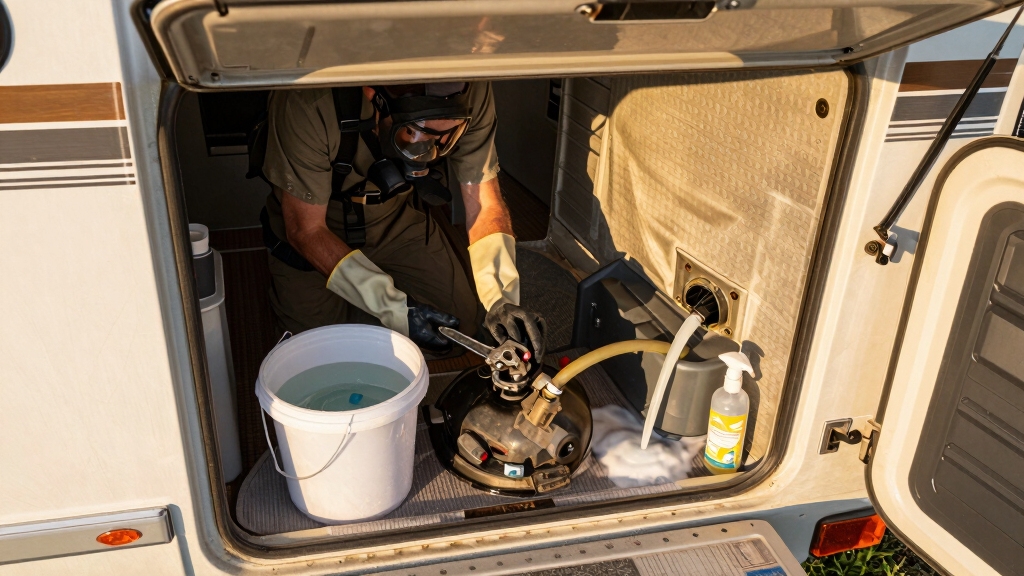
To clean and deodorize your RV holding tanks, flush your gray tank every six months using hot water mixed with mild detergent to remove buildup and odors.
Deep clean the black tank every 3–4 months with a bacteria-based cleaner by filling the tank fully, adding the treatment through the toilet, then soaking with the valve closed before rinsing thoroughly.
Homemade mixes like borax and Dawn soap support aerobic bacteria to prevent odors. Following a proper maintenance plan guarantees fresh tanks—explore further for detailed steps and tips.
Key Takeaways
- Deep clean black tanks every 3–4 months and gray tanks every six months to prevent odors and maintain function.
- Use bacteria- or enzyme-based cleaners to break down waste, reduce sludge, and prevent sensor errors.
- Flush gray tanks thoroughly with hot water and mild detergent, running water through all fixtures to remove buildup.
- Employ homemade solutions like borax with Dawn dish soap or sodium percarbonate for eco-friendly deodorizing and cleaning.
- Maintain moisture and microbial balance by partially filling tanks between flushes and avoiding harsh chemicals that kill beneficial bacteria.
Why and When to Deep Clean Your RV Black and Gray Tanks?
Although it might seem inconvenient, you should deep clean your RV black and gray tanks regularly to maintain proper function and prevent odor buildup.
Regular deep cleaning of RV black and gray tanks is essential to keep them functioning well and odor-free.
Over time, solids and residues accumulate on tank walls, leading to clogs, sensor errors, and foul odors.
For full-time RV users, cleaning black tanks every 3-4 months is ideal, while gray tanks benefit from treatment every six months to avoid buildup from kitchen and shower drainage.
Regular deep cleaning dissolves waste deposits, maintains sensor accuracy, and extends tank life.
You’ll know it’s time when you detect persistent odors, slow drainage, or inaccurate tank level readings.
Consistent maintenance prevents anaerobic bacteria growth, a primary source of stench, ensuring a hygienic and odor-free environment inside your RV.
Using enzyme-based formulations during cleaning can enhance waste digestion and reduce disposal frequency for a more effective tank maintenance routine.
Using Bacteria-Based Cleaners for Black Water Tank Deep Cleaning
If you’re looking to deep clean your black water tank, using bacteria-based cleaners is the way to go! They’re super effective at breaking down buildup, even better than most other methods, except maybe for a professional power wash.
First things first, fill your tank all the way up. Just keep an eye out for any water backing up into the toilet pipe—that’s your cue that it’s full. Once it’s good to go, pour a single bottle of the cleaner through the toilet. Let it soak for anywhere between 12 to 72 hours.
After that soak, it’s time for a thorough rinse. Start by closing the valve, then refill the tank. Open the valve to drain it, and repeat this process until everything’s nice and clean. You’ll be amazed at the difference!
For the best results, consider using enzyme-based formulas that help accelerate waste breakdown and reduce odors during the cleaning process.
Bacteria Cleaner Benefits
When you choose bacteria-based cleaners for deep cleaning your black water tank, you activate a powerful biological process that breaks down organic waste more efficiently than chemical alternatives.
These cleaners introduce aerobic bacteria that metabolize solids, fats, and proteins, reducing sludge buildup and preventing clogs.
Unlike harsh chemicals, bacteria-based solutions maintain the tank’s microbial ecosystem, preserving its natural function and extending its lifespan.
You only need to fill the tank completely and apply a single dose, allowing the bacteria 12 to 72 hours to digest waste thoroughly.
This method minimizes odors by replacing anaerobic bacteria responsible for foul smells with odorless byproducts like carbon dioxide.
Using bacteria cleaners guarantees a sustainable, effective deep cleaning that supports long-term tank health and odor control without damaging seals or tank surfaces.
Many bacteria-based treatments are environmentally friendly and safe for both RV and marine use, making them a preferred choice among full-time RVers.
Deep Cleaning Steps
Before applying a bacteria-based cleaner to your black water tank, be certain the tank is completely filled with water. This is critical for the solution to reach and treat all internal surfaces effectively.
Pour a single bottle of cleaner through the toilet into a 40-gallon tank. Allow the solution to soak for 12 to 72 hours to break down organic buildup thoroughly.
After soaking, close the tank valve, refill the tank fully, then open the valve to drain. Repeat this rinse cycle multiple times to remove residue and loosened debris.
This process restores tank function, reduces odors, and prevents buildup. Regular deep cleaning every 3–4 months ensures sustained performance, especially for full-time RV users relying on bacteria-based treatments to maintain a healthy tank environment. Using an enzyme-based cleaner enhances waste digestion and helps prevent sensor malfunctions for optimal tank maintenance.
Step-by-Step Guide to Filling and Treating Your Black Water Tank
Begin by completely filling your black water tank with water until it backs up into the toilet connection pipe, guaranteeing the tank is full enough for effective treatment.
Next, pour a single bottle of a bacteria-based cleaner, like Unique Clean-It, directly into the toilet to target buildup efficiently. Allow the solution to soak for 12 to 72 hours, maximizing breakdown of solids and odors.
During this period, keep the tank valve closed to prevent premature draining and preserve treatment efficacy. After soaking, close the valve, refill the tank fully, then open the valve to drain.
Repeat the fill-and-drain cycle several times to flush residual waste and cleaner thoroughly. This method guarantees a deep, practical clean, maintaining tank integrity and reducing odors effectively.
For added safety during your RV travels, always keep a well-stocked first aid kit on hand to address any unexpected injuries while maintaining your holding tanks.
Homemade Solutions to Keep RV Holding Tanks Fresh and Odor-Free
While commercial bacteria-based cleaners offer strong results for black tank maintenance, you can achieve effective odor control and cleaning using homemade solutions that are budget-friendly and environmentally safe.
Combining borax with Dawn dish soap or using Calgon water softener with Pine-Sol breaks down oils and promotes aerobic bacteria growth, reducing odors naturally.
Preparing mixtures in a five-gallon bucket with hot water guarantees even distribution. Apply approximately one cup of solution per 40-gallon tank for peak results.
| Ingredient | Function |
|---|---|
| Borax | Cleans and deodorizes |
| Dawn Dish Soap | Breaks down oils |
| Calgon Water Softener | Softens water, enhances cleaning |
| Pine-Sol Cleaner | Disinfects and deodorizes |
| Sodium Percarbonate | Oxygenates, eco-friendly |
Use these solutions every 3-4 months to keep your tanks fresh and odor-free. Regular treatment with effective RV toilet chemicals helps prevent clogs and odors, ensuring your system functions smoothly.
Flushing and Maintaining Your Gray Water Tank Effectively
It’s really important to flush your gray water tank regularly—aim for every six months if you can.
This helps prevent any buildup and those unpleasant odors from creeping into your kitchen and shower drains.
When you’re flushing it out, just run water through all your fixtures for a few minutes.
This is especially important after winterization or if your tank has been sitting for a while.
By doing this, you’re ensuring that everything gets cleared out properly.
Plus, keeping up with consistent maintenance really helps eliminate any organic matter that can cause those foul smells.
It’s all about keeping your tank functioning efficiently!
Using an EPA-approved sanitizer can further help maintain safe and odor-free water systems.
Gray Tank Flushing Frequency
Regularly flushing your gray water tank is essential to prevent odor buildup and maintain system efficiency.
You should flush the tank every six months to clear accumulated debris and biofilm that cause odors and reduce flow capacity.
Use multiple minutes of running water from sinks and showers to thoroughly rinse the system, ensuring all antifreeze residues or residue from soaps are eliminated.
Maintaining this schedule prevents sludge formation and keeps your tank’s sensors accurate.
If you rely heavily on the gray tank, flushing more frequently may be necessary.
Remember to run water until the tank is fully cleared, then refill with fresh water to restore proper function.
Consistent flushing prolongs your tank’s lifespan and keeps your RV’s wastewater system running smoothly.
Additionally, controlling humidity with a dehumidifier for RV can help reduce moisture-related odors and improve air quality inside your RV.
Preventing Gray Tank Odors
To prevent gray tank odors, maintaining an effective flushing routine is vital for breaking down organic matter and avoiding buildup.
Flush your gray water tank regularly, ideally every six months, using hot water mixed with a mild detergent like Dawn Ultra dish soap.
Run water through all drains, sinks, showers, and toilets to guarantee thorough clearance of residues.
Partially filling the tank between flushes helps maintain moisture levels and promotes bacterial balance.
Avoid letting waste sit stagnant; continuous valve closure except during dumping preserves seals and prevents leaks.
For enhanced odor control, incorporate aerobic bacteria treatments that replace odor-causing anaerobic bacteria.
Regular system flushing combined with proper chemical or natural treatments keeps your gray tank functioning efficiently and odor-free, ensuring a hygienic and pleasant RV environment.
Using a high-quality RV sewer hose made from durable materials can also help prevent leaks and odors during waste disposal.
Natural Ways to Prevent and Eliminate RV Holding Tank Odors
Frequently, preventing and eliminating odors in RV holding tanks hinges on fostering aerobic bacteria that naturally suppress foul smells by producing odorless carbon dioxide.
Preventing RV holding tank odors relies on promoting aerobic bacteria that produce odorless carbon dioxide.
You can promote these beneficial bacteria by avoiding harsh chemicals that kill them and instead using bacteria-based treatments designed for tanks.
Introducing aerobic bacteria replaces odor-causing anaerobic bacteria, shifting the tank environment toward natural odor control.
Additionally, homemade solutions like mixing borax with Dawn dish soap provide cost-effective cleaning that supports aerobic bacteria growth while breaking down organic buildup.
Regularly filling the tank completely before treatment guarantees thorough distribution.
By modifying the tank’s microbial ecosystem, you prevent odor formation at its source, maintaining efficiency without introducing harmful chemicals.
This natural approach balances microbial populations, offering a practical, eco-friendly solution to persistent RV holding tank odors.
Using water treated with multi-stage filtration systems can further reduce contaminants that contribute to tank odors and buildup.
Routine Maintenance Schedule to Keep Black and Gray Tanks Healthy
Maintaining black and gray tanks on a consistent schedule prevents buildup and odors that compromise RV sanitation systems.
For full-time users, clean your black tank every 3-4 months using a bacteria-based cleaner. Fill the tank completely, add the solution, and let it soak 12-72 hours.
Employ the partial-fill method during treatment to keep toilets usable. For gray tanks, treat every six months with Dawn Ultra or similar detergents to break down oils and prevent odors. Always keep the valves closed except during dumping to protect seals.
After treatment, rinse tanks thoroughly by filling completely, then draining. Regular flushing of water systems after winterization and periodic deodorization of the bathroom further maintain tank health and prevent odor buildup, ensuring peak sanitation performance.
Frequently Asked Questions
Can RV Holding Tank Odors Affect Indoor Air Quality?
Yes, RV holding tank odors can definitely impact your indoor air quality.
When anaerobic bacteria produce foul smells, those odors can seep through bathroom surfaces and vents, spreading unpleasant air throughout your living space.
You should perform regular tank maintenance, including aerobic bacteria treatments and thorough cleaning, to prevent odor buildup.
Additionally, deep-cleaning your bathroom surfaces and using air deodorization products will help maintain fresh air quality inside your RV.
How Do Temperature Changes Impact Tank Bacteria Activity?
Think of your tank bacteria like a campfire. When it’s cold, the flames dwindle.
Temperature drops slow bacterial activity, reducing waste breakdown and odor control.
You’ll notice tank performance lagging in colder weather as bacteria become less efficient.
Keeping tanks warmer supports aerobic bacteria, boosting odor elimination and digestion.
To counteract cold effects, consider insulating tanks or running treatments longer to maintain healthy bacterial action despite temperature swings.
Are There Any Risks Using Power Washers on RV Tanks?
Yes, using power washers on RV tanks carries risks. You can damage the tank’s interior lining or seals if the pressure is too high, leading to leaks or corrosion.
Also, improper nozzle angles might harm plumbing connections. You need to use low-pressure settings and specialized tank-cleaning nozzles designed for RV tanks to avoid damage.
Always follow manufacturer guidelines to guarantee safe, effective cleaning without compromising tank integrity.
What Are Signs of Black Tank Valve Seal Failure?
If you notice your campsite turning into a no-go zone thanks to mysterious puddles or a lingering, unholy stench that even your dog avoids, your black tank valve seal is probably waving the white flag.
Leaks, slow draining, or foul odors escaping near the valve all signal seal failure.
Check for cracks, corrosion, or a loose fit. Acting fast prevents messy spills and costly repairs. Don’t let your RV become a biohazard zone!
Can Tank Treatments Harm RV Plumbing Components?
Tank treatments generally won’t harm your RV plumbing if you use products designed for black or gray tanks and follow instructions.
Avoid harsh chemicals like bleach or ammonia, as they can degrade seals and valves over time.
Bacteria-based cleaners and eco-friendly solutions protect your plumbing components while breaking down waste effectively.
Always close valves except when dumping to prevent seal wear, and avoid overuse of harsh additives to maintain valve and seal integrity.
RV Tank Maintenance: Small Effort, Big Reward
You might think ignoring your RV holding tanks won’t cause trouble, but ironically, the stink proves otherwise.
Regularly deep cleaning, using bacteria-based treatments, and flushing both black and gray tanks aren’t just chores. They’re essential to avoid costly repairs and embarrassing odors.
By sticking to a maintenance schedule and using practical solutions, you actually prevent your “hidden” waste from making a very public statement.
So, don’t wait until the smell forces your hand. Take action now.