To keep your RV refrigerator door closed while traveling, always engage the built-in travel lock if available.
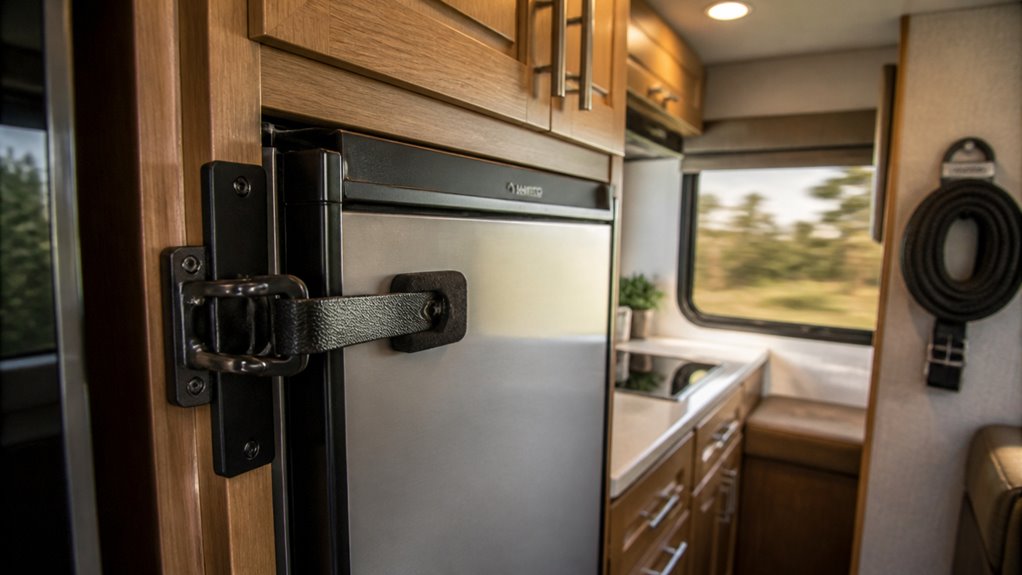
Install a sturdy, purpose-built latch designed for your model.
Firmly close the door and test latch engagement by gently pulling the handle before each trip.
Regularly inspect and maintain hinges, seals, and latches for wear or misalignment.
Promptly repair or replace any faulty hardware.
Temporary methods like straps are backups, not replacements.
Learn practical steps to ensure secure closure and protect your food on the road.
Key Takeaways
- Engage the factory-installed travel lock or install a dedicated RV refrigerator door latch before travel for secure closure.
- Firmly close and latch the door, then gently pull the handle to confirm latch engagement before every trip.
- Regularly inspect hinges, seals, and latch hardware for wear, damage, or misalignment to maintain reliable door closure.
- Replace damaged or misaligned parts with model-specific, durable metal latches and hinges designed to withstand road vibrations.
- Use temporary securing methods like Velcro straps or bungee cords only as backups, not substitutes for purpose-built latches.
Secure Your RV Refrigerator Door Using the Built-In Travel Lock

While preparing for travel, make sure to engage your RV refrigerator’s built-in travel lock to keep the doors securely closed.
Many RV refrigerators, especially Norcold models, have factory-installed travel locks designed to prevent doors from opening and food from spilling during transit.
To properly secure the door, close it firmly until you hear the latch click into place. Then verify by gently pulling on the handle.
Do not rely on a storage latch as it may not fully secure the door. Engage the travel lock before departure and release it only after arrival.
Regularly inspect the latch mechanism for wear or misalignment to maintain optimal closure performance.
Using the built-in travel lock guarantees your refrigerator stays closed, protecting contents and preventing damage while on the road.
For enhanced safety, consider models with reversible door designs which improve door accessibility and secure closure in cramped RV interiors.
Install a Dedicated RV Refrigerator Door Latch for Travel
Consider installing a dedicated RV refrigerator door latch designed specifically for travel to make sure your fridge stays securely closed on the road.
Install a dedicated RV refrigerator latch to keep your fridge securely closed during travel.
These latches, often made from durable metal, provide reliable locking to prevent door openings caused by road vibrations.
Many feature a 180-degree swing design, allowing you to keep the latch out of the way when not traveling.
Installing one is straightforward, and they’re widely available as RV refrigerator travel locks.
Using a purpose-built latch reduces the risk of spills, food loss, and damage to hinges.
Unlike temporary methods, these latches maintain closure integrity under temperature changes and repeated use.
To guarantee peak performance, select a latch compatible with your refrigerator model and install it firmly before each trip.
For enhanced security and ease of use, some models also include key-turn release mechanisms that provide controlled access without compromising durability.
Check and Test Your RV Refrigerator Door Closure Before Departure
Before you hit the road, take a moment to ensure that your refrigerator door is fully closed. It’s really important that the latch clicks securely into place. Once you think it’s shut, give the handle a gentle pull to test the latch engagement. You want to make sure it holds tight, even under a little pressure.
Also, don’t forget to check the hinges and seals. A quick inspection can save you from potential issues during your trip. Look out for any damage or misalignment that might affect how the door closes while you’re on the move. It’s those little details that can make a big difference!
For added convenience and security, consider models with auto shut-off features to prevent any accidental openings during travel.
Confirm Door Fully Closed
Firmly close your RV refrigerator door and verify that the latch clicks into place to guarantee a secure seal.
Don’t rely solely on visual confirmation; gently pull the handle to make certain the door resists opening.
A weak or misaligned latch can fail under road vibrations, risking door swings and interior damage.
Check for any misalignment or damaged seals that might prevent full closure. If necessary, replace worn hardware to restore proper function.
Avoid substituting storage latches for travel locks, as they may not secure the door adequately.
Confirming a fully closed door before departure reduces the chance of spills, food spoilage, and appliance damage while on the road.
Prioritize this step as a critical part of your pre-travel checklist.
Additionally, using a battery monitor can help ensure your RV’s power supply remains reliable, preventing unexpected appliance shutdowns during travel.
Test Latch Engagement
After confirming the refrigerator door is fully closed, you need to test the latch engagement to make certain it holds securely during travel. Firmly close the door and listen for the latch to click into place, indicating proper engagement.
Then, gently pull on the handle to verify the door resists opening. Visual checks alone aren’t enough; a weak or misaligned latch may fail under road vibrations. If your RV has a built-in travel lock, confirm it’s properly engaged before departure.
For added security, consider installing a dedicated travel latch designed for RV refrigerators. Testing the latch before each trip prevents spills, food loss, and damage caused by an unsecured door opening while driving.
Don’t rely solely on temporary methods; they’re backups, not substitutes for a fully engaged latch. Using refrigerators with frost-free technology can minimize maintenance challenges caused by door openings during travel.
Inspect Hardware Condition
Inspect the condition of your RV refrigerator’s hardware to guarantee reliable door closure during travel.
Before you hit the road, check for worn seals, damaged hinges, or misaligned components that can compromise the latch’s effectiveness.
Follow these steps to make certain secure closure:
- Visually inspect hinges, seals, and latch mechanisms for wear or damage.
- Close the door firmly and confirm the latch clicks securely into place.
- Gently pull on the handle to test the latch’s hold under tension.
- Replace any faulty or misaligned hardware with parts designed for your RV model.
A functional hardware system ensures the door stays shut, preventing spills and food spoilage.
Regular inspection and timely repairs maintain peak latch performance for safe travel.
Using a flexible sealant on door seals can enhance closure reliability by accommodating movement and temperature changes during travel.
Fix or Replace Broken or Misaligned Door Hardware
If your refrigerator door hardware is looking a bit worse for wear, it’s a good idea to tackle that issue right away. A secure seal is key to keeping everything fresh inside.
When you’re picking out replacement parts, make sure they match your model’s specifications. This will help ensure everything fits and works just as it should.
Oh, and when you’re installing those new parts, take a moment to properly align the hinges. This can help prevent any annoying gaps and make sure the door closes tightly, especially when you’re on the move.
Keeping your fridge in good shape will save you time and hassle in the long run! Also, consider the importance of proper fitting compatibility to avoid issues during installation and ensure a secure seal.
Identify Hardware Damage
Check the door hardware for signs of wear, damage, or misalignment that could compromise the refrigerator’s ability to stay securely closed during travel.
Start by inspecting hinges, latches, seals, and mounting screws for visible defects.
Look for cracks, rust, or bent components that affect alignment or function.
Addressing these early prevents door failure on the road.
- Examine hinges for looseness or corrosion that could cause door misalignment.
- Check latch mechanisms for wear or broken parts that impair locking.
- Inspect door seals for cracks or compression loss reducing closure strength.
- Verify mounting screws are tight and properly positioned to maintain hardware stability.
If you find any damage, plan to repair or replace the faulty hardware promptly to guarantee secure closure during transit.
Additionally, consider using covers or protective materials with anti-slip features to help maintain stable closures and reduce hardware wear during travel.
Choose Compatible Replacements
Select replacement hardware that matches your RV refrigerator’s specifications to guarantee proper fit and function.
Check the exact model and hole spacing. Many replacement latches fit specific measurements like 1-3/16 inch spacing.
Using incompatible parts can cause poor alignment or weak closure, risking door opening during travel.
Inspect hinges, latches, and seals for wear or damage before replacing.
Opt for durable, metal-constructed latches designed to withstand temperature changes and vibration.
Make certain the replacement latch engages firmly and securely holds the door closed.
Avoid makeshift fixes as primary solutions; purpose-built hardware provides reliable, long-term performance.
Installing compatible replacements restores peak door closure, preserving food safety and preventing spills while on the move.
Always test the new hardware to confirm proper engagement before departure.
Consider selecting latches with corrosion-resistant coatings to ensure long-lasting durability in varying RV environments.
Align Hinges Properly
Properly aligning your RV refrigerator hinges is crucial to maintaining a secure door closure during travel. Misaligned or damaged hinges cause gaps, preventing the door from sealing tightly and increasing the risk of opening while on the move.
To fix or replace your door hardware, follow these steps:
- Inspect hinges for wear, rust, or bent components that impair alignment.
- Loosen hinge screws slightly, adjust door position for proper fit, then retighten evenly.
- Replace damaged hinges with compatible parts matching original hole spacing and design.
- Test door closure by firmly closing and confirming the latch engages without resistance.
Regular hinge maintenance guarantees your refrigerator door stays firmly closed. This protects contents and prevents damage during transit. Additionally, ensuring proper sealing helps maintain moisture resistance inside the RV, preventing damage caused by humidity and condensation.
Use DIY Temporary Securing Methods Only as Backup
Although purpose-built travel latches offer the most reliable security, you can use DIY methods like Velcro straps, bungee cords, or rubber bands as temporary backups to keep your RV refrigerator door closed during transit.
These solutions provide added tension or pressure to supplement your main latch but shouldn’t replace it.
Foam tape can tighten the seal around the door frame, reducing movement, while door wedges apply extra force to hold the door shut.
Keep in mind these methods lack the durability and design precision of specialized travel latches, making them less effective over time.
Use them only when purpose-built options aren’t available or as a secondary measure.
Always verify the door’s secure closure after applying any temporary method before hitting the road.
Why Keeping Your RV Refrigerator Door Secure Protects Food and Prevents Spills?
Keeping your RV refrigerator door securely closed during travel consistently prevents food spoilage and minimizes the risk of spills.
When you make sure the door stays shut, you maintain a stable internal temperature, preserving freshness and safety.
Additionally, a secure door prevents items from shifting and breaking, which can create messes and damage the fridge interior.
Here’s why it matters:
- Maintains consistent cooling, reducing bacterial growth and spoilage.
- Prevents jars and bottles from tipping over, avoiding leaks and stains.
- Protects door seals and hinges from damage caused by rattling or forced openings.
- Keeps food in place, minimizing waste and cleanup time after travel.
Regularly Test Your RV Refrigerator Door Latch for Safe Travel
Regularly testing your RV refrigerator door latch guarantees it functions correctly and prevents unexpected openings during travel. Before each trip, close the door firmly, ensuring the latch clicks into place.
Pull gently on the handle to confirm it stays locked. Check for damage or misalignment in the latch, hinges, and seals, replacing any faulty parts promptly. Visual inspection alone isn’t enough; functional testing prevents food spoilage and interior damage.
| Action | Purpose | Frequency |
|---|---|---|
| Close & latch check | Confirm secure closure | Every trip before departure |
| Handle pull test | Verify latch engagement | Every trip before departure |
| Inspect hardware | Detect damage or misalignment | Monthly or if issues arise |
| Replace faulty parts | Restore secure closure | As needed |
| Use built-in locks | Enhance door security | Always during travel |
Frequently Asked Questions
Can Extreme Weather Affect My RV Refrigerator Door Latch Reliability?
Yes, extreme weather can affect your RV refrigerator door latch reliability.
Temperature fluctuations may cause metal components to expand or contract, leading to misalignment or weakened latch engagement.
Cold weather can stiffen seals, while heat may degrade plastic parts over time.
To maintain reliability, inspect and replace worn or damaged hardware regularly.
Using metal latches designed for durability under temperature changes helps guarantee your fridge door stays securely closed during travel.
How Do I Lubricate the RV Refrigerator Door Latch Mechanism?
To lubricate your RV refrigerator door latch mechanism, first clean it thoroughly with a dry cloth to remove dirt and debris.
Use a silicone-based lubricant or a light machine oil, applying sparingly to the latch’s moving parts.
Avoid heavy grease, which can attract dust.
Operate the latch several times to distribute the lubricant evenly.
Perform this maintenance regularly to assure smooth, reliable function and prevent corrosion or sticking.
Are There Battery-Powered Locks Available for RV Refrigerator Doors?
You won’t find many battery-powered locks specifically designed for RV refrigerator doors, as most rely on mechanical travel latches for reliability and durability.
Electronic locks tend to consume power and might fail in transit vibrations.
Instead, focus on robust mechanical latches or travel locks engineered to withstand road conditions.
If you want added security, pairing these with a battery-powered alarm system for the fridge door could be a practical, tech-savvy solution.
What Should I Do if My RV Fridge Door Seal Is Cracked?
If your RV fridge door seal is cracked, replace it promptly to maintain a proper airtight closure.
Remove the old seal carefully, clean the sealing surface, and install a compatible replacement seal designed for your fridge model.
A damaged seal reduces cooling efficiency and can cause the door to stay ajar.
Check for alignment issues and consider inspecting hinges or latches to make certain the door closes securely after seal replacement.
Can Vibration Sensors Alert Me if the Fridge Door Opens While Driving?
Coincidentally, vibration sensors can alert you if your RV fridge door opens while driving.
These sensors detect unusual movement or vibrations caused by the door swinging open.
You can connect them to an alarm or smartphone alert system, giving you real-time notifications.
Installing such sensors adds a practical layer of security, helping you prevent spills, food spoilage, and damage during travel.
It’s a smart, proactive way to monitor your fridge’s status on the road.
Keep Your RV Refrigerator Door Secure While Traveling
Keeping your RV refrigerator door securely closed while traveling is vital. Did you know that up to 30% of food spoilage in RVs results from door seal failures?
By using built-in locks, installing dedicated latches, and regularly testing closures, you’ll prevent spills and protect your groceries. Always address broken hardware promptly and rely on DIY methods only as backups.
Staying proactive guarantees safe, efficient travel and keeps your food fresh on the road.