
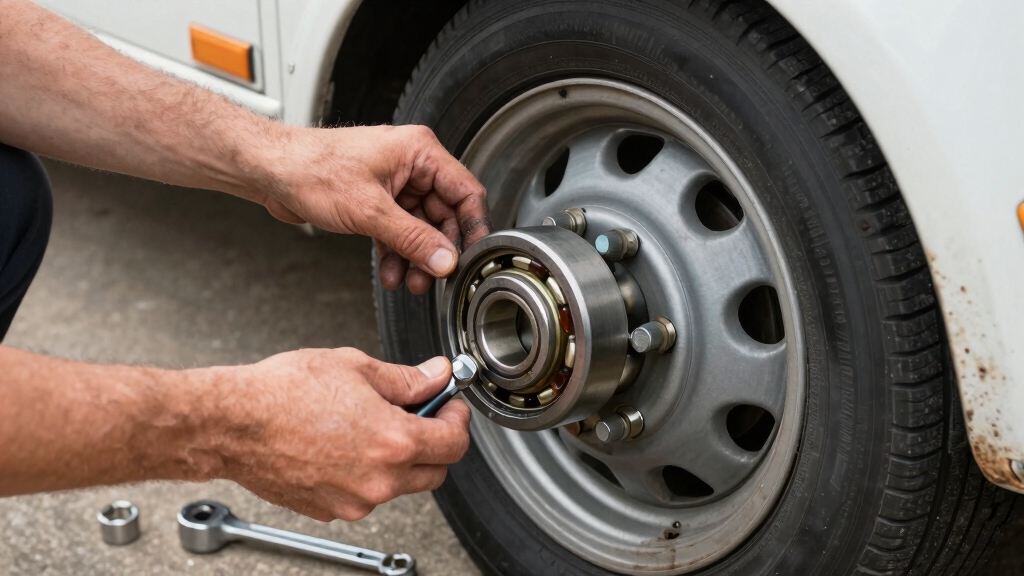
To replace trailer bearings, first secure your trailer on jack stands and remove the wheel and hub carefully. Pry off the dust cap, remove the cotter pin and castle nut, then slide the hub off to access the bearings.
Remove and discard old bearings, cups, and seals. Clean and inspect all parts for damage or wear. Pack new bearings generously with marine grease, install new seals, and reassemble with proper torque and new cotter pins.
Follow precise steps to guarantee safe, long-lasting results. Detailed guidance will enhance your process.
Key Takeaways
- Secure the trailer on jack stands, chock wheels, and remove the tire and hub assembly carefully from the spindle.
- Remove dust cap, cotter pin, castle nut, and outer bearing; then flip hub to remove the inner bearing and grease seal.
- Clean all parts thoroughly, inspect spindle and bearings for damage or wear, and discard old bearings and seals.
- Pack new bearings with marine-grade grease, install new seals, and reassemble hub, bearings, washers, and castle nut to proper torque.
- Insert a new cotter pin, install dust cap, remount wheel, torque lug nuts in a star pattern, and lower the trailer safely.
Prepare Your Trailer and Tools for Bearing Replacement

Before you begin replacing trailer bearings, start by securely lifting your trailer using jack stands to guarantee safety throughout the process.
Begin by safely lifting your trailer with jack stands to ensure stability during bearing replacement.
Next, remove the lug nuts and tire assembly carefully, setting them aside in a clean area.
Gather all essential tools: pliers, hammer, drift punch, grease packer, and a flathead screwdriver.
Before disassembly, inspect the spindle for any visible damage such as cracks or excessive wear, as this could affect bearing performance.
Prepare new cotter pins and grease seals for replacement to ensure a proper seal and secure fastening.
Organize your workspace to keep parts accessible and prevent contamination.
Following these preparation steps ensures a safe, efficient, and accurate bearing replacement without unnecessary delays or hazards.
Additionally, selecting bearings with double lip grease seals helps reduce leaks and contamination during installation.
Remove the Hub and Bearings Safely
With your trailer securely lifted and the tire assembly removed, you’re ready to take off the hub and bearings.
Begin by prying off the dust cap using a flathead screwdriver. Next, straighten and remove the cotter pin with needle-nose pliers.
Then unscrew the castle nut by hand and remove the washer. Carefully pull the hub straight off the spindle, catching the outer bearing as it comes free.
Dispose of the old cotter pin properly. Flip the hub over to expose the inner bearing and seal, preparing for their removal.
Throughout this process, support the hub adequately to prevent damage. Inspect the spindle for any signs of wear or damage before proceeding to the next step.
Working methodically guarantees you remove the hub and bearings safely and effectively. Using a jack with the appropriate load capacity ensures stability and safety while working under the trailer.
Remove Old Bearing Cups and Seals
Sure! Here’s a more conversational version of your text:
First things first, flip the hub over and give that outer bearing cup a good clean before you dive in. Once it’s nice and tidy, grab a brass drift punch and a hammer. Now, gently tap out that inner bearing cup. Just take your time with this part!
Oh, and don’t forget about the grease seal! It usually comes out along with the inner bearing, so make sure to remove it carefully. We want to avoid any damage, right?
To keep your trailer bearings protected, consider using marine-grade grease for its excellent water resistance and corrosion protection.
Removing Inner Bearing Cup
To remove the inner bearing cup, start by cleaning the outer bearing cup thoroughly to guarantee no debris interferes with the process. Support the hub on sturdy wood blocks to prevent damage.
Use a brass drift punch and a hammer to tap the inner bearing cup out carefully, applying steady, even force around the cup’s circumference. Avoid deforming the hub or spindle during removal. Once loose, knock out the inner bearing with a wood dowel and mallet using a circular motion. Discard old cups and bearings after removal.
Selecting a grease with strong adhesion and water resistance is crucial when reinstalling bearings to ensure long-lasting protection and prevent washout.
| Step | Tool Required | Key Point |
|---|---|---|
| Clean outer cup | Rag/brush | Remove all dirt and grease |
| Tap inner cup out | Brass drift & hammer | Apply even, controlled taps |
| Knock out bearing | Wood dowel & mallet | Use circular motions gently |
Extracting Grease Seal
Once you’ve knocked out the inner bearing, attention turns to removing the grease seal.
The grease seal typically comes out with the inner bearing, but if it remains stuck, use a flathead screwdriver or seal puller to pry it carefully from the hub.
Insert the tool between the seal lip and hub, applying gentle, even pressure to avoid damaging the hub surface.
Work around the seal evenly until it loosens and pops free.
Inspect the seal area and hub bore for any damage or corrosion before proceeding.
Remove any residual grease or debris to guarantee a clean surface for the new seal.
Discard the old grease seal and bearing cups.
Proper extraction prevents damage to the hub and guarantees a secure fit for replacement components.
Using valve stems made from high-grade brass can enhance durability and prevent leaks during maintenance.
Inspect Spindle, Bearings, and Races Before Installation
Before you dive into installing those new bearings, take a moment to inspect the spindle threads. You want to look out for any damage or wear that might mess with the fit and function. It’s a small step that can save you a lot of headaches later on.
Next up, don’t forget to check the bearing surfaces and races. Look for any pitting, scoring, or deformation. These little defects might seem minor, but they can lead to premature failure, which is definitely not what you want.
If you spot any components showing signs of wear, it’s best to replace them. This simple precaution will help ensure that everything operates smoothly and reliably. Trust me, you’ll be glad you took the time to do it right!
Additionally, using sealed bearings can help prevent saltwater intrusion and extend the lifespan of your trailer components.
Spindle Thread Condition
Examine the spindle threads carefully for any flat spots or deformities, especially on EZ lube types where a D-shaped thread may appear. Damaged threads can prevent proper nut tightening, risking bearing failure. Use a magnifying glass or bright light to spot irregularities.
Check the following:
- Thread integrity: No flattening, cross-threading, or burrs
- EZ lube port condition: Clean and unobstructed for grease flow
- Spindle surface: Smooth and free of corrosion or nicks
If you find damage, repair or replace the spindle before proceeding. Proper thread condition guarantees the castle nut seats securely, maintaining bearing preload.
Neglecting this step compromises safety and bearing life. Always prioritize spindle inspection to ensure reliable trailer operation. Maintaining correct tire pressure is also crucial for overall trailer safety and performance during towing.
Bearing And Race Wear
Although you’ve inspected the spindle threads, you also need to carefully check the bearings and races for wear or damage before installation.
Examine the bearing surfaces for pitting, scoring, or discoloration, which indicate overheating or contamination.
Rotate bearings to detect rough spots or binding.
Inspect the races inside the hub, looking for grooves, cracks, or uneven wear patterns.
Any signs of damage mean you must replace the bearings and races to prevent premature failure.
Wipe off excess grease and debris to get a clear view.
Never reuse old cups or bearings, as compromised components can lead to unsafe operation.
Ensuring all parts are in optimal condition maintains proper alignment, load distribution, and smooth rotation when you reassemble the hub onto the spindle.
Proper maintenance, including regular inspections, is essential to extend the lifespan of trailer tires and related components.
Pack and Install New Trailer Bearings Properly
Begin by thoroughly packing the new bearings with grease, guaranteeing every roller and cage gap is filled to prevent premature wear. Use a grease packer or your hands to force grease into all bearing surfaces.
Next, apply a generous amount of grease inside the bearing cup to ensure smooth seating. When installing the bearings, follow these steps:
Insert the inner bearing cone into the hub cup, making sure it’s fully seated. Press the new grease seal carefully into place, using light sealant on the edge for a secure fit.
Slide the hub onto the spindle, then position the outer bearing and washer correctly. Proper packing and installation reduce friction and extend bearing life, so take your time to avoid contamination.
For enhanced durability and protection against wear, consider using a grease compatible with heavy-duty steel components commonly found in trailer assemblies.
Reassemble Hub Bearings: Nuts, Cotter Pins, and Dust Caps
Once the bearings are properly packed and seated, secure the hub by tightening the castle nut to the manufacturer’s specified torque.
After torquing, align the castle nut slot with the hole in the spindle to insert a new cotter pin. Bend the cotter pin ends firmly around the spindle to prevent loosening.
Next, install the washer if removed during disassembly, ensuring it sits flush against the nut.
Finally, press the dust cap or grease cap onto the hub using a rubber mallet or by hand, making sure it’s seated evenly to protect bearings from dirt and moisture.
Confirm the dust cap fits snugly without gaps. This completes the reassembly of the hub bearings, preparing the hub for wheel installation and safe operation.
For added safety during parking or maintenance, consider using wheel chocks to ensure the trailer remains stationary.
Torque the Wheel and Reinstall the Tire Safely
Secure the tire by aligning it with the wheel studs and sliding it onto the hub. Hand-tighten the lug nuts to hold the tire in place.
Once the tire is seated, use a torque wrench to tighten the lug nuts in a crisscross or star pattern. This guarantees even pressure and proper seating of the wheel.
Tighten lug nuts to the manufacturer’s specified torque to avoid damage or loosening. Recheck torque after the first few miles of towing to maintain safety.
Lower the trailer carefully from jack stands, confirming stability. Proper torque and safe tire installation prevent wheel wobble, uneven wear, and potential accidents.
Always follow torque specs and safety protocols to complete the bearing replacement process effectively.
Frequently Asked Questions
How Often Should Trailer Bearings Be Replaced?
You should replace trailer bearings every 12,000 to 15,000 miles or at least once a year, whichever comes first.
If you notice noise, roughness, or excessive heat near the hubs, inspect and replace bearings immediately.
Regular maintenance, including cleaning, greasing, and inspection, extends bearing life.
Don’t wait for failure; proactive replacement prevents costly damage and guarantees safe towing performance.
Always follow your trailer manufacturer’s recommendations for intervals.
What Type of Grease Is Best for Trailer Bearings?
You should use high-temperature, water-resistant wheel bearing grease for trailer bearings.
Look for a grease with a lithium complex or synthetic base, which handles heat and moisture well.
This type prevents corrosion and withstands heavy loads and wet conditions.
Avoid general-purpose grease, as it lacks the necessary properties.
Always pack bearings thoroughly with this grease before installation to guarantee smooth operation and extended bearing life.
Can I Reuse Old Bearings if They Look Clean?
You shouldn’t reuse old bearings even if they look clean. Bearings endure wear and stress that aren’t always visible.
Reusing them risks premature failure, causing damage and safety hazards. Always replace bearings with new, properly greased ones during maintenance.
This guarantees peak performance and longevity. It’s a small investment compared to potential breakdowns or accidents.
Prioritize safety and reliability by installing fresh bearings every time.
How to Tell if a Bearing Is Overheating?
You can tell if a bearing is overheating by checking for discoloration, such as a blue or dark tint on the bearing or races.
Overheating often causes a burnt smell or grease breakdown, making it appear dry or contaminated.
You might also notice rough rotation or excessive play when spinning the hub.
If you feel excessive heat near the hub after use, that’s a clear sign the bearing’s running too hot and needs inspection or replacement.
What Are the Signs of Spindle Damage?
You’ll spot spindle damage by checking for flat spots, scoring, or grooves on the spindle surface.
Look for deformation, cracks, or pitting around bearing contact areas. If you have an EZ lube spindle, inspect the D-shaped section for wear or distortion.
Any roughness or uneven surfaces can cause bearing failure, so replace the spindle if you notice these signs to guarantee safe and smooth trailer operation.
From Risk to Reliability: The Power of Proper Bearing Care
Now that you’ve mastered replacing your trailer bearings, you’ve tackled one of the most critical maintenance tasks that can save your trailer from catastrophic failure.
Remember, proper inspection and packing of bearings are as essential as the nuts and bolts holding everything together.
Follow each step carefully, and you’ll guarantee smooth, safe towing every time. Neglecting this can cost you a fortune, so don’t underestimate the power of well-maintained bearings!