
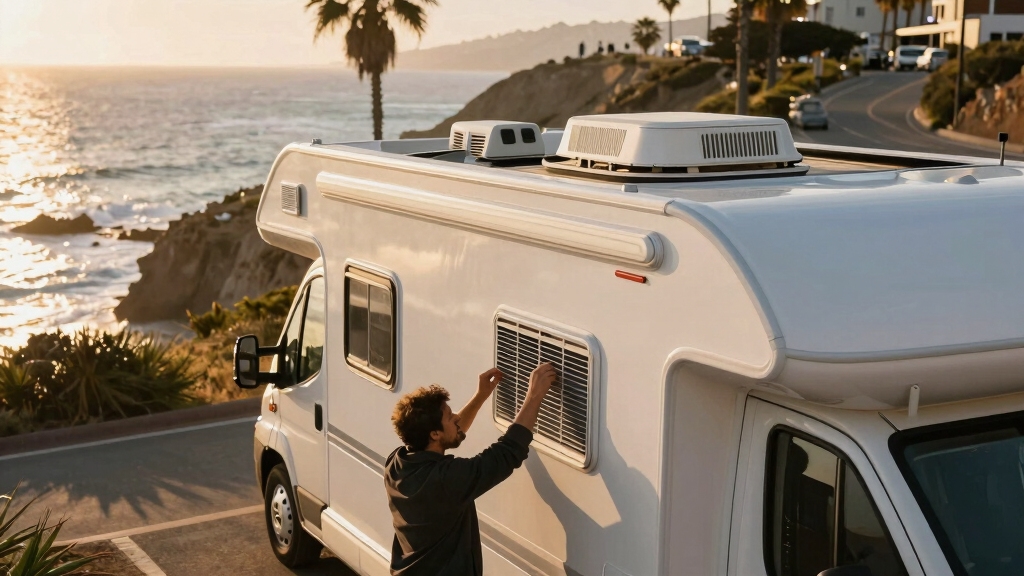
Set your RV air conditioner to “Cool” mode with the fan on “Auto” to engage the compressor efficiently and optimize airflow.
Choose a temperature a few degrees below your cabin’s current temperature to trigger reliable cooling without short cycling or wasting energy.
Avoid settings that are too high to ensure the system runs properly. Proper thermostat settings combined with suitable BTU sizing and maintenance improve performance and longevity.
Let’s explore how to maximize your RV AC’s efficiency and durability.
Key Takeaways
- Set the thermostat to “Cool” mode with the fan on “Auto” to engage the compressor efficiently and optimize energy use.
- Adjust the temperature a few degrees below the current room temperature to trigger effective cooling without short cycling.
- Use vent adjustments and portable fans to enhance airflow and evenly distribute cooled air throughout the RV.
- Avoid setting the temperature too high (e.g., above 90°F), as it prevents the AC from engaging and cooling properly.
- Regularly clean or replace air filters and maintain coils to ensure optimal airflow and consistent cooling performance.
Choose the Right BTU Size for Your RV AC

Selecting the right BTU size for your RV air conditioner is essential to guarantee effective cooling without excessive energy consumption.
If your RV is compact, a single-zone unit with around 15,000 BTUs typically suffices, balancing cooling power and efficiency.
Larger RVs, especially Class A motorhomes, often require dual AC setups with at least 15,000 BTUs per unit to maintain comfortable temperatures throughout the space.
Avoid undersizing, which strains the system and reduces lifespan, or oversizing, which wastes energy. Consider your RV’s layout, insulation, and typical climate when choosing BTUs.
Matching capacity to your RV’s cooling load ensures the compressor runs optimally, preventing short cycling and excessive power draw.
This technical balance is essential for maintaining performance and energy-efficient operation during your travels.
Energy efficiency can be further optimized by selecting models with a high Energy Efficiency Ratio (EER) to reduce power consumption and operating costs.
Set Your RV Air Conditioner for Optimal Cooling
When you want your RV air conditioner to run efficiently, setting the thermostat correctly is vital. Start by selecting the “Cool” mode, not “Fan,” to ensure the compressor activates. Set the temperature a few degrees below the current room temperature to trigger cooling.
Use the “Auto” fan speed instead of “High” or “Low” to optimize airflow and energy consumption. Whether you have an analog dial or digital controls, precise adjustments matter.
Avoid setting the temperature too high; 90°F won’t engage cooling. Trust “Auto” fan mode for balanced circulation and less wear. Lower temperature settings activate cooling cycles promptly.
Accurate temperature control preserves your AC’s longevity. Proper thermostat settings guarantee comfort while conserving energy in your RV. Choosing units with a higher Energy Efficiency Rating can further reduce power consumption and costs.
Maintain Your RV AC for Best Performance
To keep your RV AC running efficiently, it’s a good idea to change the air filters monthly during the summer. This helps prevent any airflow restrictions that can impact performance.
Also, don’t forget to regularly clean the coils and straighten any bent fins. This simple maintenance step can really help maintain peak heat exchange.
While you’re at it, take a moment to inspect the unit for any leaks or damage. Catching these issues early can save you from costly repairs down the line.
For improved startup performance and to prevent generator overloads, consider installing a hard start capacitor in your RV AC system.
Change Air Filters
Change your RV air filters monthly during the summer to maintain peak cooling efficiency and prevent airflow restrictions.
Dirty or clogged filters reduce airflow, forcing your AC compressor to work harder, which cuts efficiency and shortens the unit’s lifespan.
Regularly swapping out filters guarantees optimal air quality and consistent cooling performance. Keep these benefits in mind when changing filters:
- Enjoy fresher, cleaner air inside your RV
- Avoid costly repairs caused by strain on the compressor
- Maintain steady, even cooling throughout your space
- Extend the lifespan of your air conditioning system
Always use filters compatible with your RV AC model and inspect them visually each month.
Clean or replace filters promptly to avoid performance degradation and costly downtime.
Additionally, maintaining proper airflow with devices like RV fridge fans can help reduce strain on your cooling systems and improve overall efficiency.
Clean Coils Regularly
After regularly replacing your RV’s air filters, the next step in maintaining peak cooling efficiency is cleaning the coils.
Both the evaporator and condenser coils accumulate dirt and debris over time, which restricts airflow and reduces heat transfer.
You should clean these coils at least every six months or more frequently in dusty environments.
Use a soft brush or coil cleaner designed for RV AC units to gently remove buildup without damaging the delicate fins.
Make sure to straighten any bent fins with a fin comb to optimize airflow.
Proper coil maintenance guarantees your compressor operates efficiently, prevents overheating, and extends the system’s lifespan.
Neglecting this step can cause higher energy consumption and diminished cooling performance, undermining your RV air conditioner’s effectiveness during hot weather.
Additionally, controlling humidity with an RV dehumidifier can further improve overall air quality and comfort inside your RV.
Inspect For Leaks
Regularly inspecting your RV air conditioner for leaks is essential to maintaining peak performance and preventing costly repairs. Leaks in refrigerant lines or seals reduce cooling efficiency and strain the compressor, leading to premature failure.
You should carefully examine all visible connections, gaskets, and hoses for signs of oil residue, corrosion, or moisture buildup. Early detection helps you address issues before they escalate.
To protect your investment, focus on these critical leak indicators:
- Unexplained drops in cooling capacity causing discomfort
- Hissing sounds near refrigerant lines signaling pressure loss
- Visible oil stains around fittings or compressor seals
- Frequent compressor cycling indicating refrigerant imbalance
Additionally, maintaining proper ventilation through effective RV ceiling fans can help optimize your air conditioner’s performance by improving airflow and reducing system strain.
Boost Your RV AC’s Energy Efficiency
Improving your RV AC’s energy efficiency starts with optimizing insulation and airflow management.
Make certain windows and the vehicle underbelly are properly insulated to minimize thermal exchange.
Use vent adjustments strategically to direct cooled air toward warmer zones, preventing uneven cooling.
Incorporate portable fans to enhance air circulation, reducing the AC’s workload.
Set your thermostat to “Cool” mode with the fan on “Auto” to allow the compressor to cycle efficiently.
Avoid high fan speeds that increase energy consumption unnecessarily.
Consider installing a smart thermostat for precise scheduling, cutting power use when cooling isn’t needed.
Regularly clean or replace air filters to maintain peak airflow.
Inspect coils for debris or damage.
These steps collectively reduce strain on your unit, prolonging its lifespan and lowering energy costs.
Choosing a compatible WiFi thermostat can enable remote control and programmable schedules to further optimize energy use.
Fix Common RV AC Problems
Even with optimized energy efficiency, your RV air conditioner can still encounter operational issues that impact comfort and performance.
You need to diagnose and address these problems promptly to maintain reliability and avoid costly repairs. Common issues you might face include:
Low refrigerant causing freeze-ups and restricted cooling.
Malfunctioning thermostat leading to inconsistent temperature control.
Dirty air filters reducing airflow and efficiency.
Improper ventilation causing uneven cooling throughout the RV.
To fix these, regularly inspect refrigerant levels.
Clean or replace filters monthly during summer.
Verify thermostat settings and function.
Make sure vents direct airflow properly.
Timely maintenance prevents system strain and prolongs your AC’s lifespan.
This keeps your RV comfortable no matter the conditions.
Installing a soft start device can reduce compressor startup strain, improving efficiency and preventing electrical overloads.
Pick the Best RV AC Model for Your Needs
Choosing the right RV air conditioner requires evaluating your vehicle’s size, power availability, and cooling needs carefully.
For compact RVs, a single 15,000 BTU unit usually suffices, balancing cooling power with energy efficiency. Larger Class A motorhomes often require dual AC setups to maintain consistent temperature.
Consider rooftop units for standard installation or basement models if noise reduction is a priority. Assess your power source, whether 12V or shore power, to guarantee compatibility.
Models like the RecPro 15K offer durability for general use, while TOSOT GO COOL handles extreme temperatures effectively. For small spaces with limited power, the BALIGO 12V model is ideal.
Always factor in pre-wiring, SEER ratings, and fan speed variability to optimize performance and energy consumption for your specific RV environment.
Many modern units feature inverter compressor technology to enhance energy efficiency and reduce battery drain during operation.
Frequently Asked Questions
Can I Use My RV AC Unit While Driving?
Yes, you can use your RV AC unit while driving, but it depends on your RV’s electrical system.
If your RV is connected to shore power or has a robust generator running, the AC will operate efficiently.
Running the AC solely on your vehicle’s battery or alternator can strain the system and drain power quickly.
Make sure your AC’s power source supports continuous operation during travel to avoid damage or interruptions.
How Do I Winterize My RV Air Conditioner?
Since refrigerant systems can lose efficiency in freezing temperatures, you should winterize your RV air conditioner by first disconnecting power and removing the unit if possible.
Clean and dry all components thoroughly, including coils and drains, to prevent mold and corrosion.
Cover the unit with a breathable, insulated cover to protect from ice and debris.
Change air filters and inspect seals to maintain peak function when you reinstall it in warmer weather.
What Is the Average Lifespan of an RV AC Unit?
You can expect your RV AC unit to last between 10 to 15 years with proper maintenance.
Factors like regular filter changes, coil cleaning, and ensuring no refrigerant leaks extend lifespan.
Neglecting these tasks or running the unit in harsh conditions shortens durability.
Keep an eye on components such as gaskets and electrical parts.
Perform amp-draw tests periodically to catch issues early and maintain peak operation longevity.
Are RV Air Conditioners Compatible With Solar Power Systems?
Yes, RV air conditioners can be compatible with solar power systems, but you need to make sure your solar setup can handle their high power demands.
Most RV AC units require significant wattage, often around 1,200 to 1,500 watts. You’ll need a sufficiently sized solar array, battery bank, and inverter.
Using energy-efficient models with variable speed fans and a high SEER rating can reduce power consumption, making solar integration more feasible for you.
How Loud Are Rooftop RV Air Conditioners Compared to Basement Units?
Rooftop RV air conditioners typically produce noise levels around 70 decibels, similar to a vacuum cleaner, while basement units operate quieter, often near 50-55 decibels.
You’ll notice basement units generate less sound because they’re insulated by the RV’s structure and mounted away from living spaces.
If noise is a priority, basement units reduce distraction, but rooftop models are easier to install and maintain.
Weigh noise against convenience carefully.
Travel Smarter with an Efficient and Powerful RV Cooling System
Choosing the right BTU size and setting your RV air conditioner properly is like tuning a precision instrument. It guarantees peak performance every time.
By maintaining your AC and addressing common issues swiftly, you’ll keep your system running efficiently. This will also extend its lifespan.
Don’t forget to boost energy efficiency to save power on the road. With the best model tailored to your needs, you’ll stay cool and comfortable no matter where your travels take you.