

RV antifreeze does evaporate, but how fast depends on its makeup and exposure.
Propylene glycol-based antifreeze, common in RVs, has a high boiling point and evaporates very slowly, especially in closed plumbing systems.
Water and alcohol additives speed evaporation, with alcohols increasing volatility and flammability risks.
Temperature also affects evaporation rates; the warmer it gets, the faster antifreeze can thin.
Proper sealing slows fluid loss markedly. Understanding these factors helps you manage antifreeze longevity and effectiveness.
Key Takeaways
- Propylene glycol-based RV antifreeze evaporates very slowly due to its low volatility and high boiling point.
- Water and alcohol components in antifreeze evaporate faster, causing fluid concentration and thickening over time.
- Alcohol-containing antifreeze formulas evaporate more quickly and present higher flammability risks.
- Closed and sealed RV plumbing systems minimize antifreeze evaporation by limiting air exposure.
- Open traps and bowls allow evaporation, leading to residue buildup that impairs system function.
What RV Antifreeze Is Made Of and How It Affects Evaporation?
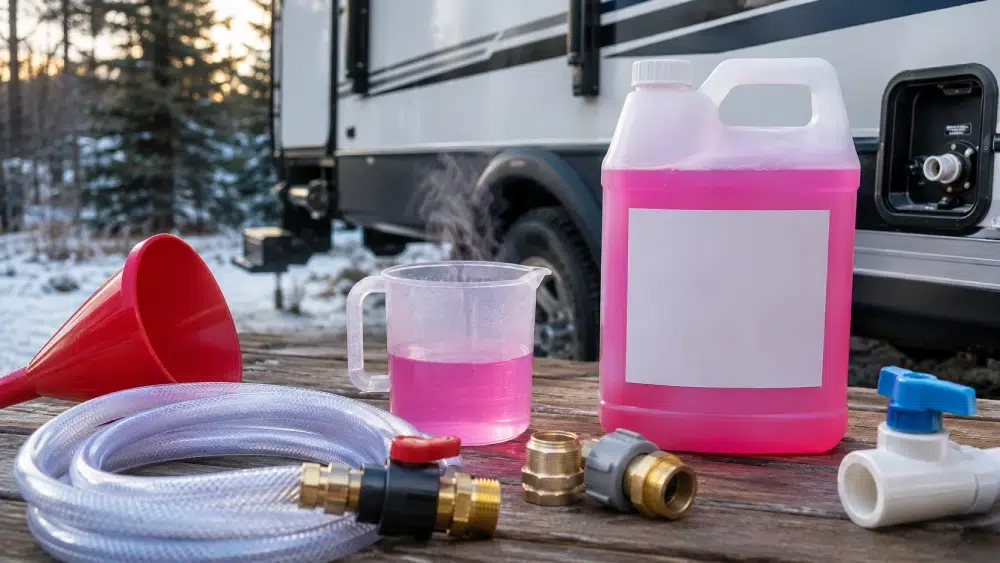
Understanding what RV antifreeze is made of is key to grasping how it evaporates under various conditions.
Most RV antifreezes consist primarily of propylene glycol mixed with water. Some formulations include alcohols like ethanol.
The evaporation rate depends largely on the volatile components—mainly water and any alcohol present. Propylene glycol has a high boiling point and low volatility, so it evaporates very slowly.
However, since many products are premixed, the water content can evaporate faster. This causes the fluid to thicken over time in open systems like P-traps.
Alcohol-containing blends tend to evaporate quicker due to alcohol’s higher volatility, which also affects flammability.
Consequently, the precise chemical composition directly influences how quickly RV antifreeze loses volume under different storage or usage scenarios.
Many formulations also include corrosion inhibitors and seal lubricants to maintain system integrity during extended storage, which can affect the fluid’s overall stability and evaporation behavior in extreme cold conditions.
Does Propylene Glycol-Based RV Antifreeze Evaporate?
You might be wondering about propylene glycol-based RV antifreeze and whether it evaporates. Well, the good news is that it evaporates very slowly under typical storage temperatures. This is mainly due to its unique chemical makeup.
Now, the evaporation rate can really vary. It depends a lot on factors like the antifreeze’s water and alcohol content, as well as the surrounding temperature. In most cases, you won’t see temperatures that approach the boiling point, which is around 223°F. Using antifreeze with advanced corrosion inhibitors can help maintain its effectiveness over time.
Evaporation Rate Factors
Although propylene glycol-based RV antifreeze doesn’t evaporate quickly under typical storage conditions, its evaporation rate depends heavily on its chemical composition and environmental factors.
Most formulas combine propylene glycol with water, so the water fraction chiefly drives evaporation.
Products containing alcohols, such as ethanol, exhibit higher volatility and evaporate faster. This increases fluid loss and potentially fire risk.
The antifreeze’s volatile content typically ranges from 25% to 35% by volume, influenced by premixed water and additives.
Closed systems minimize evaporation, but exposed traps or bowls allow gradual thinning as water evaporates first.
To accurately assess evaporation, consider the specific blend’s water-to-glycol ratio and presence of volatile components. Understanding these factors helps you predict antifreeze longevity and informs appropriate maintenance and storage practices.
Regular inspection and maintenance of RV water systems, including components like the magnesium anode rod, further help preserve system integrity.
Temperature Impact On Evaporation
Temperature plays a critical role in determining whether propylene glycol-based RV antifreeze evaporates.
You’ll find that evaporation rates remain minimal under typical winter storage temperatures, as these are far below the boiling point of a 50/50 propylene glycol-water mixture, which is approximately 223°F.
Only when the fluid approaches or exceeds this threshold does evaporation become significant.
Since most RV antifreeze formulations contain a substantial proportion of propylene glycol, a compound with low volatility, the fluid resists evaporation under normal conditions.
However, if temperatures rise considerably, especially above ambient storage levels, you risk accelerated loss through vaporization.
Understanding this temperature dependence helps you maintain adequate antifreeze levels and avoid premature thickening or drying out in plumbing components exposed to heat.
For best results and to maintain protection, always use non-toxic RV antifreeze formulated specifically for potable water systems.
Composition Influence On Stability
Because the composition of RV antifreeze directly affects its evaporation rate, understanding the balance of ingredients is essential.
Propylene glycol-based formulas typically combine water and propylene glycol, with variations influencing stability and volatility. You should note these key factors:
Water content increases evaporation potential as water evaporates faster than propylene glycol.
Alcohol additives, such as ethanol, raise volatility and flammability risks.
Premixed products often contain 25–35% volatile compounds by volume.
Pure propylene glycol evaporates very slowly under normal storage conditions.
Residual thickening occurs as water evaporates, concentrating propylene glycol and reducing further evaporation.
Using lead-free brass adapters during winterization can reduce antifreeze dependence by effectively removing residual water from plumbing systems.
How Water and Alcohol Influence RV Antifreeze Evaporation?
When you examine the composition of RV antifreeze, you’ll find that both water and alcohol markedly influence its evaporation rate.
Water, being highly volatile, evaporates faster than propylene glycol, causing the antifreeze mixture to thicken over time as water content decreases.
Alcohols such as ethanol, often included in some formulas, increase volatility further, accelerating evaporation compared to propylene glycol alone.
This volatility variation means that antifreeze blends with higher water or alcohol percentages lose fluid volume more quickly under exposure.
You should also consider that alcohol-containing antifreezes may present flammability concerns due to their faster evaporation.
Consequently, understanding the relative proportions of water, alcohol, and propylene glycol in your RV antifreeze is essential for predicting evaporation behavior and planning maintenance intervals effectively.
Additionally, incorporating fuel stabilizers can help mitigate the effects of evaporation and maintain the protective properties of your antifreeze over time.
How Temperature Impacts RV Antifreeze Evaporation Rates?
The volatility of water and alcohol in RV antifreeze sets the stage for how temperature influences evaporation rates. As temperature rises, the vapor pressure of these components increases, accelerating evaporation. You’ll notice this effect particularly with alcohol-containing formulations, which evaporate faster than propylene glycol blends.
Key temperature impacts include:
Evaporation remains minimal below typical winter storage temperatures (far below 223°F).
Water evaporates first due to a lower boiling point, altering antifreeze concentration.
Alcohol presence raises evaporation rate, especially as temperatures approach ambient or higher.
Propylene glycol’s high boiling point (~370°F) limits its evaporation under normal conditions.
Elevated temperatures accelerate fluid thinning in exposed plumbing, risking freeze protection loss.
Understanding these dynamics helps you manage antifreeze storage and maintain effective freeze protection.
Proper maintenance and protection against environmental factors are crucial for preserving RV roof lifespan.
Why RV Antifreeze Lasts Longer in Closed Plumbing Systems?
You know, RV antifreeze tends to last a lot longer in closed plumbing systems, and there are a couple of reasons for that.
First off, when the system is sealed, there’s less exposure to air. This really helps cut down on evaporation.
Plus, with a sealed system, the volatile components in the antifreeze are less likely to escape. That means the protective concentration of the antifreeze stays intact for a longer time.
And let’s not forget about contamination. Closed systems do a great job of minimizing that, which helps prevent fluid degradation. So, overall, keeping things sealed really makes a difference in how long your RV antifreeze can last!
Using hoses made from reinforced PVC or hybrid polymers in the plumbing can also contribute to maintaining antifreeze effectiveness by preventing leaks and contamination.
Reduced Air Exposure
Because RV antifreeze is stored within a closed plumbing system, its exposure to air and consequently evaporation is materially limited.
You’ll find that limiting air contact reduces the rate at which volatile components dissipate, preserving antifreeze volume and effectiveness.
In closed systems, the fluid remains largely undisturbed, minimizing evaporation compared to open containers or exposed traps.
Consider these factors that influence evaporation in closed plumbing:
- Limited air exchange reduces loss of water and alcohol fractions.
- Sealed fittings prevent oxygen ingress and vapor escape.
- Reduced airflow lowers drying and concentration changes.
- Minimal surface area exposure curbs volatilization.
- Stable internal pressure discourages fluid loss.
Additionally, the use of sealed fittings that match plumbing specifications is essential to maintain the integrity of the closed system and prevent fluid loss.
Sealed System Benefits
Limiting air exposure markedly enhances the longevity of RV antifreeze by minimizing evaporation.
When your RV’s plumbing system is sealed, the antifreeze remains contained, preventing volatile components, primarily water and any alcohol additives, from dissipating.
This containment stabilizes the fluid’s concentration, preserving its freeze protection properties over extended storage periods.
In contrast, open systems expose antifreeze to ambient air, accelerating water loss and increasing solution viscosity, which compromises performance.
Since most RV antifreeze formulas combine propylene glycol with water, maintaining a closed environment slows evaporation rates substantially.
Additionally, sealed systems inhibit contamination and reduce the risk of syrupy residue formation in low-use fixtures.
For RV owners in cold climates, using hoses with freezing/weather resistance can further protect against system damage during winter storage.
How Evaporation Changes Antifreeze Thickness in P-Traps and Bowls?
Although RV antifreeze is designed to resist evaporation, the water component in its mix gradually dissipates in P-traps and toilet bowls. This causes the fluid to thicken over time.
As water evaporates faster than propylene glycol, the concentration of glycol increases. This change affects the antifreeze’s viscosity and protective properties. You’ll notice this thickening especially in low-use fixtures exposed to air.
Key factors include:
- Water’s higher volatility leads to selective evaporation.
- Increased propylene glycol concentration raises fluid thickness.
- Thicker antifreeze can affect flow and trap seals.
- Residual syrupy deposits may accumulate with prolonged evaporation.
- Viscosity changes can reduce freeze protection efficiency.
Understanding these changes helps you maintain your RV plumbing’s reliability during storage.
Risks of Alcohol-Based RV Antifreeze: Evaporation and Fire Hazards
When you choose an alcohol-based RV antifreeze, you should understand that its evaporation rate is markedly higher compared to propylene glycol formulas. This can lead to faster fluid loss in exposed areas.
Alcohols like ethanol have higher volatility, increasing evaporation especially in unsealed plumbing components. This accelerated loss not only reduces freeze protection reliability but also concentrates residual solids, potentially clogging fixtures.
Additionally, alcohol-based antifreezes pose greater fire hazards due to their flammability. If exposed to ignition sources, vapors can ignite more readily than propylene glycol mixtures, which are generally safer.
You must carefully assess storage conditions and ventilation to mitigate these risks. Always consult product Safety Data Sheets to understand specific evaporation characteristics and fire safety measures before selecting an alcohol-containing antifreeze for your RV system.
How to Minimize RV Antifreeze Loss During Winter Storage?
To minimize RV antifreeze loss during winter storage, you should focus on maintaining a sealed plumbing system and limiting exposure to open air. Antifreeze evaporation primarily occurs through volatile components, so reducing airflow and sealing entry points helps retain fluid integrity. Follow these key steps:
Make certain all drain valves, faucets, and access points are tightly closed or capped.
Avoid leaving traps or bowls partially exposed to air.
Use formulas with lower alcohol content to reduce faster evaporation risks.
Store your RV in a cool, stable environment to prevent temperature fluctuations that could increase volatility.
Periodically inspect the system for leaks or dried residues that indicate antifreeze loss.
When and How to Flush RV Antifreeze After Storage?
After completing winter storage, flushing RV antifreeze from your plumbing system is essential to guarantee safe potable water use and peak performance.
Begin by connecting your fresh water supply to the inlet and opening all faucets, including the shower and outdoor fixtures.
Start by hooking up your fresh water and opening every faucet, inside and out.
Flush the system thoroughly until the water runs clear and free of antifreeze’s characteristic odor and color.
Don’t forget to flush toilets and drain P-traps, where residual syrupy antifreeze can accumulate due to partial evaporation during storage.
Use sufficient water pressure and volume to purge all plumbing lines, ensuring no antifreeze remains that could contaminate drinking water.
Performing this flushing process promptly after storage prevents antifreeze residues from degrading system seals or affecting taste, maintaining the integrity and safety of your RV’s potable water system.
Choosing the Right RV Antifreeze: Evaporation and Safety Tips
When it comes to choosing the right RV antifreeze, one key factor to think about is its evaporation rate. You see, different formulas behave quite differently. For instance, propylene glycol blends tend to evaporate slowly, which is great for long-lasting protection. On the other hand, alcohol-based antifreeze dries out a lot faster.
Now, let’s talk about storage conditions. If you have a sealed system, that’s a big plus! It helps retain antifreeze more effectively and also lowers any safety risks. So, it’s worth considering how and where you’re storing your RV.
And before you make a purchase, don’t forget to check the product specifications. Pay attention to things like volatility and flammability. This way, you can ensure safe handling and effective freeze protection for your RV.
Evaporation Rates By Formula
Although all RV antifreeze products serve the primary function of freeze protection, their evaporation rates vary markedly depending on their chemical composition.
You should consider these factors when assessing evaporation behavior:
Propylene glycol-based formulas evaporate slowly due to low volatility and high boiling points (~223°F).
Water content in premixed antifreeze increases evaporation rate as water evaporates faster than glycol.
Alcohol-containing antifreezes evaporate more rapidly and pose flammability risks.
In closed plumbing systems, evaporation is minimal compared to open traps or bowls where fluid thickens as water evaporates first.
Higher storage temperatures accelerate evaporation, but typical winter conditions keep it negligible.
Understanding formula composition helps you choose antifreeze with the best balance of freeze protection and evaporation stability for your RV.
Safety Considerations For Storage
When selecting RV antifreeze for storage, understanding the safety implications of its chemical composition is essential.
Propylene glycol-based antifreeze is less volatile and safer for potable water systems. Alcohol-containing formulas evaporate faster and pose higher fire risks.
Store antifreeze in sealed containers to minimize evaporation and prevent contamination. Avoid open exposure, especially in traps or bowls, since residue can thicken and impair system performance.
Check Safety Data Sheets (SDS) for volatile content and flammability warnings.
Maintain storage temperatures well below the fluid’s boiling point (~223°F) to reduce evaporation risk.
Make sure the product matches intended use; marine or potable water-safe formulas are preferable for drinking water systems.
Proper handling and storage reduce health hazards while preserving antifreeze efficacy during extended winterization periods.
Frequently Asked Questions
Can RV Antifreeze Damage Plumbing Fixtures Over Time?
Yes, RV antifreeze can damage plumbing fixtures over time, especially if it’s left sitting in low-use areas.
As water evaporates from the antifreeze, the remaining fluid thickens and becomes syrupy, which may clog or coat traps and valves.
Alcohol-containing formulas can dry out seals faster, increasing wear.
You should flush the system with fresh water when returning to service to prevent residue buildup and potential fixture damage.
Is RV Antifreeze Safe if Accidentally Ingested?
RV antifreeze is usually propylene glycol-based and considered less toxic than automotive antifreeze, but you shouldn’t ingest it.
Even “non-toxic” or potable-water-safe formulas contain chemicals that can cause nausea, vomiting, or other health issues if swallowed.
If ingestion occurs, seek medical attention immediately.
Never assume safety due to labeling. Always store antifreeze out of reach and use it strictly as directed to avoid accidental consumption risks.
How Should RV Antifreeze Be Disposed of Properly?
Think of RV antifreeze like a chemical puzzle. You can’t just dump it anywhere.
You should never pour it down drains, on soil, or into water sources. Instead, take it to a hazardous waste disposal facility or a local recycling center that accepts automotive or chemical fluids.
Check your product’s label and local regulations for specific instructions. Ensure you handle it safely and protect the environment from contamination and harm.
Can RV Antifreeze Freeze if Left in Outdoor Tanks?
Yes, RV antifreeze can freeze if left in outdoor tanks exposed to temperatures below its freeze protection rating.
Most propylene glycol-based antifreezes protect down to about -28°F to -50°F, depending on the formula.
If the temperature drops below that threshold, the antifreeze may start to freeze, risking damage.
To avoid this, make sure you use the correct concentration and keep tanks insulated or heated during extreme cold conditions.
Does RV Antifreeze Lose Effectiveness After Multiple Winters?
You won’t find RV antifreeze transforming into useless sludge after a couple of winters. It holds up surprisingly well. Its propylene glycol base and closed plumbing storage keep it stable, maintaining freeze protection effectively.
However, repeated exposure to temperature swings, slow evaporation of water content, and possible contamination can degrade its performance over many years. To guarantee maximum effectiveness, flush and replace antifreeze regularly, especially if you notice thicker residue or diminished freeze resistance.
Does Rv Antifreeze Evaporate? Final Facts
Understanding RV antifreeze is like mastering a delicate balance. Its evaporation depends on components like propylene glycol, water, and alcohol, as well as temperature and system sealing.
You’ll find that propylene glycol-based antifreeze evaporates slowly, especially in closed plumbing. In contrast, alcohol-based types pose higher evaporation and fire risks.
To protect your RV’s plumbing during storage, minimize evaporation by sealing systems properly and flushing antifreeze timely. Choosing the right antifreeze guarantees both durability and safety.