You’ll need both an RV converter and inverter to manage your power efficiently.
The converter transforms 120V AC from shore power or a generator into 12V DC to run onboard systems and charge batteries.
Meanwhile, the inverter converts stored 12V DC battery power into 120V AC for household appliances when off-grid.
Battery health and load capacity directly affect their performance, so choosing and sizing them correctly is essential.
Understanding these differences will clarify your power setup options.
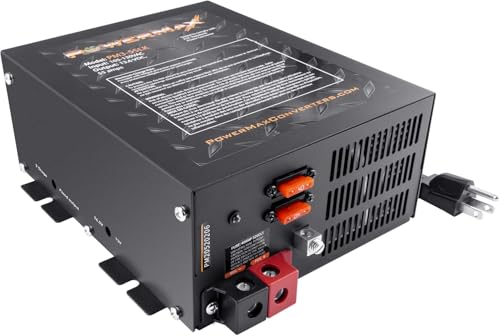
- Controlled, Quiet, Cool Operation – This converter operates quietly and reliably, ensuring excellent…
- Wide voltage range – The PowerMax converter is a flexible power source suitable for various…
- Certified safety – Rest easy with the PowerMax converter, a trusted choice for safety. It holds…
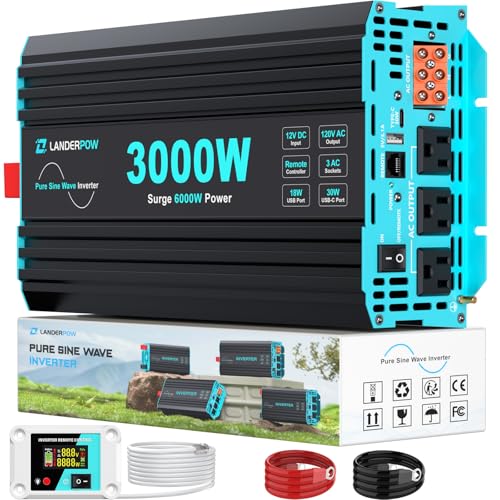
- 【𝟑𝟎𝟎𝟎 𝐖𝐚𝐭𝐭 𝐈𝐧𝐯𝐞𝐫𝐭𝐞𝐫】— This pure sine wave…
- …
- …
Key Takeaways
- Converters change 120V AC from shore power into 12V DC to run onboard systems and charge batteries.
- Inverters convert 12V DC battery power into 120V AC to operate household appliances off-grid.
- Converters require external AC sources, while inverters rely solely on stored battery power.
- Proper sizing of converters and inverters ensures efficient power delivery and prevents overload.
- Combining both devices provides continuous 12V power and AC appliance use during both plugged-in and off-grid conditions.
RV Converter vs Inverter: Key Differences in Power Conversion, Battery Charging, and Off-Grid Use
| Comparison Factors | RV Converter | RV Inverter |
|---|---|---|
| Primary Function | Converts AC electricity into DC power | Converts DC electricity into AC power |
| Power Conversion Direction | 120V AC → approximately 12V DC system voltage | 12V DC → 120V AC in a typical RV setup |
| Main Power Source | Shore power or generator | House batteries |
| Primary Purpose | Power DC systems and charge batteries | Power compatible AC appliances |
| Battery Charging | Yes, with a compatible charging function | Not with inverter-only models |
| Battery Discharging | Does not normally draw battery energy for conversion | Consumes stored battery energy |
| Typical Applications | Lights, water pumps, control circuits, battery charging | TVs, laptops, kitchen appliances, AC outlets |
| Shore Power Requirement | Requires AC input | Does not require shore power |
| Off-Grid Functionality | Cannot operate without an appropriate AC supply | Operates using available battery power |
| Output Capacity | Commonly specified in DC amperes | Commonly specified in AC watts |
| Efficiency Considerations | Depends on DC loads and charging efficiency | Depends on conversion losses and appliance loads |
| Battery Compatibility | Charging profile must match battery chemistry | Input voltage and load must match battery system capability |
| High Startup Loads | Must support connected DC loads and charging needs | Requires sufficient surge capacity for applicable appliances |
| Solar Power Integration | Can coexist with a solar charge controller | Can use batteries charged by solar power |
| Installation Requirements | Proper AC input, DC output, fusing, and charging configuration | Proper battery wiring, overcurrent protection, grounding, and AC transfer arrangements |
| Best For | Shore-powered RV systems and battery charging | Boondocking and off-grid AC appliance operation |
| Overall Recommendation | Choose for AC-to-DC conversion and house battery charging | Choose for battery-powered AC electricity |
RV Converters vs Inverters: Which Do You Need?

Although both RV converters and inverters handle electrical power conversion, knowing which one you need depends on how you use your RV’s power system.
If you rely primarily on shore power or a generator, a converter is essential. It transforms 120V AC into 12V DC to power onboard systems and charge batteries.
Conversely, if you often camp off-grid without external AC sources, an inverter becomes critical. It converts stored 12V DC battery power into 120V AC to run household appliances.
For off-grid camping, an inverter converts 12V battery power into 120V AC for your appliances.
Your decision hinges on your power source availability and appliance demands. Many RVers benefit from both devices to guarantee continuous operation of DC circuits and AC appliances in varying conditions.
Understanding this functional contrast allows you to match your RV’s electrical needs efficiently. Modern RV converters often include multi-stage smart charging features optimized for lithium batteries, enhancing battery life and safety.
How RV Converters and Inverters Work: The Basics?
Understanding how RV converters and inverters operate starts with recognizing their opposite roles in electrical conversion: converters transform incoming 120V AC power into 12V DC to run your RV’s low-voltage systems and charge batteries.
In contrast, inverters convert stored 12V DC battery power back into 120V AC to power household-style appliances when shore power isn’t available.
Here’s how they function:
- Converters rely on external AC sources like shore power or generators.
- They supply continuous 12V DC output for lights, pumps, and battery charging.
- Inverters draw DC power from batteries, converting it to usable 120V AC.
- Inverters enable off-grid use of appliances like microwaves and TVs.
This complementary conversion underpins your RV’s electrical flexibility and system design. Using an automatic transfer switch can further enhance safety and reliability by managing power source transitions seamlessly.
How Batteries and Power Sources Impact Performance?
Batteries and power sources critically determine how well your RV’s converter and inverter perform under different conditions.
Your converter relies on stable 120V AC input from shore power or a generator to efficiently produce 12V DC output for onboard systems and battery charging.
Converters need stable 120V AC from shore power or generators to provide reliable 12V DC output.
In contrast, your inverter depends entirely on the stored energy within your RV’s batteries, converting 12V DC to 120V AC for household appliances.
Battery health, state of charge, and capacity directly influence inverter output quality and duration. Low or aging batteries reduce inverter efficiency and runtime, potentially causing voltage drops or shutdowns.
Meanwhile, converters can’t operate without AC input, limiting their use off-grid.
Understanding these dependencies helps optimize your power system’s reliability and ensures your RV’s electrical demands are consistently met. Choosing between Lithium and AGM batteries can significantly affect performance and maintenance needs during dry camping.
Sizing RV Converters and Inverters for Your Needs
Because your RV’s electrical system depends on both 12V DC and 120V AC power, sizing your converter and inverter correctly is essential to maintaining reliable operation.
For converters, match the amperage output to your RV’s total 12V load and battery charging requirements. For inverters, size based on the combined wattage of the AC appliances you plan to run simultaneously.
Consider these key steps:
- Calculate your total 12V DC current draw for lights, pumps, and accessories to select an appropriate converter amperage.
- Sum the wattage of all AC devices you’ll operate at once to determine inverter capacity.
- Factor in surge ratings for devices with high startup currents, such as microwaves.
- Choose pure sine wave inverters for sensitive electronics to ensure stable power delivery.
This precise sizing prevents overload, protects batteries, and ensures efficient system performance. Additionally, incorporating multi-stage smart charging in your system can optimize battery maintenance and extend battery life.
Why Most RVs Benefit From Both Converters and Inverters?
Although converters and inverters perform opposite electrical conversions, most RV owners find that having both devices maximizes power flexibility and system reliability.
Converters and inverters together enhance power flexibility and ensure reliable electrical systems for RV owners.
The converter supplies 12V DC power and charges batteries when plugged into shore power or a generator, supporting essential onboard systems.
Meanwhile, the inverter converts stored 12V DC battery power into 120V AC, enabling use of residential appliances off-grid.
By integrating both, you guarantee continuous 12V operation and battery maintenance during hookups, plus AC appliance functionality during boondocking.
This dual setup balances energy sources, reduces dependency on one power mode, and adapts to varied camping conditions.
Proper sizing and installation further optimize performance, minimizing electrical interruptions and safeguarding battery health.
This makes both devices indispensable for a robust RV electrical system.
Using a smart multi-stage charger alongside this setup can help maintain battery health and extend battery life during long-term storage or infrequent use.
Frequently Asked Questions
Can an Inverter Damage My RV Batteries if Used Improperly?
Yes, an inverter can damage your RV batteries if you use it improperly.
Drawing more power than the battery’s capacity causes deep discharges, shortening battery life.
Running the inverter for extended periods without recharging stresses the battery.
Also, poor wiring or using an incompatible inverter type may lead to voltage drops or overheating.
To protect your batteries, match inverter size to load demands and monitor battery voltage regularly during use.
How Do Pure Sine Wave and Modified Sine Wave Inverters Differ in Sound Output?
Pure sine wave inverters produce a smooth, clean AC waveform, resulting in minimal electrical noise and quieter operation.
Modified sine wave inverters generate a stepped, less smooth waveform, which often causes audible humming or buzzing in sensitive appliances and the inverter itself.
If you want quieter sound output and better compatibility with electronics, choose pure sine wave models.
Modified sine wave inverters can be louder due to their waveform’s abrupt shifts.
Are RV Converters Compatible With Solar Power Systems?
Yes, RV converters can be compatible with solar power systems, but not directly.
Since converters convert AC shore power to 12V DC, you’ll need a solar charge controller to regulate solar panel output before it reaches your batteries.
The converter then maintains battery charge when plugged in.
For smooth integration, make sure your solar setup has proper charge regulation. Use the converter primarily when connected to shore power or a generator.
What Maintenance Is Required to Keep Converters and Inverters Functioning Well?
You might overlook this, but regular maintenance is vital to keep converters and inverters reliable.
You should clean dust and debris from vents and connections to prevent overheating.
Check wiring for corrosion or loose terminals to avoid power loss.
Test battery voltage and charging function often, since poor batteries strain inverters.
Update firmware if available, and make certain your inverter runs within its rated load.
Neglect these steps, and you risk costly failures when you least expect them.
Can I Install an Inverter and Converter Myself, or Should I Hire a Professional?
You can install an inverter and converter yourself if you have solid electrical knowledge and experience with RV systems.
However, wiring errors or improper sizing could damage equipment or create safety hazards.
Hiring a professional guarantees correct installation, proper grounding, and compliance with electrical codes.
If you’re unsure about handling 12V DC and 120V AC circuits safely, it’s best to let a certified RV electrician manage the job for reliable and safe operation.
RV Converter vs Inverter: Final Verdict
Choosing between an RV converter and inverter is like selecting the right tool for a complex machine. You need both working in harmony.
Converters efficiently charge your batteries from shore power, while inverters transform stored DC power into usable AC electricity when off-grid.
Understanding their distinct roles and sizing them accurately guarantees peak performance and energy management.
By integrating both, you maximize your RV’s power reliability, making your mobile living experience seamless and efficient.
- Controlled, Quiet, Cool Operation – This converter operates quietly and reliably, ensuring excellent…
- Wide voltage range – The PowerMax converter is a flexible power source suitable for various…
- Certified safety – Rest easy with the PowerMax converter, a trusted choice for safety. It holds…
- 【𝟑𝟎𝟎𝟎 𝐖𝐚𝐭𝐭 𝐈𝐧𝐯𝐞𝐫𝐭𝐞𝐫】— This pure sine wave…
- …
- …
Last update on 2026-11-25 / Affiliate links / Images from Amazon Product Advertising API