Your RV water pump won’t shut off because pressure isn’t building properly. This is often due to open valves causing constant water demand, leaks on the output side, or a stuck check valve allowing backflow.
Misadjusted pressure switch settings or electrical faults can also keep the pump running nonstop. Checking valve positions, eliminating leaks, and verifying the pressure switch can resolve most issues.
Exploring system components and settings will help you understand why and how to fix these problems.
Key Takeaways
- Continuous pump running often results from open valves preventing pressure buildup needed for automatic shutoff.
- A faulty or stuck check valve allows backflow, stopping pressure rise and causing the pump to run nonstop.
- Leaks or drips in output plumbing reduce system pressure, forcing the pump to remain active.
- Incorrect pressure switch settings or electrical faults can prevent the pump from shutting off properly.
- Bleeding air from lines, inspecting valves, and checking battery voltage are essential troubleshooting steps.
How an RV Water Pump Normally Shuts Off?
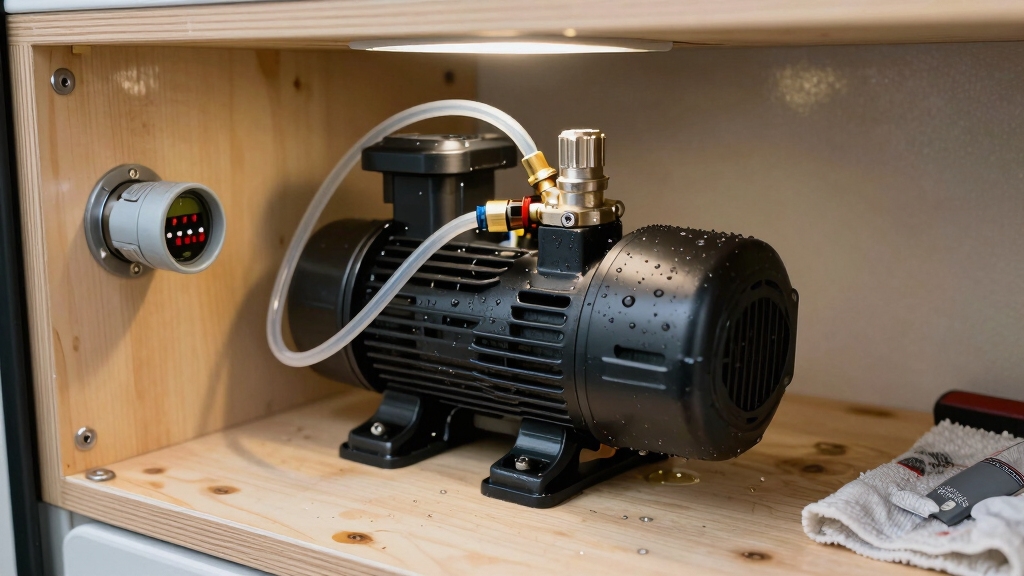
Although you mightn’t notice it, your RV water pump relies on pressure buildup within the system to shut itself off automatically.
When you open a faucet, the pump activates to deliver water, increasing pressure in the output plumbing. Once you close the faucet, pressure rises to a preset cutoff point, triggering the pump’s pressure switch to stop the motor.
This mechanism prevents continuous running and conserves power. The pump’s check valve maintains pressure by preventing backflow, which is essential for proper shutoff.
If pressure doesn’t reach the cutoff threshold, the pump keeps running. Understanding this pressure-dependent cycle helps you diagnose why your pump won’t stop.
This ensures you focus on pressure leaks, valve positions, and component integrity rather than unnecessary electrical troubleshooting.
Additionally, maintaining your RV’s water system with seamless construction tanks can reduce leaks that affect pump pressure and shutoff function.
Why an Open Valve Keeps Your Pump Running?
When you leave a valve open in your RV’s water system, it creates a continuous demand that keeps the pump running nonstop.
The open valve acts as a constant outlet, preventing pressure from building up to the cutoff threshold.
Your pump senses this ongoing flow and fails to engage its shutoff mechanism.
This condition often mimics the effect of a leak or a faulty pressure switch, but the root cause is simply water circulating through the open valve.
To fix this, you need to locate and close any valves left open, such as city fill, tank fill, or water heater bypass valves, that inadvertently create a loop.
Closing these valves restores pressure buildup, allowing the pump’s pressure switch to activate shutoff properly and stop continuous operation.
Using a pressure regulator can help maintain safe water pressure and prevent pump overrun caused by pressure fluctuations.
How Check Valves and Strainers Affect Pump Shutoff?
You really need to keep an eye on your check valve and strainer. If there’s something off with either of them, it can mess up your pressure buildup, which might lead to your pump running continuously.
A damaged or clogged check valve? That can block the flow and prevent the pump from hitting that all-important cutoff pressure. And don’t forget about the strainer! If it’s dirty or cracked, it can restrict the flow too, which means your system won’t be able to shut off the pump as effectively.
Regular maintenance, including cleaning filters and inspecting components, is essential to ensure optimal pump performance and prevent continuous running issues.
Check Valve Functionality
Inspecting the check valve and strainer is essential because their condition directly influences the pump’s ability to build pressure and shut off properly.
A faulty or dirty check valve allows water to flow backward, preventing pressure buildup that triggers the pump to stop.
If the valve sticks open or has internal damage, the pump keeps running as it can’t maintain the necessary cutoff pressure.
You should remove and test the check valve for smooth operation and replace it if debris, cracks, or wear are present.
While the strainer filters debris, a defective check valve causes more critical shutoff issues.
Ensuring the check valve seals tightly and functions correctly prevents pressure loss and continuous pump cycling.
This protects the pump from damage and improves system reliability.
Using enzyme-based cleaners regularly can help maintain system components by preventing buildup that might affect valve performance.
Strainer Condition Impact
Strainers frequently play an essential role in maintaining proper pump shutoff by preventing debris from entering the system and obstructing flow.
If your strainer is clogged, cracked, or poorly sealed, it restricts water flow. This causes the pump to run continuously as it struggles to build cutoff pressure.
You should inspect the strainer regularly for debris accumulation or damage. Removing and cleaning the strainer is a straightforward step that often resolves shutoff issues.
Additionally, a faulty strainer can create pressure drops that mimic leaks, confusing troubleshooting. Replace any cracked or compromised strainers to restore smooth flow and pressure buildup.
Proper strainer maintenance guarantees the pump can reach the pressure threshold needed to shut off. This prevents unnecessary wear and potential overheating.
For best results, selecting a water pump with built-in pressure switches can further enhance automatic shutoff reliability.
Pressure Buildup Interference
When check valves or strainers malfunction, they prevent the water pump from building the necessary pressure to trigger shutoff. A stuck check valve allows water to flow backward, causing pressure loss. Clogged strainers restrict flow, forcing the pump to run continuously.
You must inspect and clean these components regularly to maintain proper pressure buildup. Using pumps with thermal and dry-run protection can also help prevent damage caused by continuous running.
| Component | Common Issue | Effect on Pump |
|---|---|---|
| Check Valve | Stuck or leaky | Pressure loss, no shutoff |
| Strainer | Clogged or cracked | Flow restriction, continuous run |
| Valve Position | Incorrectly open | Recirculation, no cutoff |
| Plumbing Leak | Output-side leaks | Pressure drop, pump runs nonstop |
Addressing these guarantees your pump shuts off correctly, preventing damage.
How RV Water Pump Pressure Switch Settings Affect Operation?
If your RV water pump won’t shut off, it’s a good idea to check the pressure switch settings. Improper adjustments can lead to issues like continuous cycling or the pump just not stopping at all.
Some RV pumps even require you to calibrate a separate bypass switch. This can really influence the cutoff thresholds, so it’s worth paying attention to.
Additionally, ensuring your battery monitor is functioning correctly can help prevent power issues that affect the pump’s operation by providing accurate voltage readings and early warnings.
Pressure Switch Adjustment
Although adjusting the pressure switch might seem straightforward, improper settings can cause your RV water pump to cycle continuously or fail to shut off.
You need to make certain the cut-in and cut-out pressure points are correctly set to match your system’s requirements.
If the cut-out pressure is too high, the pump may never reach that threshold, running nonstop.
Conversely, if it’s too low, the pump may short-cycle, causing wear.
Use a pressure gauge to verify system pressure and adjust the switch’s spring tension accordingly.
Always disconnect power before making adjustments to avoid shocks.
After setting, test by running water and monitoring pump behavior.
Proper pressure switch adjustment ensures efficient operation and prevents damage from continuous running or rapid cycling.
For winterizing, it is important to turn off water pump and drain the system to avoid freeze damage during storage.
Bypass Switch Impact
Understanding the bypass switch’s role is crucial, as it directly influences your RV water pump’s cycling behavior. This switch controls the pressure threshold where the pump stops running.
If it’s misadjusted or set too low, your pump may cycle continuously, never reaching the cutoff pressure. Conversely, if set too high, the pump may run excessively, risking damage.
You’ll want to check that the bypass switch is calibrated separately from the main pressure switch, as some models require distinct settings. Improper bypass settings can mimic leaks or valve faults by preventing pressure buildup, causing the pump to run nonstop.
Adjusting the bypass switch properly helps maintain the correct cutoff pressure. This ensures efficient pump operation and protects the system from wear caused by short-cycling or continuous operation.
Additionally, installing a reliable RV battery disconnect switch can safeguard your water pump system by isolating power during extended inactivity, preventing electrical issues that may affect pump performance.
How RV Plumbing Valves and Bypass Positions Cause Pump Issues?
When plumbing valves and bypass positions aren’t set correctly in your RV, the water pump can keep running nonstop. This occurs because it senses a continuous demand or recirculation loop.
Leaving city fill or tank-fill valves open in the wrong position creates a path that prevents pressure buildup. This causes the pump to run continuously.
Similarly, an open water-heater bypass valve can circulate water without building cutoff pressure.
Leaks in output-side plumbing, including faulty toilet valves or loose fittings, reduce system pressure and keep the pump active.
It’s essential to inspect all valves and bypass settings carefully, ensuring no unintended circulation routes exist.
Correct valve positioning and eliminating leaks restore proper pressure, enabling the pump to shut off as designed and preventing damage from continuous operation.
Additionally, regular maintenance and inspection of pressure relief valves help maintain system safety and proper pump function.
Electrical Problems That Prevent RV Water Pump Shutoff
After verifying valve positions and plumbing integrity, turn your attention to the electrical system powering the water pump. Electrical faults can prevent the pump from shutting off properly, even if plumbing is sound.
First, check battery voltage; low voltage reduces pump performance and pressure buildup. Second, confirm the pump power switch is fully functional and not stuck in the “on” position.
Third, inspect wiring for corrosion, loose connections, or shorts that could cause continuous power delivery to the pump motor. Any of these issues can force the pump to run nonstop by supplying power regardless of pressure switch signals.
Addressing these electrical factors guarantees the pump receives correct power cycling. Ignoring them risks pump damage from overheating or mechanical stress due to continuous operation.
How to Troubleshoot an RV Water Pump That Won’t Stop Running?
Start by confirming the water tank has sufficient water and all faucets are open to bleed air from the system.
Begin by ensuring the water tank is full and faucets are open to release trapped air.
Next, check the strainer or filter for debris, cracks, or poor sealing that could restrict flow.
Inspect all fittings and valves under pressure for leaks, especially on the output side. Leaks prevent pressure buildup needed for pump shutoff.
Verify the city fill and water heater bypass valves are in the correct position to avoid unintended circulation loops.
Confirm battery voltage and pump power switch status to rule out electrical faults.
Finally, observe the pump’s behavior after closing faucets. Continuous running often indicates pressure switch misadjustment or mechanical failure inside the pump.
Address these areas systematically to identify and correct the root cause.
Common Leaks and Air Issues That Reduce Pump Pressure
Leaks and air intrusion in your RV’s plumbing system directly lower pressure, preventing the water pump from reaching its cutoff point. To fix this, first check for common issues that reduce pressure and cause continuous pump running:
- Leaks in output-side plumbing: Even minor drips reduce system pressure, forcing the pump to run nonstop.
- Air entering suction lines: Air pockets stop the pump from priming properly, delaying shutoff.
- Open or mispositioned valves: Valves left partially open create recirculation loops that prevent pressure buildup.
Inspect all fittings and valves under pressure. Bleed air from lines by running faucets, and verify valve positions. Addressing these leaks and air problems restores normal pressure, allowing your water pump to shut off correctly.
When to Repair or Replace Your RV Water Pump?
While some water pump issues can be resolved by adjusting valves or clearing air from the system, you’ll need to weigh repair or replacement when the pump runs continuously despite correcting common causes.
First, inspect the strainer, check valve, and pressure switch for damage or malfunction.
If the pump surges or fails to build pressure, mechanical wear may have compromised sealing components.
Consider replacement if parts are unavailable or the pump shows signs of overheating or excessive wear from nonstop operation.
Repair is practical if you identify specific faulty components like a clogged strainer or misadjusted pressure switch.
Always confirm electrical supply and system integrity before replacement.
Prioritize replacement when persistent operation causes performance degradation or low pressure at fixtures, ensuring reliable water delivery and preventing further damage.
Frequently Asked Questions
Can Water Temperature Affect the RV Water Pump’s Shutoff Function?
Water temperature itself doesn’t directly affect your RV water pump’s shutoff function.
However, extreme temperatures can influence plumbing components or water viscosity, potentially impacting pressure buildup or valve operation indirectly.
For example, very cold water might cause slight contraction or slow flow, while hot water can affect seals or valves.
Still, your pump’s cutoff relies mainly on pressure and switch settings, so focus on those for troubleshooting shutoff issues.
How Does Altitude Impact RV Water Pump Pressure and Shutoff?
At higher altitudes, you’ll experience lower atmospheric pressure, which reduces water’s boiling point and affects pump pressure sensing.
Your RV water pump may struggle to build enough pressure to reach the shutoff threshold, causing it to run longer or cycle more frequently.
You’ll need to adjust the pressure switch settings accordingly and make certain no air leaks exist.
Air entrainment increases at altitude, further impacting pump priming and pressure stability.
Are There Specific Pump Brands Known for Better Shutoff Reliability?
Looking for a pump that reliably shuts off? Brands like Shurflo and Flojet are known for solid pressure control and durable switches, reducing your chances of nonstop running.
They use quality diaphragms and adjustable pressure settings that help maintain consistent cutoff. While no pump is perfect, choosing these brands means less frequent troubleshooting.
Can Using Additives or Water Treatments Cause Pump Shutoff Problems?
Yes, using additives or water treatments can cause pump shutoff problems if they leave residues that clog strainers or damage check valves.
You should avoid treatments that cause buildup inside the pump or plumbing, as this restricts flow and pressure buildup needed for proper shutoff.
Always choose RV-approved, non-corrosive treatments and flush the system regularly to prevent debris accumulation that can interfere with pump operation and cutoff functions.
What Maintenance Schedule Prevents RV Water Pump Shutoff Failures?
Don’t wait for your pump to star in “The Never-Ending Run.”
You should check your valves monthly, clean or replace strainers quarterly, and inspect fittings under pressure every trip.
Bleed air from lines before use and verify pressure switch settings biannually.
Keep your battery charged and test for leaks regularly.
This disciplined routine stops leaks, airlocks, and debris from tricking your pump into nonstop operation, saving your sanity and your RV’s water system.
Final Checks Before Replacing Your RV Water Pump
Think of your RV water pump like a faucet that never fully closes. Just like a dripping tap wastes gallons over time, a pump that won’t shut off can drain your battery and damage components.
By checking valves, pressure switches, and electrical connections carefully, you’ll pinpoint the cause quickly. Address leaks and air issues promptly to restore proper pressure.
With the right troubleshooting, you can keep your water system running efficiently and avoid costly repairs.