You should keep your RV water pressure between 40 and 55 PSI for balanced flow and plumbing protection. Many newer RVs handle up to 60 PSI, while older models typically limit at 50 PSI. Always check your owner’s manual.
Using a pressure regulator helps prevent costly leaks and damage by smoothing out city water fluctuations. Installing it at the spigot safeguards your hoses and fittings early on.
For a reliable setup and upkeep tips, you’ll find more essential guidance ahead.
Key Takeaways
- Ideal RV water pressure ranges between 40 and 55 PSI for balanced flow and plumbing safety.
- Newer RVs may tolerate pressures up to 60 PSI, but older models typically limit pressure to 50 PSI.
- Avoid water pressure near or above 100 PSI to prevent plumbing damage and leaks.
- Use a pressure regulator set around 45 PSI to protect RV plumbing and maintain consistent pressure.
- Install the pressure regulator at the water source spigot to safeguard hoses, filters, and RV plumbing early.
What’s the Best Water Pressure for Your RV?
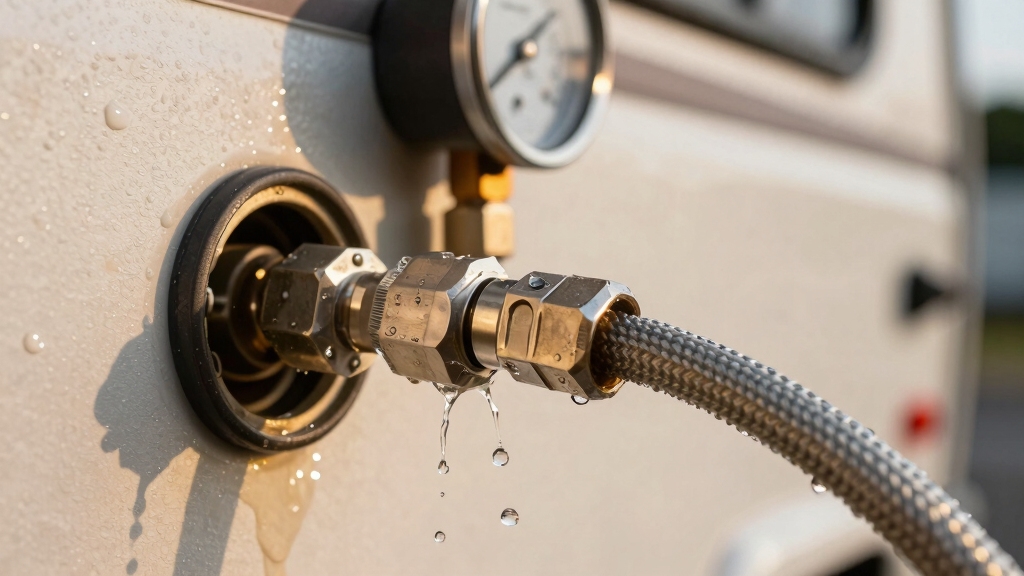
When you hook up your RV to city water, maintaining the right pressure is essential to avoid damaging your plumbing system.
Ideally, you want to keep the pressure between 40 and 55 PSI, which balances strong water flow with safety. Many newer RVs can handle up to 60 PSI, but exceeding that risks wear and leaks.
Older models typically have a 50 PSI limit, so check your owner’s manual for specifics. Some adjustable regulators come preset at 45 PSI, offering a practical starting point.
Avoid pressures near or above 100 PSI, as even some modern rigs aren’t designed for such force. Staying within these ranges guarantees your plumbing, hoses, and fixtures perform reliably without premature failure. Using a pressure regulator can help maintain consistent pressure and protect your RV’s water system.
Why an RV Water Pressure Regulator Protects Your Plumbing?
Because city water pressure can vary widely and often exceeds safe levels for RV plumbing, using a water pressure regulator is essential to protect your system from damage.
City water pressure fluctuates and can harm RV plumbing without a pressure regulator to protect the system.
Without regulation, pressures above 60 PSI can strain fittings, valves, and hoses, leading to leaks or bursts. The regulator reduces incoming pressure to a safe, consistent level—typically between 40 and 55 PSI—preserving your plumbing integrity.
It also shields inline filters and hoses from high-pressure stress, preventing premature wear and costly repairs. By controlling pressure before water enters your RV, the regulator maintains optimum flow without overwhelming your fixtures.
Installing and maintaining a quality regulator guarantees your water system operates safely and efficiently. This extends the lifespan of your plumbing and reduces the risk of unexpected failures.
Additionally, using plastic connecting fittings helps avoid thread damage and ensures secure seals, which complements the protection provided by a water pressure regulator.
Where to Install Your RV Water Pressure Regulator?
To get the most effective protection, install your RV water pressure regulator directly on the spigot where the water source begins.
Positioning it here guarantees the regulator reduces pressure before water enters your hose, safeguarding not only your RV’s plumbing but also your hose and any inline filters.
Avoid placing the regulator at the RV inlet, as this protects plumbing but leaves hoses and filters vulnerable to high pressure.
Install the regulator between the spigot and the hose, adding an inline filter downstream if needed.
For stress reduction, consider a 90-degree elbow fitting at the RV inlet.
This setup minimizes pressure spikes and mechanical strain, extending the lifespan of your entire water system.
Proper placement is critical for reliable, consistent pressure control during every hookup.
Using hoses rated to support at least 150 PSI ensures your water system can handle pressure fluctuations safely.
Adjusting and Maintaining Your RV Water Pressure Regulator
Regularly checking and adjusting your RV water pressure regulator guarantees peak water flow and protects your plumbing system. Use a flathead screwdriver to fine-tune pressure within safe limits, usually between 40 and 55 PSI.
Avoid exceeding your RV’s maximum rating to prevent damage. Clean the regulator periodically to remove debris and replace it if you notice leaks or inconsistent pressure.
It is also important to maintain your hoses with features like strain relief ends to prevent kinking and ensure secure connections.
| Task | Frequency |
|---|---|
| Pressure Adjustment | Before each trip or when flow changes |
| Cleaning | Every 6 months |
| Replacement | Every 2-3 years or if damaged |
Monitor pressure with a gauge during adjustments. Proper upkeep ensures consistent flow, extends regulator life, and protects hoses and filtration systems downstream.
Water Pressure Limits: Older vs Newer RVs
While newer RV models often tolerate higher water pressure, older rigs usually require more conservative limits to protect their plumbing.
Typically, you should keep older RVs at or below 50 PSI to prevent strain or damage to pipes and fittings.
Keep older RV water pressure at or below 50 PSI to protect plumbing from damage.
Newer trailers and motorhomes often handle pressures up to 60 PSI safely, benefiting from improved plumbing materials and design.
Some modern fifth wheels might endure pressures near 100 PSI, but operating at such levels isn’t recommended due to potential risk.
Always consult your RV’s owner’s manual for model-specific pressure thresholds.
To maintain optimal water flow without risking damage, use a pressure regulator adjusted within these limits.
Staying within these parameters helps guarantee the longevity and reliability of your RV’s water system.
Proper maintenance and sealing, including the use of flexible sealants, can prevent leaks that might worsen under high water pressure.
Frequently Asked Questions
How Do I Test My Current RV Water Pressure Accurately?
To test your RV water pressure accurately, attach a water pressure gauge to the city water inlet or directly to the hose spigot before connecting to your RV.
Turn on the water slowly to avoid pressure spikes. Read the gauge once the flow stabilizes.
For precise results, use a reliable gauge rated for at least 100 PSI. Repeat the test at different campgrounds to monitor pressure variations and adjust your regulator accordingly.
Can High Water Pressure Affect My RV Water Heater?
Yes, high water pressure can damage your RV water heater. Excessive pressure stresses internal components and can cause leaks or premature failure.
To protect your water heater, keep pressure within recommended limits, typically 40-60 PSI depending on your model.
Installing a pressure regulator before the water enters your RV guarantees stable, safe pressure levels. This prevents damage not only to the heater but also to plumbing, hoses, and filters.
Regularly check and maintain your regulator.
What Are Signs of a Failing Water Pressure Regulator?
About 60% of RV water pressure issues stem from failing regulators. You’ll notice inconsistent water pressure, sudden spikes above 60 PSI, or a drop causing weak flow.
Your regulator might leak, hiss, or cause water hammer sounds. Check for visible damage or corrosion. If you see these signs, it’s time to clean or replace the regulator to protect your plumbing and maintain safe operating pressure.
Are There Different Regulator Types for Freshwater and Gray Water Systems?
You won’t find different regulator types specifically for freshwater versus gray water systems because pressure regulation focuses on protecting plumbing rather than water type.
Freshwater lines need pressure regulators to prevent damage, while gray water systems typically don’t require them since they handle wastewater flow.
So, you’ll use standard pressure regulators on freshwater inputs only.
Ensure they’re installed at the water source to maintain safe operating pressure and protect your RV’s plumbing and components.
How Often Should I Replace the Water Pressure Regulator in My RV?
Think of your water pressure regulator as a gatekeeper guarding your RV’s plumbing kingdom.
You should replace it every 1 to 2 years or sooner if you notice leaks, pressure fluctuations, or damage.
Regular replacement guarantees consistent protection against city water surges and prevents costly repairs.
Don’t wait for failure; inspect it seasonally and swap it out proactively to keep your system running smoothly and safely.
Final Tips on What Water Pressure for RV Use Is Best
To keep your RV’s plumbing running smoothly, aim for a water pressure between 40 and 60 PSI. This guarantees optimal performance without strain.
Installing and regularly adjusting a water pressure regulator protects your pipes from damage caused by high pressure, especially in older RVs.
By monitoring and maintaining this balance, you’ll avoid costly repairs and enjoy reliable water flow wherever you park.
Remember, precision in pressure means longevity for your RV’s plumbing system.