
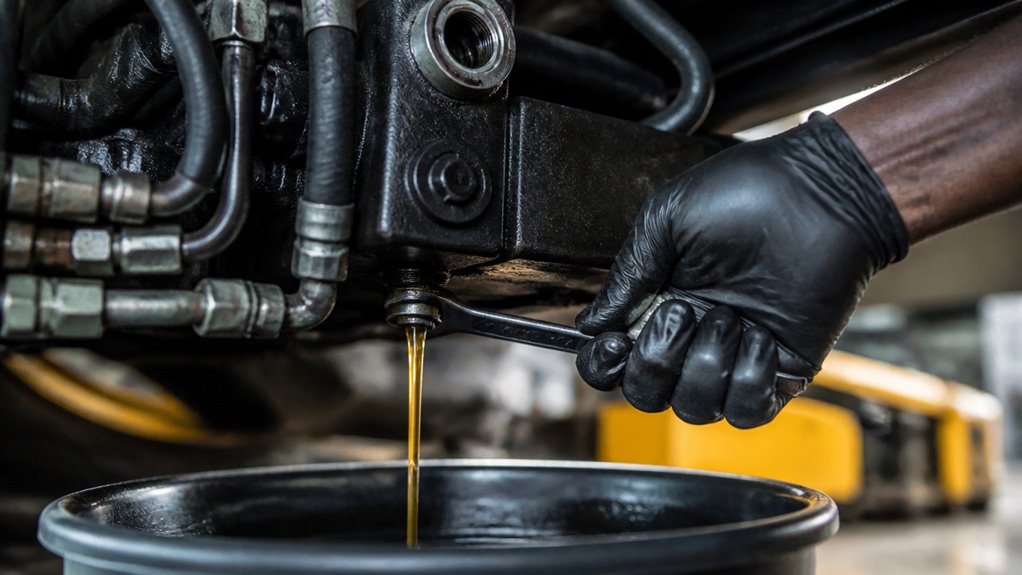
Before changing hydraulic fluid, lock out the system and fully relieve pressure to guarantee safety.
Drain warm fluid completely from all points and clean the reservoir, plugs, and components thoroughly.
Select the correct fluid matching specifications and refill using clean methods, venting air at high points.
Start the system slowly, cycling actuators to remove trapped air and check for leaks.
Maintain filters and monitor fluid quality regularly.
Following these steps guarantees effective fluid change and system longevity; further guidance covers maintenance and disposal details.
Key Takeaways
- Lock out the system, relieve all pressure, and wear protective gear before starting hydraulic fluid change.
- Drain hydraulic fluid while hot from all accessible points, ensuring complete removal and cleaning of reservoir and components.
- Inspect and clean drain plugs, seals, and fittings; replace damaged parts and remove contaminants before reassembly.
- Refill with manufacturer-specified fluid using clean tools, vent high points to remove air, and fill to recommended level.
- Start system at low pressure, cycle actuators fully, check for leaks, monitor fluid level, and adjust as needed.
Prepare Safely Before Changing Hydraulic Fluid

Before you begin changing hydraulic fluid, make sure you’ve locked out the system and fully relieved all pressure to prevent accidental release.
Lower all cylinders, attachments, and implements to the ground or secure them mechanically to avoid unintended movement during service.
Discharge accumulators following the manufacturer’s specified procedure, then verify zero pressure with a calibrated gauge.
Wear protective gear designed for exposure to hot oil, splashes, and contaminated fluids to safeguard yourself.
Maintain a clean work environment by removing dirt and debris around the hydraulic components; this prevents contamination when you open lines or reservoirs.
These safety measures reduce hazards and protect system integrity, ensuring a controlled, contamination-free fluid change process.
Always follow these steps methodically before proceeding to any fluid handling or component disassembly.
Additionally, using components with corrosion-resistant materials helps maintain system longevity and reduces maintenance issues during hydraulic fluid changes.
Select the Right Hydraulic Fluid and Service Interval
When it comes to choosing hydraulic fluid, it’s super important to pick one that matches the grade and viscosity outlined in your equipment manual. This ensures you’re getting the best performance possible.
Now, don’t forget about those service intervals! Sticking to the recommended schedule is key, but if you’re operating in tougher conditions, you might need to adjust those intervals a bit.
Regularly keeping an eye on these factors can really help maintain your system’s efficiency and prevent any premature wear. It’s all about keeping things running smoothly!
Using additives with effective water management capability can further protect your hydraulic system from moisture-related damage during storage or operation.
Fluid Grade and Viscosity
Although selecting the right hydraulic fluid may seem straightforward, choosing the correct grade and viscosity is critical to ensuring peak system performance and longevity.
You must consult the equipment manual to identify the specified fluid grade and viscosity range. Using fluid outside these parameters can cause inefficient flow, increased wear, and temperature issues.
Viscosity affects lubrication and pressure transfer, so select a fluid that maintains stable viscosity across the operating temperature range.
Consider ambient conditions and system design. Cold climates require lower viscosity to avoid sluggish response, while high-temperature environments demand fluids with higher viscosity indices.
Avoid mixing fluids with different viscosities, as this alters performance. Always verify fluid cleanliness meets manufacturer standards to prevent contamination-related damage.
This ensures optimal system dependability and extends component life.
Additionally, selecting fluids that provide excellent engine protection and cleanliness can significantly reduce wear and prolong system life.
Service Interval Guidelines
Selecting the correct hydraulic fluid grade and viscosity sets the foundation for system reliability. Maintaining fluid quality through proper service intervals guarantees ongoing performance.
You should adhere strictly to the manufacturer’s recommended replacement intervals, adjusting for operating conditions. Harsh environments or contamination signs require more frequent changes.
Use fluid sampling and analysis to verify fluid condition and cleanliness targets.
Follow these guidelines:
- Replace hydraulic fluid at specified intervals or sooner if contamination is detected.
- Increase change frequency in dusty or severe environments.
- Monitor fluid appearance and odor for early signs of degradation.
- Employ fluid analysis routinely to track breakdown and contamination trends.
This methodical approach prevents premature wear and secures peak hydraulic system efficiency. Choosing fluids with proper corrosion inhibitors helps protect components and extend system life.
How to Fully Drain Old Hydraulic Fluid?
First things first, it’s a good idea to drain the hydraulic fluid while it’s still hot. This helps keep all those pesky contaminants suspended, making it easier to get everything out.
Once you’ve done that, you’ll want to tackle any leftover oil hanging around in the cylinders, lines, and reservoir. You can do this by mopping it up or using a pump—whatever works best for you!
And don’t forget to give the drain plugs and any surrounding hardware a good clean before you put everything back together. This step is super important to avoid bringing any contamination back into the system.
Using adhesive and water-resistant grease on seals and fittings can help maintain system integrity during reassembly.
Happy draining!
Drain Fluid While Hot
Because contaminants remain suspended when the fluid is hot, drain the hydraulic system while the oil has reached its operating temperature. This guarantees that sludge and particles stay in suspension, allowing for a more complete removal.
Before draining, confirm the system is safely depressurized and protected against spills.
Follow these steps to drain fluid effectively:
- Run the system until it reaches normal operating temperature, then shut it down.
- Open the drain plugs and allow fluid to flow freely, avoiding partial drainage.
- Drain fluid from all accessible points, including cylinders and lines that may trap oil.
- Clean sediment and debris from drain plugs and nearby surfaces before reassembly.
Draining hot fluid maximizes contaminant removal and prepares the system for thorough cleaning. It is also important to have a well-stocked first aid kit nearby to ensure safety during maintenance tasks.
Remove Residual Oil
Remove residual oil using mops, siphons, or pumps to guarantee no old fluid remains trapped in the reservoir or hard-to-drain components.
After the main drainage, thoroughly extract fluid from corners, crevices, and lines where oil tends to settle. This step prevents contamination carryover and secures system longevity.
| Method | Application Area | Efficiency Level |
|---|---|---|
| Mop | Reservoir bottom | Moderate |
| Siphon | Hard-to-reach lines | High |
| Pump | Large volume removal | Very High |
Choose the method based on component geometry and fluid volume. Always verify complete fluid removal before proceeding to the next maintenance step.
This precision avoids residual contamination and maintains hydraulic system integrity. Using cables with corrosion-resistant terminals ensures reliable connections when servicing hydraulic system components electrically.
Clean Drain Hardware
Thoroughly clean the drain plugs and surrounding hardware before reassembly to guarantee a proper seal and prevent contamination.
Residual debris or old fluid on these components can compromise sealing surfaces and introduce contaminants into the system.
Follow these steps for effective cleaning:
- Remove drain plugs and wipe off all oil, dirt, and sediment with lint-free cloths.
- Inspect threads and sealing surfaces for damage or wear; replace hardware if necessary.
- Use a suitable solvent or degreaser to dissolve stubborn residues, then dry completely.
- Reinstall plugs with new seals or gaskets to make certain leak-free operation.
This methodical approach assures a clean, secure connection.
It maintains hydraulic system integrity and facilitates a full, uncontaminated fluid replacement.
Using properly maintained hardware helps prevent issues caused by water intrusion and contamination, which are common causes of equipment failure.
Clean the Reservoir and Hydraulic Components Thoroughly
Wiping the reservoir clean with lint-free cloths after draining is essential to prevent contamination in the fresh hydraulic fluid.
Remove rust, paint chips, sludge, and settled debris from the tank interior using appropriate non-abrasive tools and solvents approved by the manufacturer.
Inspect and clean filters, strainers, and filter housings, replacing any components that show signs of wear or clogging.
Examine suction lines and fittings carefully for leaks, cracks, or contamination sources, addressing any issues before reassembly.
Make certain all cleaned parts are free of dirt and moisture before reinstalling.
Maintain a clean environment around the reservoir during this process to avoid introducing particles.
These steps help guarantee system reliability and prolong component life by reducing contamination risks before refilling.
For sealing and protecting hydraulic components, using a flexible waterproof sealant can prevent leaks and extend maintenance intervals.
Refill Your Hydraulic System Correctly and Safely
When you’re ready to refill your hydraulic system, make sure to use the specified hydraulic fluid and follow clean handling practices to prevent contamination.
Contaminants can severely impair system performance and longevity, so maintain strict cleanliness.
Follow these steps:
- Use a clean funnel or pump to add fluid, ensuring no dirt enters the reservoir.
- Fill to the manufacturer’s recommended level; avoid overfilling or underfilling.
- Vent high points during refilling to minimize air entrapment without starting the system yet.
- After filling, start the system at low pressure. Cycle actuators slowly through full strokes to distribute fluid evenly and check for leaks.
These measures guarantee reliable operation and protect your hydraulic system from damage caused by improper refilling. Additionally, maintaining proper ventilation during maintenance can help prevent moisture buildup that might affect system components.
Bleed Air and Vent the Hydraulic System Properly
Although refilling your hydraulic system correctly is essential, bleeding air and venting the system properly is equally critical to assure peak performance.
Air trapped within hydraulic lines or components can cause spongy controls, erratic actuator movement, and increased wear.
Begin by locating all vent valves, typically at high points or on cylinders.
Open these valves slowly while you operate the system at low pressure, allowing air to escape.
Cycle actuators through full strokes to dislodge trapped air.
Monitor fluid levels continuously, adding fluid as needed to avoid introducing more air.
Once a steady, air-free fluid flow appears from vents, close valves securely.
Proper venting minimizes cavitation, maintains consistent pressure, and assures smooth actuator response.
Adequate bleeding prevents premature component failure and maintains the system’s reliability and efficiency.
Start Up and Test Your Hydraulic System After Fluid Change
Power up the hydraulic system cautiously after refilling to verify the integrity of your fluid change process.
Begin by starting the system at low pressure, watching for leaks or unusual noises. Then, cycle actuators slowly through their full range to guarantee smooth operation and confirm air removal.
Next, monitor the fluid level and adjust as necessary to maintain the correct volume. Finally, inspect all fittings and seals for leaks or signs of wear.
- Start system at low pressure; listen for abnormal sounds.
- Slowly cycle actuators through complete strokes.
- Check and adjust fluid level after startup.
- Inspect all connections and seals for leaks.
This methodical approach guarantees a successful fluid change and system readiness.
Maintain Hydraulic Filters and Fluid Condition Over Time
Regularly inspecting and replacing hydraulic filters is essential to maintain fluid cleanliness and system performance. You should monitor filter condition and fluid quality through scheduled checks and oil analysis to detect contamination, water ingress, or degradation early.
Replace filters before they reach bypass pressure to prevent unfiltered fluid circulation.
| Parameter | Normal Range | Action Threshold |
|---|---|---|
| Particle Count | < ISO 18/16/13 | Replace Filter |
| Water Content | < 200 ppm | Investigate Leak |
| Viscosity | Within spec | Change Fluid |
Track these parameters regularly to guarantee peak hydraulic system function and extend component life. Consistent maintenance prevents costly failures and maintains operational efficiency.
Dispose of Used Hydraulic Fluid Responsibly and Legally
Because used hydraulic fluid contains contaminants and hazardous substances, you must dispose of it according to local environmental regulations and industry best practices.
Improper disposal risks soil and water contamination and legal penalties.
Follow these steps to dispose of used fluid responsibly:
- Collect the fluid in approved, clearly labeled containers designed for hazardous waste.
- Store containers in a secure, covered area to prevent leaks and exposure to rain or heat.
- Contact certified hazardous waste disposal services or recycling centers authorized to handle used hydraulic oil.
- Maintain detailed records of disposal dates, volumes, and the service provider for regulatory compliance and audits.
Frequently Asked Questions
How Can I Identify Signs of Hydraulic Fluid Contamination Early?
You can identify hydraulic fluid contamination early by regularly checking for odor changes, discoloration, or cloudiness in the fluid.
Monitor system performance for sluggish or erratic operation. Use fluid analysis and sampling to detect increased particulate levels, water content, or viscosity changes.
Inspect filters frequently and note any unusual pressure drops. Acting on these signs promptly helps you prevent severe contamination and equipment failure.
What Are Common Causes of Hydraulic Fluid Overheating?
You might expect smooth operation, but instead face overheating caused by high fluid viscosity and excessive system pressure.
Overheating often results from blocked filters restricting flow, or from inadequate cooling due to dirty or malfunctioning heat exchangers.
Contamination introduces friction, while fluid overuse in harsh environments accelerates thermal breakdown.
To prevent this, check for leaks, monitor system load, and maintain proper fluid levels and cooling components regularly.
How Do Hydraulic Fluid Additives Affect System Performance?
Hydraulic fluid additives improve system performance by enhancing lubricity, reducing wear, and preventing corrosion.
They stabilize fluid viscosity across temperature changes, ensuring consistent pressure and flow.
Antioxidants extend fluid life by minimizing oxidation, while anti-foam agents prevent air entrapment, maintaining system responsiveness.
You’ll notice better seal protection and reduced contamination effects.
Using the right additives, matched to your equipment’s specifications, helps maintain efficient operation and prolongs component lifespan.
Can I Mix Different Brands or Types of Hydraulic Fluid Safely?
Mixing different brands or types of hydraulic fluid is like mixing oil and water. It rarely blends well. You shouldn’t mix fluids unless the manufacturer explicitly states compatibility.
Different additives, viscosities, and base oils can cause chemical reactions, reduce performance, and damage seals or components. Always use the exact fluid grade and type specified in your equipment manual to maintain system integrity and avoid costly failures.
When in doubt, stick to one trusted brand.
What Tools Are Best for Measuring Hydraulic Fluid Cleanliness?
You should use a particle counter or a portable oil cleanliness monitor to measure hydraulic fluid cleanliness accurately.
These tools quantify contamination by counting particles per milliliter, following ISO cleanliness codes.
Additionally, a ferrography analyzer helps detect wear metals, while a microscope can inspect debris morphology.
Always calibrate instruments properly, collect samples following standardized methods, and interpret results against manufacturer or industry cleanliness standards.
This ensures system reliability and prevents premature failures.
How to Change Hydraulic Fluid: Final Safety Tips?
Changing hydraulic fluid is like tuning a finely crafted instrument. Neglect can cause discord, but proper care guarantees smooth performance.
Remember, just as a violinist regularly tightens strings for perfect sound, you must prepare safely, select the right fluid, and follow precise steps to drain, clean, refill, and bleed your system.
Consistent maintenance and responsible disposal keep your hydraulic system reliable and efficient. This prevents costly breakdowns and environmental harm.
Stay methodical, stay safe, and keep your system in harmony.